 Call
Call Patient Reports
Best Disarticulation at Minor Joint Level Surgery Hospital
At Medicover Hospitals, disarticulation at minor joint level is performed using open surgical techniques by our skilled team of vascular and endovascular surgeons with qualifications such as MS, DNB, and MCh. This approach often results in reduced blood loss and shorter hospital stays for patients.
Expert Surgeons
Yearly Surgeries
Patient Satisfaction
What is Disarticulation at Minor Joint Level?
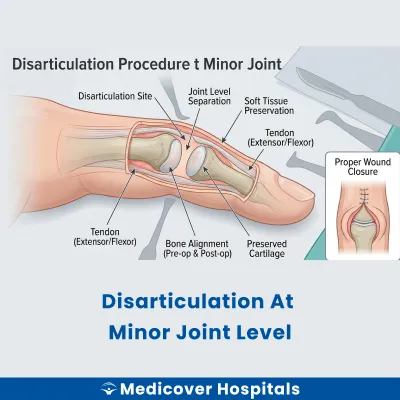
Disarticulation at Minor Joint Level refers to the surgical removal of a joint at a smaller body part, such as fingers or toes. This procedure involves separating the joint surfaces without cutting through the bone. It is often performed on the phalanges (bones of the fingers and toes) to address severe issues.
This surgery is needed for conditions like severe infection, trauma, or deformity that cannot be treated otherwise. If left untreated, these conditions can lead to pain, loss of function, or further complications. Modern surgical approaches, such as minimally invasive techniques, are available for performing disarticulation at minor joint levels, ensuring better recovery and outcomes.
Disarticulation at Minor Joint Level Doctors Near You
Find skilled vascular endovascular surgeons at Medicover Hospitals across India. Choose your city and book a consultation to explore disarticulation at minor joint level options near you.
Why Choose Medicover Hospitals for Disarticulation at Minor Joint Level?
Get a second opinion from trusted experts and makeconfident, informed decisions.
 Get Second Opinion
Complete Guide To Disarticulation At Minor Joint Level
Everything you need to know about the procedure, preparation, and recovery
Disarticulation at Minor Joint Level Surgery Indications
Disarticulation at minor joint level is recommended when less invasive treatments fail to relieve symptoms or halt disease progression. This procedure is often considered when preserving limb function and quality of life is a priority.
Severe Infection
Patients may experience persistent pain, swelling, and fever. Examination often reveals tissue necrosis or abscess formation. When antibiotics and wound care do not control the infection, surgery may be necessary.
Gangrene
Symptoms include discolouration, foul odour, and numbness in the affected area. Doctors may find tissue death on examination. If revascularization or debridement fails, disarticulation may be required.
Severe Trauma
Patients might suffer from intense pain and inability to move the joint. Imaging may show irreparable damage to bones and soft tissues. When reconstruction is not viable, disarticulation is considered.
Malignant Tumours
Signs include a noticeable mass, pain, and restricted movement. Biopsy diagnostic test and imaging might confirm malignancy. If the tumour is unresponsive to chemo drug therapy or radiation, surgical intervention is advised.
Chronic Osteomyelitis
Symptoms include persistent bone pain and swelling. Lab tests may show elevated inflammatory markers. When antibiotics and conservative measures fail, disarticulation may be the solution.
How to Prepare for Disarticulation at Minor Joint Level?
Proper preparation is crucial for a successful disarticulation at minor joint level. It helps minimise risks and ensures a smoother recovery.
- Medication Review: Stop NSAIDs, anticoagulants, and herbal supplements 7-10 days before surgery.
- Fasting Guidelines: Do not eat or drink anything for at least 6-8 hours before the procedure.
- Pre-Surgery Hygiene: Bathe with an antiseptic soap the night before and the morning of the surgery.
- Comfortable Clothing: Wear loose, comfortable clothing on the day of the surgery for easy dressing post-procedure.
- Transportation: Arrange for someone to drive you home after the procedure, as you may feel drowsy from anaesthesia.
- Medication List: Bring a list of all current medications, including dosages, to share with the medical team.
- Pre-Op Instructions: Follow any additional instructions provided by your surgeon or healthcare team.
- Emotional Support: Consider having a family member or friend accompany you for moral support.
Disarticulation at Minor Joint Level Surgery (Step-by-Step)
This procedure is performed by a vascular-endovascular surgeon. It typically lasts 1-2 hours and is done under general anaesthesia to ensure the patient is comfortable and pain-free.
- Preparation: The patient is positioned to allow easy access to the joint. The surgical area is cleaned and sterilized to prevent infection.
- Incision: A small incision, usually 1-2 cm, is made over the joint. This provides access to the joint structures.
- Joint Exposure: Surgical instruments like a curette or bipolar cautery are used to carefully expose the joint. Surrounding tissues are gently moved aside.
- Disarticulation: The joint is carefully separated using precise instruments. The harmonic scalpel may be used to cut through tissues with minimal bleeding.
- Closure: After disarticulation, the incision is closed with sutures. The area is cleaned and dressed to protect the wound.
- Recovery: The patient is moved to a recovery area. They are monitored as they wake from anaesthesia. Pain management is provided as needed.
Who Performs Disarticulation at Minor Joint Level Surgery?
This surgery is performed by a vascular-endovascular surgeon. These specialists are trained in procedures involving blood vessels and joints. They use their expertise to ensure the surgery is performed safely and effectively.
Recovery After Disarticulation at Minor Joint Level Surgery
Recovery from disarticulation at a minor joint level involves gradual healing and adaptation. It's essential to follow medical advice for a smooth recovery process. Expect some discomfort initially, but it should improve over time.
Day 1-3:
- Rest and keep the affected area elevated to reduce swelling.
- Follow prescribed pain management and take medications as directed.
- Start with a soft diet including curd, dal-rice, and soups to maintain nutrition.
Day 4-7:
- Begin gentle movements as advised by your doctor to prevent stiffness.
- Continue with a balanced diet including moong dal and khichdi for easy digestion.
- Avoid strenuous activities and heavy lifting.
Week 2-4:
- Gradually increase activity levels, but avoid putting stress on the joint.
- Incorporate physiotherapy exercises if recommended.
- Return to work or school may be possible, depending on your recovery and doctor's advice.
Phase 2 (Month 1-3):
- Focus on regaining strength and flexibility through regular exercises.
- Monitor the site for any signs of infection or unusual changes.
- Continue with a nutritious diet to support healing.
When to Seek Urgent Help
- Increased redness, swelling, or warmth around the surgical site.
- Persistent pain not relieved by medication.
- Fever or chills indicating possible infection.
- Sudden loss of function or severe discomfort.
Benefits of Disarticulation at Minor Joint Level Surgery
Disarticulation at minor joint level can offer several advantages for patients requiring this procedure.
- Pain Relief: Helps alleviate chronic pain in the affected joint.
- Improved Mobility: Can enhance movement by removing a dysfunctional joint.
- Reduced Infection Risk: Eliminates the source of recurrent infections in the joint.
- Quick Recovery: Generally involves a shorter recovery time compared to more extensive surgeries.
Risks and Complications of Disarticulation at Minor Joint Level Surgery
While this surgery can be beneficial, it is important to be aware of potential risks and complications.
- Common: Infection at the surgical site.
- Common: Bleeding during or after the procedure.
- Rare: Nerve damage leading to numbness or tingling.
- Rare: Blood clots forming in the veins.
- Rare: Delayed wound healing.
- Rare: Adverse reaction to anaesthesia.
Cost of Disarticulation at Minor Joint Level Surgery
The cost of disarticulation at minor joint level surgery Rs.25,000 to Rs.1,00,000 can vary based on factors such as the surgical approach, duration of hospital stay, room category, required diagnostics, and post-operative care.
At Medicover Hospitals, we ensure transparent pricing. We support insurance and TPA services, including CGHS, ESI, and major TPAs, with cashless facility options available. Please contact the hospital for the latest insurance panel details as these may change periodically.
Frequently Asked Questions
1. How much does Disarticulation at Minor Joint Level surgery cost at Medicover Hospitals?
The cost of Disarticulation at Minor Joint Level surgery Rs.25,000 to Rs.1,00,000 varies. Please contact Medicover Hospitals for detailed pricing information.
2. Is Disarticulation at Minor Joint Level surgery covered under health insurance at Medicover?
Many insurance plans, including CGHS and ESI, may cover this surgery. Please contact the hospital for current panel details as insurance panels may change.
3. Will I need a prosthetic after minor joint disarticulation?
Yes, a prosthetic may be recommended to improve function. Consult your specialist for a tailored solution post-surgery.
4. Can I drive after minor joint disarticulation?
Driving is usually restricted until full recovery. Consult your doctor about when it is safe to resume driving.
5. Will I experience phantom pain after disarticulation?
Phantom pain can occur after disarticulation. Your doctor will discuss management options if this becomes a concern.
6. How soon can I return to work after minor joint disarticulation?
Return to work depends on your job and recovery. Typically, it may take a few weeks; consult your doctor for specific advice.
7. What exercises are recommended post-disarticulation?
Physiotherapy exercises are crucial for recovery. Your therapist will guide you on specific exercises to regain strength and mobility.
8. Is disarticulation a major surgery?
Yes, Disarticulation is considered a major surgery, as it involves removal of a limb through a joint (like hip, knee, or shoulder) and requires anesthesia, hospitalization, and rehabilitation.
9. What are the risks of hip disarticulation?
Hip disarticulation carries significant risks such as bleeding, infection, wound healing problems, blood clots, and phantom limb pain. There may also be challenges with mobility and the need for long-term rehabilitation and prosthetic support.


