What is Dilation and Evacuation (D&E)?
Dilation and Evacuation (D&E) is a surgical procedure used to terminate pregnancy, primarily during the second trimester. It is considered one of the safest and most effective methods for managing pregnancies that need to be ended due to medical reasons or personal choices.
D&E involves the cervix's gradual dilation and the pregnancy tissue removal from the uterus. This article provides a detailed overview of the D&E procedure, its indications, process, considerations, and potential risks.
30 to 60 Minutes
Surgery Duration
General Anesthesia
Anesthesia Used
2-4 Weeks
Full Recovery Timeline
When is Dilation and Evacuation Recommended?
Dilation and Evacuation (D&E) is considered safe and effective when performed by trained medical professionals in appropriate clinical settings. It's important to note that D&E is a medical procedure and should be discussed with a qualified healthcare provider. Indications of Dilation and Evacuation include:
- Fetal Abnormalities: When a significant fetal anomaly or chromosomal abnormality is detected that is incompatible with life or poses severe health risks to the fetus.
- Maternal Health Complications: If continuing the pregnancy poses a serious risk to the mother's health, such as conditions like severe preeclampsia or uncontrolled maternal medical conditions.
- Medical Reasons: In cases where the pregnancy is causing severe medical issues that cannot be managed without terminating the pregnancy, such as certain types of maternal infections.
- Gestational Age Limitations: D&E may be restricted after a certain gestational age in many regions due to legal regulations. Beyond a certain point, the procedure might only be available in cases of severe medical necessity.
- Failed Medical Abortion: If a medical abortion (using medications) has not been successful in terminating the pregnancy, a D&E might be performed as a follow-up procedure.
- Personal or Psychological Reasons: In some cases, a woman might choose to have a D&E due to personal or psychological reasons, such as the inability to continue the pregnancy for emotional or financial reasons.
It's important to emphasize that the decision to undergo a D&E should be made in consultation with a qualified healthcare provider, who will consider the individual's medical history, the stage of pregnancy, and any relevant ethical, legal, and personal factors. Additionally, laws and regulations regarding abortion vary by country and region, so it's essential to be aware of the legal framework in your specific area.
How To Prepare For Dilation And Evacuation
Preparing for a Dilation and Evacuation (D&E) procedure involves both medical and personal steps.
Before Your Procedure
- Consultation: Your doctor will discuss the procedure, risks, benefits, and alternatives. This is a necessary time to ask questions.
- Pre-Procedure Instructions: You might need to fast for several hours before the procedure if general anesthesia is used. Your doctor may also prescribe medications to prepare your cervix for dilation.
On the Day of the Procedure
- Wear comfortable clothing.
- Bring a support person to accompany you, as you may not be able to drive afterwards.
Dilation and Evacuation Procedure Steps
The Dilation and Evacuation (D&E) procedure is a safe and commonly used method for ending a pregnancy in the second trimester. It is performed by trained specialists in a controlled medical setting to ensure the patient's safety and comfort.
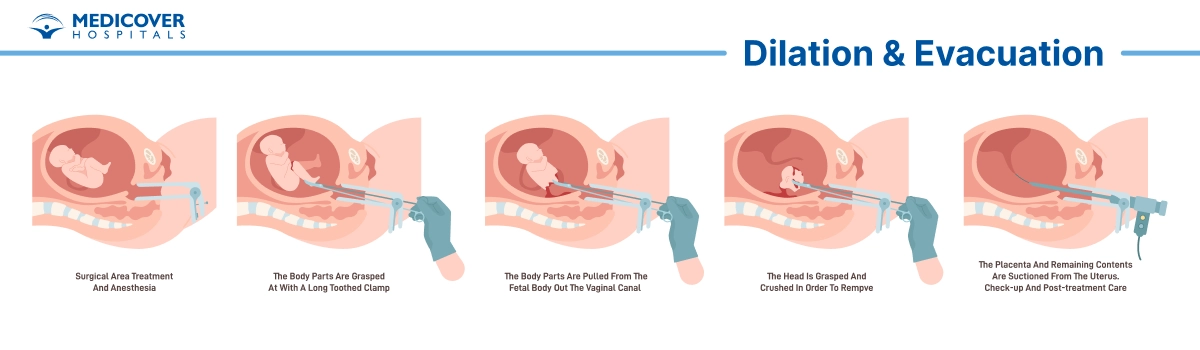
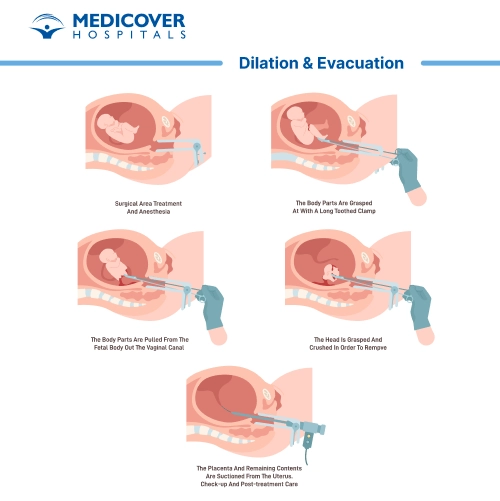
- Pre-procedure: Before the D&E, a thorough medical evaluation and counselling session occurs. The healthcare provider explains the procedure, addresses concerns, and obtains informed consent from the patient.
- Cervical Preparation: The cervix is gradually dilated using specialized instruments or medications such as misoprostol. Dilating the cervix is crucial for safe uterine access during the procedure.
- Anesthesia: Local, regional, or general anesthesia is administered to ensure the patient's comfort during the procedure. The choice of anesthesia depends on the patient's health status and preferences.
- Evacuation of Uterine Contents: During the procedure, the healthcare provider uses a combination of suction and medical instruments to remove the pregnancy tissue from the uterus gently. This process is performed with precision and care to minimize risks and complications.
- Post-procedure Care: After the D&E, patients are monitored closely in a recovery area. They are provided information on what to expect regarding physical recovery and emotional well-being. Follow-up appointments are scheduled to monitor recovery progress.
Who Will Perform for Dilation and Evacuation?
Dilation and evacuation (D&E) procedure is performed to terminate a pregnancy or address specific medical conditions. It is typically carried out by a qualified healthcare provider, such as:
- Obstetrician/Gynecologist (OB/GYN): These medical doctors specialize in women's reproductive health, including pregnancy, childbirth, and related procedures. They are often the ones who perform D&E procedures for various reasons.
- Reproductive Health Specialists: Physicians focusing on reproductive health and family planning may also be qualified to perform D&E procedures.
- Family Medicine Physicians: In some cases, doctors with additional training and expertise in women's health might perform D&E procedures.
Dilation and Evacuation Recovery
Recovery after a Dilation and Evacuation (D&E) procedure is usually smooth, but it varies from person to person.
Immediate Recovery
After the procedure, you'll be monitored in a recovery area while the effects of anesthesia wear off. Most of people feel drowsy or lightheaded, and this usually resolves within a couple of hours.
Physical Healing
- You might experience cramping, similar to menstrual cramps, and some vaginal bleeding. The bleeding can last for a few days to a week. You should avoid using tampons and stick to pads.
- Your doctor will advise you to avoid strenuous activities, lifting, and sexual intercourse for some time to allow your body to heal properly.
Pain Management
Mild pain is normal after a D&E. Your healthcare provider may prescribe pain relief medications or recommend options to manage discomfort.
Emotional Support
The emotional impact of the procedure can be significant, mainly if it was performed for pregnancy termination. It's important to seek emotional support from counselors or support groups to help you through your recovery.
Follow-up Care
You will need to attend a follow-up appointment with your healthcare provider to check your recovery and ensure there are no complications.
Lifestyle Changes After Dilation And Evacuation
Dilation and Evacuation (D&E) is a medical procedure usually performed during the second trimester of pregnancy to terminate or address specific medical conditions.
After undergoing a D&E, there are some potential lifestyle changes and considerations that you might want to keep in mind for your recovery and overall well-being:
- Rest and Recovery: Rest is essential during your initial recovery period. Give your body the time it needs to heal and avoid overexertion.
- Physical Restrictions: Follow your doctor's instructions regarding physical activity. Avoid heavy lifting or strenuous exercises until your healthcare provider gives you clearance.
- Hydration and Nutrition: Keep hydrated and eat a balanced diet to support your healing process.
- Emotional Well-Being: Be kind to yourself emotionally. It's normal to feel a range of emotions after the procedure. Seek support if needed.
Remember that every individual's recovery process can differ based on their health, the procedure, and other factors. Always follow the guidance of your healthcare provider and prioritize your physical and emotional well-being during this time.
Benefits of Dilation And Evacuation (D&E)
Dilation and Evacuation (D&E) is a commonly used and reliable procedure in the second trimester, offering several advantages for women's safety, health, and recovery. Here the benefits of Dilation And Evacuation include:
- Safe and effective second-trimester option
- Quick recovery compared to other surgical methods
- Can be performed when medical abortion fails
- Provides closure in cases of fetal abnormalities
- Helps protect maternal health
Potential Risks and Complications of Dilation And Evacuation
D&E procedure is generally considered safe when performed by trained healthcare professionals in a clinical setting. However, as with any medical procedure, there are potential risks and complications, including:
- Bleeding and infection, although these risks are minimal with proper medical care.
- Perforation of the uterus or other organs, though this is rare.
- Emotional and psychological distress can be managed through counselling and support services.
Dilation and Evacuation (D&E) Cost in India
The cost of Dilation and Evacuation (D&E) in India typically ranges from Rs. 10,000 to Rs. 35,000, with an average of around Rs. 25,000. In metro cities like Delhi, Bangalore, and Hyderabad, prices may go higher, with some private hospitals charging up to Rs. 70,000 depending on gestational age, hospital type, doctor's expertise, anesthesia, and post-care. Patients should consult the hospital directly for an accurate cost estimate.
 040 68334455
 WhatsApp
 Patient Portal
 Home Care