 Call
Call Patient Reports
Digital Subtraction Angiography Procedure by Expert Interventional Radiologists
Digital subtraction angiography (DSA) at Medicover Hospitals is performed using advanced imaging techniques by our skilled cardiologists with DM and DNB qualifications. This minimally invasive procedure allows for precise visualization of blood vessels, leading to reduced blood loss and shorter hospital stays for patients.
Expert Specialists
Yearly Procedures
Patient Satisfaction
What is Digital Subtraction Angiography?
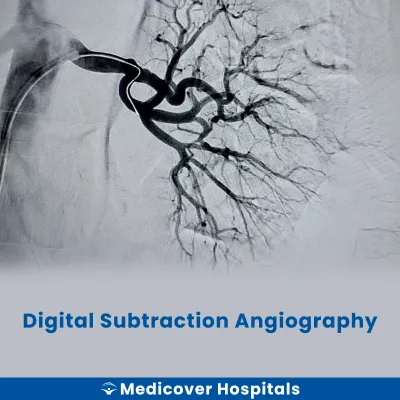
Digital subtraction angiography (DSA) is a medical imaging technique used to visualize blood vessels. It involves the use of contrast material to highlight the blood vessels in organs such as the brain, heart, and kidneys. The "subtraction" process removes the background images, providing a clear view of the vascular structures. This helps in detecting abnormalities like blockages or aneurysms.
DSA is often needed to diagnose conditions like arterial blockages, aneurysms, or vascular malformations. If left untreated, these conditions can lead to serious complications such as strokes or organ damage. Modern approaches to DSA include minimally invasive catheter-based techniques. These allow for precise imaging with reduced recovery time. Early detection and treatment can prevent severe health issues.
Digital Subtraction Angiography Doctors Near You
Discover experienced interventional radiologists at Medicover Hospitals across India. Choose your city and book a consultation to explore digital subtraction angiography options tailored to your heart health needs.
Why Choose Medicover Hospitals for Digital Subtraction Angiography?
Get a second opinion from trusted experts and makeconfident, informed decisions.
 Get Second Opinion
Complete Guide To Digital Subtraction Angiography
Everything you need to know about the procedure, preparation, and recovery
Digital subtraction angiography procedure Indications
Doctors recommend digital subtraction angiography (DSA) to get detailed images of blood vessels. This helps in diagnosing and planning treatment for various vascular conditions.
Unexplained Chest Pain
Patients may experience persistent chest pain not relieved by medication. Initial tests like ECG or stress tests might show abnormalities. When non-invasive tests are inconclusive, DSA helps in visualising coronary arteries.
Peripheral Artery Disease
Patients often report leg pain or cramping while walking. Physical examination may reveal weak pulses in the legs. When ultrasound or CT angiography does not provide clear results, DSA is used for detailed imaging.
Stroke or Transient Ischemic Attack
Symptoms include sudden weakness, speech difficulties, or vision problems. Imaging like CT or MRI may show blockages. If symptoms persist despite initial treatment, DSA can identify specific areas of concern in cerebral vessels.
Aneurysm Detection
Patients might experience severe headaches or neurological symptoms. CT or MRI scans may suggest an aneurysm. DSA is recommended to confirm the diagnosis and assess the aneurysm's size and location.
Renal Artery Stenosis
Symptoms include high blood pressure not controlled by medication. Blood tests may show impaired kidney function. When ultrasound results are inconclusive, DSA helps in evaluating the renal arteries.
How to Prepare for Digital Subtraction Angiography?
Proper preparation for Digital Subtraction Angiography (DSA) ensures accurate results and reduces potential complications. Following these steps can help you be ready for the procedure.
- Medication Review: Stop NSAIDs, anticoagulants, and herbal supplements as advised by your doctor.
- Fasting: Do not eat or drink for at least 6 hours before the procedure due to anaesthesia requirements.
- Hydration: Drink plenty of water the day before, unless instructed otherwise.
- Clothing: Wear loose-fitting clothes for comfort and ease of changing.
- Transportation: Arrange for someone to drive you home post-procedure.
- Medication List: Bring a list of current medications with dosages for reference.
- Allergy Check: Inform your doctor about any allergies, especially to contrast dye or iodine.
- Consent Form: Read and sign the consent form after discussing all concerns with your healthcare provider.
Digital Subtraction Angiography Procedure (Step-by-Step)
Digital subtraction angiography (DSA) is performed by interventional radiologists. The procedure typically lasts 30 minutes to an hour. It is usually done under local anaesthesia.
- Preparation: The patient lies on an X-ray table. A local anaesthetic is applied to numb the area, usually in the groin or arm.
- Catheter Insertion: A small incision (1-2 cm) is made. A catheter is inserted into a blood vessel using a guidewire. The patient may feel slight pressure.
- Contrast Injection: A contrast dye is injected through the catheter. The patient might feel a warm sensation as the dye moves through the bloodstream.
- Imaging: X-ray images are taken. The machine captures images before and after the dye injection, allowing for subtraction of background details.
- Catheter Removal: The catheter is carefully removed. Pressure is applied to the incision site to prevent bleeding.
- Observation: The patient is monitored for a short period to ensure there are no immediate complications. They may feel drowsy from the anaesthetic.
- Recovery: The patient is advised to rest and avoid strenuous activities for a day or two. Follow-up instructions are provided.
Who performs the digital subtraction angiography procedure?
Digital subtraction angiography is performed by interventional radiologists & cardiologists. These specialists are trained in using imaging techniques to diagnose and treat vascular conditions. They use specific instruments like catheters and guidewires to navigate blood vessels and perform the procedure safely.
Recovery After Digital Subtraction Angiography Procedure
Recovery from a Digital Subtraction Angiography (DSA) procedure is usually smooth, with most patients resuming normal activities within a few days. However, it is important to follow specific guidelines to ensure a safe and speedy recovery.
Day 1:
- Rest is crucial. Avoid any strenuous activities.
- Keep the puncture site clean and dry. Monitor for any signs of bleeding or swelling.
- Hydrate well. Drink plenty of water to help flush out the contrast dye used during the procedure.
Day 2-3:
- Continue to rest. You may start light activities like walking around the house.
- Stick to a light diet. Include foods like curd, dal-rice, and moong dal to aid digestion.
- Avoid lifting heavy objects or bending over.
Day 4-7:
- You can gradually resume normal activities, but avoid strenuous exercise.
- Return to work or school if you feel comfortable, but take breaks as needed.
- Include nutritious foods like khichdi and soups to maintain energy levels.
Phase 2 (Week 2 and Beyond):
- Most patients can resume all normal activities, including exercise, unless advised otherwise by a doctor.
- Maintain a balanced diet to support overall health.
When to Seek Urgent Help:
- Severe headache or dizziness.
- Excessive bleeding or swelling at the puncture site.
- Fever or signs of infection.
- Sudden vision changes or difficulty speaking.
Benefits of Digital Subtraction Angiography Procedure
Digital subtraction angiography (DSA) is an advanced imaging procedure used to diagnose and evaluate blood vessel conditions with high accuracy. At our Interventional Radiology department, specialists use advanced imaging technology to support precise diagnosis and effective treatment planning.
- High Precision: Produces detailed images of blood vessels for accurate evaluation of vascular conditions.
- Real-Time Imaging: Enables immediate assessment and guidance during diagnostic or interventional procedures.
- Minimally Invasive: Requires only a small catheter insertion, resulting in faster recovery and minimal discomfort.
- Reduced Contrast Usage: Uses lower amounts of contrast dye compared to some traditional imaging techniques.
Risks and Complications of the Digital Subtraction Angiography Procedure
Although DSA is generally considered safe, certain risks and complications may occur in some patients.
- Bruising or Bleeding (Common): Mild bleeding or bruising may occur at the catheter insertion site.
- Allergic Reactions (Common): Some patients may experience mild to severe reactions to the contrast dye.
- Kidney Damage (Rare): Contrast dye may affect kidney function, particularly in patients with existing kidney disease.
- Infection (Rare): There is a small risk of infection at the insertion site.
- Blood Vessel Injury (Rare): Catheter insertion may occasionally cause damage to blood vessels.
- Stroke or Heart Attack (Rare): Serious complications are extremely uncommon but possible in rare cases.
Cost of Digital subtraction angiography procedure
The cost of a Digital Subtraction Angiography procedure at Medicover Hospitals ranges from Rs. 32,000 to Rs. 51,000. The price varies based on the ward category chosen, such as day care, general, or suite options.
We offer transparent pricing and support for insurance and TPA, including CGHS, ESI, and major TPAs. A cashless facility is also available for your convenience. Please contact the hospital for the latest insurance panel details as these may change periodically.
Frequently Asked Questions
1. How much does Digital subtraction angiography procedure cost at Medicover Hospitals?
The cost for Digital subtraction angiography at Medicover Hospitals ranges from Rs.32000 to Rs.
2. Prices vary based on room type and care level. 2. Is Digital subtraction angiography procedure covered under health insurance at Medicover?
Digital subtraction angiography may be covered by CGHS, ESI, and major TPAs for cashless treatment. Please contact the hospital for current panel details.
3. Can Digital subtraction angiography detect brain aneurysms?
Yes, Digital subtraction angiography is effective in detecting brain aneurysms. It provides detailed images of blood vessels in the brain.
4. Will I need to avoid certain activities post-angiography?
After Digital subtraction angiography, avoid strenuous activities for a few days. Light activities can be resumed as advised by your doctor.
5. Are there any dietary restrictions after Digital subtraction angiography?
Post-procedure, maintain a balanced diet including curd, dal-rice, and khichdi. Stay hydrated and avoid heavy meals for a day.
6. What complications can arise from Digital subtraction angiography?
Complications can include bleeding at the catheter site or allergic reactions to contrast dye. Discuss risks with your healthcare provider beforehand.
7. How soon can I return to work after Digital subtraction angiography?
Most patients can return to work within a week after the procedure. Follow your doctor's advice based on your specific health condition.
8. What is the difference between digital subtraction angiography and CT angiography?
Digital Subtraction Angiography (DSA) is an invasive procedure where a catheter is inserted into the blood vessels and contrast dye is injected to obtain detailed images. CT Angiography (CTA) is a non-invasive imaging test that uses a CT scan and contrast dye injected through a vein to visualize blood vessels. DSA provides more precise and real-time images, while CTA is quicker and less invasive.
9. What is the technique of digital subtraction angiography?
In DSA, a catheter is inserted through a small puncture (usually in the groin or wrist) and guided to the target blood vessel. Contrast dye is injected, and X-ray images are taken. Pre-contrast images are digitally subtracted from post-contrast images to clearly highlight the blood vessels.
10. How does digital subtraction angiography work?
DSA works by first capturing images without contrast (baseline images), followed by images after contrast dye injection. The system subtracts the background structures like bones and tissues, leaving a clear view of only the blood vessels.
11. What is the difference between DSA and CTA?
DSA and CTA differ mainly in approach and detail. DSA is invasive and offers highly detailed, real-time imaging, often used during interventions. CTA is non-invasive, faster, and commonly used for diagnosis and screening, but may provide slightly less detailed images compared to DSA.


