 Call
Call Patient Reports
Best Diagnostic Ureteroscopy Procedure Hospital with Advanced Care
At Medicover Hospitals, our skilled urologists, with qualifications like MS, DNB, and MCh, perform Diagnostic Ureteroscopy using advanced endoscopic techniques. This minimally invasive approach ensures smaller incisions and reduced recovery time, leading to shorter hospital stays for patients across India.
Expert Surgeons
Yearly Surgeries
Patient Satisfaction
What is Diagnostic Ureteroscopy?
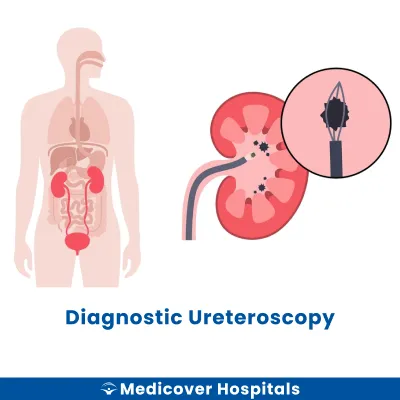
Diagnostic Ureteroscopy is a medical procedure used to examine the ureters and kidneys. The ureters are tubes that carry urine from the kidneys to the bladder. A ureteroscope, a thin tube with a camera, is inserted through the urethra into the bladder and then into the ureter. This allows doctors to view the inside of these organs and identify any abnormalities.
This procedure is needed to diagnose conditions like kidney stones, strictures (narrowing of the ureter), or tumors. If these conditions are left untreated, they can lead to severe pain, infections, or kidney damage. Modern approaches like flexible ureteroscopy and digital ureteroscopy provide enhanced visualization, aiding in accurate diagnosis. Early detection through this procedure can prevent complications.
Diagnostic Ureteroscopy Doctors Near You
Discover skilled urologists for diagnostic ureteroscopy at Medicover Hospitals across India. Choose your city and book a consultation to address your urological health needs efficiently.
Why Choose Medicover Hospitals for Diagnostic Ureteroscopy?
Get a second opinion from trusted experts and makeconfident, informed decisions.
 Get Second Opinion
Complete Guide To Diagnostic Ureteroscopy
Everything you need to know about the procedure, preparation, and recovery
Diagnostic Ureteroscopy Procedure Indications
Doctors recommend diagnostic ureteroscopy when there is a need to visually inspect the ureters and kidneys for abnormalities. This procedure helps in diagnosing conditions that are not easily identifiable through non-invasive methods.
Persistent Hematuria
Patients may experience blood in their urine without a clear cause. If imaging tests like ultrasound or CT scans do not reveal the source, ureteroscopy may be used to identify potential lesions or stones causing the bleeding.
Unexplained Flank Pain
Severe pain in the side or back can indicate kidney stones or other obstructions. When initial imaging fails to pinpoint the cause, ureteroscopy allows direct visualization to identify and address the issue.
Recurrent Urinary Tract Infections (UTIs)
Frequent UTIs with no apparent cause may suggest underlying structural issues. Ureteroscopy can help detect strictures or other anomalies that contribute to repeated infections.
Abnormal Imaging Results
When imaging tests show suspicious masses or irregularities in the urinary tract, ureteroscopy provides a closer look. This helps in assessing whether further intervention is necessary.
Failed Conservative Treatment for Stones
Patients with kidney or ureteral stones may not respond to medication or lithotripsy procedure. Ureteroscopy is then used to locate and possibly remove the stones directly.
How to Prepare for Diagnostic Ureteroscopy?
Proper preparation ensures a smooth procedure and reduces complications. Follow these steps to get ready for your diagnostic ureteroscopy.
- Medication Review: Stop NSAIDs, anticoagulants, and herbal supplements a week before the procedure.
- Fasting: Do not eat or drink anything for at least 6-8 hours before the procedure if general anaesthesia is used.
- Bowel Preparation: Follow any bowel prep instructions given by your doctor to clear the intestines.
- Clothing: Wear loose, comfortable clothing on the day of the procedure for easy changing.
- Transportation: Arrange for someone to drive you home after the procedure, as you may feel drowsy.
- Medication List: Bring a list of all medications you are currently taking, including dosages.
- Health Conditions: Inform your doctor about any existing health conditions or allergies.
- Pre-Procedure Tests: Complete any required blood tests or imaging studies before the procedure.
Diagnostic Ureteroscopy procedure (Step-by-Step)
Diagnostic ureteroscopy is performed by urologists. The procedure typically lasts between 30 to 60 minutes. It is usually done under general anaesthesia to ensure the patient is comfortable and pain-free.
- Preparation: The patient is positioned on the operating table. General anaesthesia is administered to ensure comfort throughout the procedure.
- Insertion of Ureteroscope: A ureteroscope, a thin, flexible instrument, is gently inserted through the urethra into the bladder and then into the ureter. The patient remains asleep and does not feel any discomfort.
- Visual Examination: The urologist uses the ureteroscope to visually inspect the ureter and kidney. A camera attached to the ureteroscope projects images onto a screen, allowing for detailed examination.
- Sample Collection: If necessary, small instruments like biopsy forceps are passed through the ureteroscope to collect tissue samples. The patient remains unaware of this process due to anaesthesia.
- Fluid Irrigation: Sterile fluid is used to irrigate the ureter, improving visibility. This helps the urologist to clearly see any abnormalities.
- Completion: Once the examination is complete, the ureteroscope is carefully withdrawn. The patient is then moved to a recovery area to wake up from anaesthesia.
- Post-Procedure Care: The patient may experience mild discomfort or a burning sensation during urination, which usually subsides within a day or two.
Who Performs Diagnostic Ureteroscopy procedure?
Diagnostic ureteroscopy is performed by expert urologists, specialists trained in diagnosing and treating urinary tract conditions. They use advanced instruments and techniques to ensure a thorough examination of the ureter and kidneys.
Recovery After Diagnostic Ureteroscopy procedure
After a diagnostic ureteroscopy, most patients experience mild discomfort. Recovery is usually quick, but it's important to follow your doctor's advice for a smooth healing process.
Day 1:
- Rest is crucial. Avoid any strenuous activities.
- Drink plenty of fluids to flush out the urinary tract.
- Expect some blood in the urine, which should gradually decrease.
- Stick to a light diet. Opt for soft foods like curd, dal-rice, and soups.
Days 2-3:
- Continue drinking fluids. Water and coconut water are good choices.
- Resume light activities as tolerated. Avoid heavy lifting or exercise.
- Include easily digestible foods like khichdi and moong dal in your diet.
Days 4-7:
- Most people can return to work or school, depending on how they feel.
- Gradually increase activity levels but listen to your body.
- Maintain a balanced diet to support recovery.
When to Seek Urgent Help:
- Severe pain not relieved by medication.
- High fever or chills.
- Persistent heavy bleeding in urine.
- Inability to urinate or severe burning sensation.
Contact your healthcare provider if you experience any of these symptoms. It's important to ensure that your recovery is on track. Please contact the hospital for current details as insurance panels may change.
Benefits of Diagnostic Ureteroscopy procedure
Diagnostic ureteroscopy is a valuable procedure for examining the urinary tract. It helps in identifying and addressing various issues effectively.
- Accurate Diagnosis: Provides a clear view of the ureters and kidneys, aiding in precise diagnosis.
- Minimally Invasive: Involves no incisions, reducing recovery time and discomfort.
- Direct Visualisation: Allows direct observation of abnormalities, enhancing diagnostic accuracy.
- Biopsy Capability: Enables tissue sampling for further analysis if needed.
Risks and Complications of Diagnostic Ureteroscopy procedure
While generally safe, diagnostic ureteroscopy carries some risks. Understanding these helps in making informed decisions.
- Common: Mild discomfort or pain during urination post-procedure.
- Common: Temporary blood in urine, usually resolving quickly.
- Rare: Infection requiring antibiotics.
- Rare: Ureteral injury, potentially needing further treatment.
- Rare: Allergic reaction to anaesthesia or contrast dye.
- Rare: Stricture formation in the ureter.
Cost of Diagnostic Ureteroscopy procedure
The cost of a Diagnostic Ureteroscopy procedure at Medicover Hospitals ranges from Rs. 17,000 to Rs. 46,000. The price varies based on the ward category chosen, such as outpatient, day care, general, private, and deluxe options. We offer transparent pricing and support for insurance and TPA, including CGHS, ESI, and major TPAs. A cashless facility is also available for your convenience. Please contact the hospital for the latest insurance panel details as these may change periodically.
Frequently Asked Questions
1. How much does Diagnostic Ureteroscopy cost?
The cost of a Diagnostic Ureteroscopy at Medicover Hospitals ranges from Rs.17000 to Rs.46000, depending on the type of room and location.
2. Is Diagnostic Ureteroscopy covered by insurance?
Diagnostic Ureteroscopy may be covered by CGHS, ESI, and major TPAs. Please contact the hospital for current panel details.
3. Will I need a stent after ureteroscopy?
A stent may be placed temporarily to ensure urine flow after ureteroscopy. Your doctor will decide based on your specific condition.
4. Can ureteroscopy cause urinary tract infections?
There is a risk of urinary tract infections after ureteroscopy. Your doctor may prescribe antibiotics to prevent this complication.
5. What foods should I avoid post-ureteroscopy?
Avoid spicy and acidic foods after ureteroscopy. Opt for bland meals like dal-rice, khichdi, and curd to aid recovery.
6. Will I experience pain while urinating after?
You may experience mild discomfort or burning during urination after ureteroscopy. This usually resolves within a few days.
7. How soon can I resume work post-ureteroscopy?
Most patients can return to work within a week after ureteroscopy. However, follow your doctor's advice based on your recovery.
8. Is ureteroscopy a major or minor surgery?
Ureteroscopy is a minor, minimally invasive surgery done without any external cuts. It is usually a day-care procedure with quick recovery.
9. Is ureteroscopy surgery safe?
Yes, ureteroscopy is generally safe and widely performed with a high success rate. Minor side effects like pain, burning urination, or blood in urine may occur temporarily.
10. What size stones can ureteroscopy remove?
Ureteroscopy can remove stones from small sizes up to about 2 cm effectively. Larger stones may be broken using laser and sometimes require multiple sessions.


