What is Cyst Removal?
Cyst removal is a medical procedure to take out a fluid-filled lump (cyst) that forms under the skin. Cysts can appear anywhere on the body and are usually noncancerous (benign). Many cysts don't need treatment and may go away on their own, but if they become painful, infected, or bothersome, removal may be necessary.
Most cyst removal procedures are quick and straightforward, done in a clinic or hospital setting. Doctors use different techniques to remove the cyst completely, reducing the chance of it coming back.
Never try to pop, squeeze, or cut out a cyst at home. Doing so can lead to infection, scarring, or recurrence. Always seek treatment from a qualified healthcare provider.
What is a Cyst?
In medical terms, a cyst means a closed sac-like pocket of tissue that can develop anywhere in the body. It may contain fluid, pus, air, or other substances. While most cysts are non-cancerous, they can sometimes grow, become painful, get infected, or affect normal organ function.
Some cysts shrink or resolve on their own, but others may require medical care such as cyst removal surgery, cyst excision surgery, or drainage. The type of treatment depends on the cyst's location, size, and symptoms.
Types of Cysts
Sebaceous Cysts
Sebaceous cysts are small, non-cancerous lumps beneath the skin. They are generally painless but may get swollen or infected. In such cases, cyst removal or cyst excision is performed to prevent recurrence.
Ovarian Cysts
Ovarian cysts are fluid-filled sacs that form on or inside the ovaries. While many are harmless, some may cause pelvic pain, bloating, or affect reproductive health. Symptomatic cases are treated with ovarian cyst surgery to remove the cyst while preserving ovarian function.
Ganglion Cysts
Ganglion cysts are non-cancerous lumps often found along the tendons or joints of the wrists and hands. They may cause pain, tingling, or restrict movement. Depending on severity, aspiration or cyst excision surgery may be recommended.
Pilonidal Cysts
Pilonidal cysts develop near the tailbone and can become infected, forming painful abscesses. Recurring or complicated cases usually require pilonidal cyst surgery for complete removal.
Bartholin Cysts
Bartholin cysts form in the Bartholin glands near the vaginal opening. If they become painful or infected, bartholin cyst surgery (drainage or marsupialization) may be required to provide long-term relief.
30-60 minutes
Surgery Duration
Local or General Anesthesia
Anesthesia Used
1 to 2 days
Hospital Stay
4-6 weeks
Full Recovery Timeline
Who needs Cyst Surgery?
Cyst surgery is generally recommended for patients who experience pain, swelling, or repeated infections due to cysts. It may also be needed if the cyst interferes with daily activities, affects organ function, or causes visible lumps that lead to cosmetic concerns.
For example, a ganglion cyst on the wrist may limit movement, an ovarian cyst can affect reproductive health, and a pilonidal cyst can cause severe discomfort while sitting or walking. In such cases, surgical removal offers long-term relief.
What conditions does cyst surgery treat?
Cyst surgery is used to treat different types of cysts depending on their location and severity:
- Sebaceous cysts: Small skin lumps that become inflamed or infected
- Ovarian cysts: Fluid-filled sacs in the ovaries that cause pelvic pain or fertility issues (managed with ovarian cyst surgery)
- Ganglion cysts: Lumps around joints or tendons that cause stiffness or discomfort
- Pilonidal cysts: Painful cysts near the tailbone that may form abscesses (treated with pilonidal cyst surgery)
- Bartholin cysts: Cysts near the vaginal opening that may cause pain or infection (treated with bartholin cyst surgery)
These procedures are often performed as cyst excision surgery to ensure complete removal and reduce the chance of recurrence.
When would a doctor recommend cyst surgery?
A doctor may recommend surgery when:
- The cyst is persistently painful, swollen, or infected
- It grows larger or puts pressure on nearby structures
- It recurs after previous drainage or conservative treatment
- It interferes with essential functions, such as walking, sitting, or reproductive health
- There is a need for biopsy to rule out rare cases of malignancy
In such cases, cyst surgery becomes the most effective and permanent solution compared to temporary treatments.
Why is cyst surgery done?
The main reasons for performing cyst surgery are:
- Symptom relief: To reduce pain, swelling, and discomfort caused by the cyst
- Prevention of complications: To stop infections, abscesses, or rupture
- Functional improvement: To restore movement, fertility, or comfort depending on the cyst's location
- Cosmetic reasons: To remove visible lumps that affect a patient's confidence
- Long-term solution: To prevent recurrence by completely removing the cyst and its sac
Overall, cyst surgery provides both medical and lifestyle benefits, making it an important treatment option when cysts become problematic.
How should I prepare before the Cyst Surgery?
Preparation begins with a consultation where your doctor reviews your medical history, current medications, and allergies. Patients are advised to maintain good hygiene around the surgical site and follow specific instructions, such as fasting if general anesthesia will be used.
In some cases, especially with ovarian cyst surgery, additional precautions may be required to safeguard reproductive health.
What tests are done before Cyst Surgery?
To plan the procedure effectively, doctors may recommend:
- Ultrasound or MRI scans to evaluate the cyst's size, depth, and location
- Blood tests to rule out infection or check organ function
- Physical examination to assess surrounding tissues
- In rare cases, a biopsy to exclude malignancy before the surgery
These tests help determine whether the patient needs cyst excision surgery, laparoscopic ovarian cyst surgery, or another approach.
Should I stop eating, drinking, or taking medicines?
If the surgery requires general anesthesia, patients are usually instructed to avoid food and drink for 6-8 hours before the operation. Certain medications, especially blood thinners or antiplatelets, may need to be paused to reduce bleeding risks. Your doctor will provide clear guidance tailored to your health condition.
How is the Cyst Surgery procedure performed?
The surgical technique depends on the type and location of the cyst:
- Open surgery: A small incision is made to obliterate the cyst, often used for large or deep cysts.
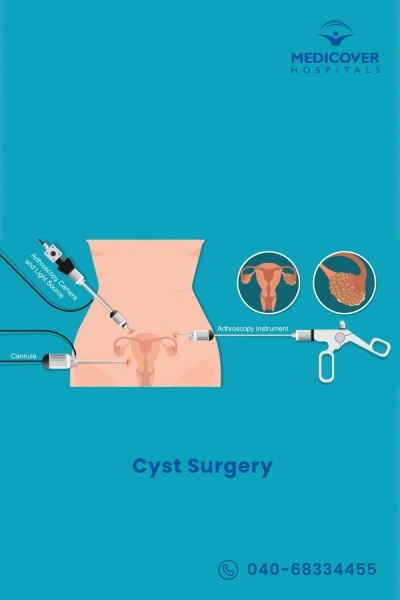
- Laparoscopic surgery: A minimally invasive approach, beneficial for ovarian cyst surgery, involving minor cuts and a camera-guided instrument.
- Aspiration or drainage: Used in selected cases but less effective for permanent removal since the cyst wall remains intact.
- Excision surgery: The entire cyst sac and its contents are removed to minimise recurrence.
Who performs the procedure?
Cyst surgeries are performed by qualified surgeons specialized in general surgery, gynecology (for ovarian or bartholin cysts), or Dermatologists.
At Medicover Hospital, our surgical team ensures safe, effective treatment using advanced technology and patient-centered care.
What should I expect immediately after the procedure?
After the surgery, patients may experience mild pain, swelling, or tenderness around the incision site. In most cases, discomfort is manageable with pain medication prescribed by the doctor.
Stitches or dressings may be applied, and in some procedures, a small drainage tube may be temporarily placed to prevent fluid buildup. You may also feel drowsy for a few hours if general anesthesia was used.
When can I return to normal activities?
- For small cyst removals, most patients resume routine activities within a few days.
- For more complex procedures like pilonidal cyst surgery or ovarian cyst surgery, patients are usually advised to avoid strenuous exercise, heavy lifting, or long periods of sitting for at least 2-4 weeks.
- Full recovery and return to normal lifestyle may take up to 6 weeks in complicated cases.
Are lifestyle changes required after recovery?
Most patients do not require major lifestyle changes after a cyst operation. However, doctors may recommend:
- Practising good hygiene to reduce infection risk, especially after pilonidal cyst surgery
- Regular gynecological check-ups after ovarian cyst surgery
- Avoiding repetitive strain in cases of ganglion cysts to lower the recurrence chances
- Following a balanced diet and staying hydrated to support overall healing
With proper postoperative care and follow-ups, patients typically recover well and experience long-term relief.
What are the benefits of Cyst Surgery?
Cyst surgery offers several important benefits:
- Relief from symptoms: Pain, swelling, and discomfort caused by the cyst are resolved.
- Prevention of complications: Surgery prevents infection, abscess formation, or rupture.
- Restoration of function: In cases like ganglion or ovarian cysts, surgery helps restore joint movement or reproductive health.
- Cosmetic improvement: Removal of visible cysts (such as sebaceous cysts) enhances appearance and confidence.
- Long-term solution: Unlike aspiration or drainage, cyst excision surgery completely removes the cyst wall, reducing the risk of recurrence.
What are the risks and complications of Cyst Surgery?
As with any surgical procedure, cyst surgery carries some risks, though they are generally low when performed by experienced surgeons. Possible complications include:
- Infection at the surgical site
- Bleeding or hematoma formation
- Scarring after cyst removal
- Recurrence if the cyst sac is not completely removed
- Rare risks associated with anesthesia
The likelihood of complications depends on the cyst's type, size, and location, as well as the patient's overall health.
What are the side effects of Cyst Surgery?
Most side effects are temporary and improve as healing progresses. These may include:
- Mild pain or discomfort around the incision site
- Swelling, redness, or bruising in the treated area
- Temporary numbness or tingling near the surgical site
- For deeper procedures (like ovarian cyst surgery or pilonidal cyst surgery), there may be a longer healing period with activity restrictions
With proper post-operative care, most patients recover smoothly and experience lasting relief from their symptoms.
What is the cost of cyst removal?
The cost of cyst removal surgery in India can vary widely depending on the type of cyst and the procedure used.
- For small skin or sebaceous cysts, the cost may start from around Rs. 5,000 and go up to Rs. 40,000.
- Pilonidal cyst surgery usually ranges between Rs. 30,000 and Rs. 70,000, depending on whether it requires a simple excision or a more complex flap closure.
- Ovarian cyst surgery cost is higher due to the complexity and may range from Rs. 80,000 to Rs. 1,50,000, particularly for laparoscopic procedures.
Overall, a general cyst operation cost may fall anywhere between Rs. 5,000 and Rs. 1,50,000 depending on the case.
 040 68334455
 WhatsApp
 Patient Portal
 Home Care