 Call
Call Patient Reports
Cardiac Catheterization and Four Vessel Angiography Procedure at Medicover Hospitals
At Medicover Hospitals, our cardiologists, holding qualifications such as DM and DNB, perform cardiac catheterization and four vessel angiography using the open surgical approach. This technique helps in diagnosing and treating heart conditions effectively, often resulting in shorter hospital stays for patients.
Expert Procedures
Yearly Procedures
Patient Satisfaction
What is Cardiac Catheterization and Four Vessel Angiography?
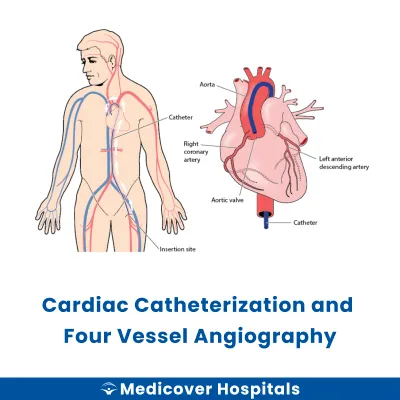
Cardiac Catheterization is a medical procedure involving the insertion of a thin tube (catheter) into a blood vessel leading to the heart. It helps diagnose and treat heart conditions. Four Vessel Angiography is an imaging test that examines the blood vessels in the brain. It involves the carotid and vertebral arteries. This procedure provides detailed images to assess blood flow and detect blockages.
This procedure is essential for diagnosing coronary artery disease, heart valve issues, and congenital heart defects. It also helps in assessing brain blood flow. Untreated conditions can lead to heart attacks or strokes. Modern approaches include minimally invasive techniques like radial access (through the wrist) and femoral access (through the groin). These methods reduce recovery time and improve patient comfort.
Cardiac Catheterization and Four Vessel Angiography Doctors Near You
Discover expert cardiologists for cardiac catheterization and four vessel angiography at Medicover Hospitals across India. Choose your city and book a consultation to address your heart health needs today.
Why Choose Medicover Hospitals for Cardiac Catheterization and Four Vessel Angiography?
Get a second opinion from trusted experts and makeconfident, informed decisions.
 Get Second Opinion
Complete Guide To Cardiac Catheterization And Four Vessel Angiography
Everything you need to know about the procedure, preparation, and recovery
Cardiac Catheterization and Four Vessel Angiography procedure Indications
Doctors recommend cardiac catheterization and four vessel angiography to diagnose and evaluate heart conditions. This procedure helps in assessing blood flow and identifying blockages or abnormalities in the heart and surrounding vessels.
Chest Pain (Angina)
Patients often experience chest pain or discomfort, especially during physical activity. Doctors may find abnormal stress test results or ECG changes. When medication and lifestyle changes do not relieve symptoms, this procedure helps in further evaluation.
Shortness of Breath
Patients may struggle with breathing, especially during exertion. Imaging tests might show heart enlargement or fluid in the lungs. If symptoms persist despite medical management, catheterization can assess heart function and blood flow.
Unexplained Syncope
Patients may faint or feel lightheaded without a clear cause. Doctors might find irregular heart rhythms or abnormal blood pressure readings. When initial tests do not reveal the cause, this procedure helps in detailed examination.
Heart Attack (Myocardial Infarction)
Patients experience severe chest pain, sweating, and nausea. Blood tests show elevated cardiac enzymes, and ECG indicates heart damage. Immediate catheterization is crucial to assess and restore blood flow.
Congenital Heart Defects
Patients may have symptoms like fatigue, cyanosis, or heart murmurs. Imaging tests reveal structural heart abnormalities. When non-invasive tests are inconclusive, this procedure provides detailed anatomical information.
Abnormal Stress Test Results
Patients might not have clear symptoms but show abnormal results during stress tests. Doctors use catheterization to investigate potential blockages or heart function issues when stress test findings are concerning.
How to Prepare for Cardiac Catheterization and Four Vessel Angiography?
Proper preparation is crucial for the success and safety of cardiac catheterization and four vessel angiography. It helps in minimizing risks and ensuring accurate results.
- Medication Review: Stop NSAIDs, anticoagulants, and herbal supplements as advised by your doctor.
- Fasting: Do not eat or drink anything for at least 6-8 hours before the procedure.
- Allergy Check: Inform your doctor about any allergies, especially to iodine or contrast dyes.
- Clothing: Wear loose, comfortable clothing on the day of the procedure.
- Transportation: Arrange for someone to drive you home post-procedure as you may feel drowsy.
- Medication List: Bring a list of all medications you are taking, including dosages.
- Hydration: Drink plenty of water the day before, unless otherwise directed.
- Pre-Procedure Tests: Complete any blood tests or imaging as instructed by your healthcare provider.
Cardiac Catheterization and Four Vessel Angiography procedure (Step-by-Step)
Overview: This procedure is performed by cardiologists. It typically lasts 1 to 2 hours. Local anaesthesia is usually administered.
- Preparation: The patient lies on an examination table. An intravenous (IV) line is inserted for medications. The groin, arm, or wrist area is cleaned and numbed with local anaesthesia.
- Catheter Insertion: A small incision, about 1-2 cm, is made. A sheath is inserted into the blood vessel. A catheter is then threaded through the sheath to the heart.
- Contrast Dye Injection: A contrast dye is injected through the catheter. This helps in visualizing the heart and blood vessels on X-ray images.
- Imaging: X-ray images are taken to examine the coronary arteries and heart chambers. The patient may feel a warm sensation when the dye is injected.
- Four Vessel Angiography: The catheter is guided to the four main vessels. Detailed images are captured to assess blood flow and detect blockages.
- Catheter Removal: The catheter and sheath are carefully removed. Pressure is applied to the incision site to prevent bleeding.
- Recovery: The patient is monitored for a few hours. Instructions are given for rest and care at home.
Who Performs Cardiac Catheterization and Four Vessel Angiography procedure?
This procedure is performed by interventional cardiologists. They are specialists in diagnosing and treating heart conditions using catheter-based techniques. Their expertise ensures accurate assessment and management of cardiovascular issues.
Recovery After Cardiac Catheterization and Four Vessel Angiography procedure
After undergoing cardiac catheterization and four vessel angiography, patients can expect a short recovery period. It's essential to follow the doctor's advice for a smooth recovery. Most individuals can resume normal activities within a few days, but it's crucial to monitor for any unusual symptoms.
Day 1:
- Rest is vital. Avoid any strenuous activities.
- Keep the catheter site clean and dry.
- Consume light meals such as khichdi or moong dal.
Day 2-3:
- Gradually increase light activities like walking.
- Continue with a soft diet including curd, dal-rice, and soups.
- Stay hydrated but avoid caffeine and alcohol.
Day 4-7:
- Most can return to work or school if feeling well.
- Avoid heavy lifting or intense exercise.
- Maintain a balanced diet with plenty of fruits and vegetables.
Phase 2 (Week 2):
- Resume normal activities gradually.
- Incorporate regular, gentle exercise like walking or yoga.
- Continue eating heart-healthy meals.
When to Seek Urgent Help
Contact a healthcare provider immediately if you experience:
- Severe pain or swelling at the catheter site
- Chest pain or shortness of breath
- Fever or chills
- Unusual bleeding or bruising
These could be signs of complications requiring prompt medical attention.
Benefits of Cardiac Catheterization and Four Vessel Angiography procedure
This procedure is a valuable diagnostic tool for assessing heart and blood vessel health.
- Accurate Diagnosis: Provides detailed images of the heart and blood vessels.
- Minimally Invasive: Requires only a small incision, reducing recovery time.
- Real-Time Results: Allows for immediate assessment and decision-making.
- Guides Treatment: Helps in planning further interventions if needed.
Risks and Complications of Cardiac Catheterization and Four Vessel Angiography procedure
While generally safe, there are potential risks associated with this procedure.
Common Risks
- Bruising or bleeding at the catheter insertion site.
- Allergic reaction to the contrast dye used.
Rare Risks
- Damage to the blood vessels or heart.
- Heart attack or stroke during the procedure.
- Infection at the catheter site.
- Kidney damage from the contrast dye.
Cost of Cardiac Catheterization and Four Vessel Angiography procedure
The cost for Cardiac Catheterization and Four Vessel Angiography at Medicover Hospitals ranges from ₹20,000 to ₹60,000. Prices vary based on the ward category chosen. We offer transparent pricing and support for insurance and TPA, including CGHS, ESI, and major TPAs. A cashless facility is also available for your convenience. Please contact the hospital for the latest insurance panel details as these may change periodically.
Frequently Asked Questions
1. How much does Cardiac Catheterization and Four Vessel Angiography procedure cost at Medicover Hospitals?
The cost ranges from ₹20,000 to ₹60,000 across Medicover Hospitals. Prices vary based on room type and specific requirements.
2. Is Cardiac Catheterization and Four Vessel Angiography procedure covered under health insurance at Medicover?
Yes, it is often covered by CGHS, ESI, and major TPAs with cashless options. Please contact the hospital for current panel details.
3. Can I resume exercise after Cardiac Catheterization?
Light activities can resume after one week. Consult your doctor before starting any strenuous exercise.
4. Will I experience chest pain after the procedure?
Some patients may feel mild chest discomfort. It usually subsides within a few days.
5. What diet should I follow post-procedure?
A light diet including curd, dal-rice, and khichdi is recommended. Avoid spicy and oily foods for a few days.
6. Is there a risk of blood clots after the procedure?
There is a small risk of blood clots. Follow your doctor's advice on medications to minimize this risk.
7. Can I drive immediately after Cardiac Catheterization?
Driving is not recommended for at least 24 hours post-procedure. Ensure you have someone to drive you home.


