 Call
Call Patient Reports
Bilateral Microsurgical Varicocelectomy Surgery by Expert Urologists
Bilateral Microsurgical Varicocelectomy at Medicover Hospitals is performed by experienced urologists with qualifications like MS, DNB, and MCh. This procedure uses a microsurgical approach to treat varicoceles, resulting in smaller incisions and reduced blood loss, ensuring a quicker recovery for patients.
Expert Surgeons
Yearly Surgeries
Patient Satisfaction
What is Bilateral Microsurgical Varicocelectomy?
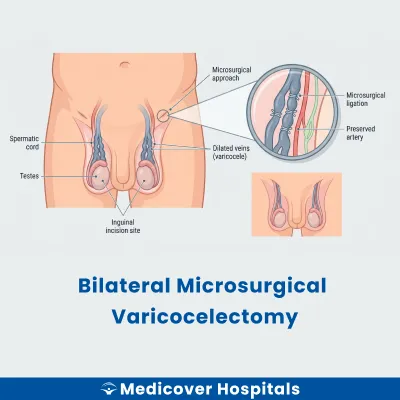
Bilateral Microsurgical Varicocelectomy is a surgical procedure to treat varicoceles in both testicles. Varicoceles are enlarged veins in the scrotum (the pouch of skin containing the testicles). This condition can affect blood flow and lead to discomfort or fertility issues. The surgery involves using a microscope to precisely tie off the affected veins, improving blood flow and reducing symptoms.
This surgery is needed when varicoceles cause pain, testicular atrophy (shrinkage), or infertility. If left untreated, varicoceles can lead to decreased sperm production and quality. Modern surgical approaches include microsurgical techniques, which offer better precision and recovery. These techniques help in reducing complications and improving outcomes. Early intervention can prevent long-term reproductive issues.
Bilateral Microsurgical Varicocelectomy Doctors Near You
Discover skilled urologists for bilateral microsurgical microsurgical varicocelectomy at Medicover Hospitals across India. Choose your city and book a consultation to address your health needs effectively.
Why Choose Medicover Hospitals for Bilateral Microsurgical Varicocelectomy?
Get a second opinion from trusted experts and makeconfident, informed decisions.
 Get Second Opinion
Complete Guide To Bilateral Microsurgical Varicocelectomy
Everything you need to know about the procedure, preparation, and recovery
Bilateral Microsurgical Varicocelectomy Surgery Indications
Doctors recommend bilateral microsurgical varicocelectomy when varicoceles affect both sides and cause significant symptoms or fertility issues. This procedure is often considered when non-surgical treatments do not provide relief.
Infertility
Patients may experience difficulty in conceiving due to reduced sperm quality or count. Doctors may find abnormal semen analysis results. Surgery is advised when lifestyle changes and medications do not improve fertility.
Scrotal Pain
Persistent or recurring pain in the scrotum can be a symptom. Physical examination may reveal enlarged veins. Surgery is considered when pain persists despite pain management and supportive measures.
Testicular Atrophy
Some patients notice a reduction in testicle size. Doctors may confirm this through physical examination and ultrasound. Surgery is recommended when atrophy progresses despite conservative management.
Visible Varicoceles
Patients might observe enlarged veins in the scrotum. Doctors confirm this through physical examination and Doppler ultrasound. Surgery is suggested when varicoceles are large and symptomatic.
Failed Conservative Treatment
When lifestyle modifications and medications fail to alleviate symptoms or improve test results, surgery becomes necessary. This is often the case when symptoms persist over time.
How to Prepare for Bilateral Microsurgical Varicocelectomy?
Proper preparation is crucial for a smooth Bilateral Microsurgical Varicocelectomy. It helps minimise risks and ensures a successful recovery.
- Medication Review: Stop NSAIDs, anticoagulants, and herbal supplements 7 days prior. Consult your doctor for guidance.
- Fasting Instructions: Fast for at least 8 hours before the surgery. This is essential for general anaesthesia.
- Pre-Surgery Hygiene: Take a shower using antibacterial soap on the day of the procedure to reduce infection risk.
- Comfortable Clothing: Wear loose, comfortable clothing on the day of surgery for easy dressing post-procedure.
- Transportation Arrangement: Arrange for someone to drive you home, as you will not be able to drive post-surgery.
- Medication List: Bring a list of your current medications with dosages to the hospital for reference.
- Smoking and Alcohol: Avoid smoking and alcohol for at least 48 hours before the surgery to aid recovery.
- Rest and Relaxation: Ensure you get adequate rest the night before to help your body prepare for the procedure.
Bilateral Microsurgical Varicocelectomy Surgery (Step-by-Step)
Overview: This procedure is performed by urologists. It typically lasts 2 to 3 hours. General anaesthesia is commonly used to ensure patient comfort.
- Preparation: The patient is positioned comfortably on the surgical table. Anaesthesia is administered to induce sleep and prevent pain.
- Incision: A small incision, about 1-2 cm, is made in the groin area. This allows access to the spermatic cord.
- Microscopic Dissection: Using a surgical microscope, the urologist carefully identifies and isolates the enlarged veins. Precision instruments like bipolar cautery are used to prevent damage to surrounding tissues.
- Vein Ligation: The identified varicose veins are tied off to stop abnormal blood flow. This helps alleviate pressure and improve circulation.
- Closure: The incision is closed with sutures. The area is then cleaned and dressed to promote healing.
- Recovery: The patient is moved to a recovery room. Vital signs are monitored as the anaesthesia wears off. Patients may experience mild discomfort, which is managed with medication.
Who Performs Bilateral Microsurgical Varicocelectomy Surgery?
This surgery is performed by urologists who specialise in male reproductive health. They have expertise in microsurgical techniques, ensuring precise handling of delicate structures during the procedure.
Recovery After Bilateral Microsurgical Varicocelectomy Surgery
Recovery from bilateral microsurgical varicocelectomy is generally smooth. Most patients experience minimal discomfort and can resume daily activities within a few weeks. However, following post-operative care instructions is crucial for optimal recovery.
Day 1-3:
- Rest is essential. Avoid strenuous activities.
- Keep the surgical area clean and dry.
- Consume light meals like curd, dal-rice, and soups to aid digestion.
Day 4-7:
- Gradually increase light activities as tolerated.
- Continue with a balanced diet including khichdi and moong dal.
- Avoid lifting heavy objects or engaging in vigorous exercise.
Day 8-14:
- Most patients can return to work or school, depending on comfort.
- Resume normal diet, but maintain hydration and fibre intake.
- Gentle walking is encouraged, but avoid high-impact sports.
Phase 3 (Week 3-4):
- Gradually return to regular exercise routines.
- Monitor for any unusual symptoms and maintain follow-up appointments.
When to Seek Urgent Help:
- Severe pain or swelling in the scrotal area.
- High fever or chills.
- Persistent nausea or vomiting.
- Signs of infection, such as redness or discharge from the incision site.
Benefits of Bilateral Microsurgical Varicocelectomy Surgery
Bilateral microsurgical varicocelectomy is a procedure aimed at treating varicoceles in both testicles, potentially improving fertility and reducing discomfort.
- Improved Fertility: This surgery can enhance sperm quality and count, which may boost fertility.
- Reduced Pain: Many patients experience relief from the discomfort associated with varicoceles.
- Minimally Invasive: The microsurgical approach involves smaller incisions, leading to quicker recovery.
- Lower Recurrence Rate: This method has a reduced likelihood of varicoceles returning compared to other techniques.
Risks and Complications of Bilateral Microsurgical Varicocelectomy Surgery
While generally safe, bilateral microsurgical varicocelectomy carries some risks, as with any surgical procedure.
Common Risks
- Swelling or bruising in the surgical area may occur post-surgery.
- Temporary discomfort or pain is possible during the recovery period.
Rare Risks
- Infection at the incision site, though uncommon, can occur.
- Hydrocele formation, an accumulation of fluid around the testicle, may develop.
- Injury to surrounding blood vessels or tissues, though infrequent, is a potential risk.
- Testicular atrophy, or shrinkage, is a very rare complication.
Cost of Bilateral Microsurgical Varicocelectomy Surgery
The cost of Bilateral Microsurgical Varicocelectomy Surgery at Medicover Hospitals ranges from ₹40,000 to ₹1,80,000. The price varies depending on the ward category chosen. We offer transparent pricing and support for insurance and TPA, including CGHS, ESI, and major TPAs. A cashless facility is available for your convenience. Please contact the hospital for the latest insurance panel details as these may change periodically.
Frequently Asked Questions
1. How much does Bilateral Microsurgical Varicocelectomy surgery cost at Medicover Hospitals?
The cost for Bilateral Microsurgical Varicocelectomy surgery ranges from ₹40,000 to ₹1,80,000 across Medicover Hospitals.
2. Is Bilateral Microsurgical Varicocelectomy surgery covered under health insurance at Medicover?
Yes, it is often covered by CGHS, ESI, and major TPAs with cashless options. Please contact the hospital for current panel details.
3. Will I experience scrotal swelling after varicocelectomy?
Scrotal swelling is a common temporary occurrence post-surgery. It usually subsides within a few weeks with proper care.
4. Can I resume gym workouts after varicocelectomy?
Avoid heavy lifting and strenuous exercise for at least 4 weeks post-surgery. Gradually resume activities as advised by your doctor.
5. Is there a risk of infertility after varicocelectomy?
Bilateral Microsurgical Varicocelectomy aims to improve fertility by correcting varicoceles. Discuss potential outcomes and concerns with your doctor.
6. What should I eat after varicocelectomy?
Consume a light diet including curd, dal-rice, and khichdi. Avoid spicy and heavy foods to aid recovery.
7. Can varicoceles recur after surgery?
Recurrence of varicoceles is rare but possible. Regular follow-ups can help monitor and address any issues early.


