 Call
Call Patient Reports
Best Bilateral Laparoscopic Orchidopexy Surgery Hospital
At Medicover Hospitals, our team of skilled urologists, holding qualifications like MS, DNB, and MCh, perform Bilateral Laparoscopic Orchidopexy using laparoscopic techniques. This minimally invasive approach ensures smaller incisions and reduced blood loss, leading to a shorter hospital stay for patients.
Expert Surgeons
Yearly Surgeries
Patient Satisfaction
What is Bilateral Laparoscopic Orchidopexy?
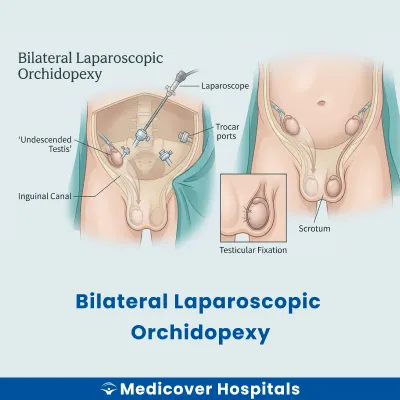
Bilateral Laparoscopic Orchidopexy is a minimally invasive surgical procedure. It is performed to reposition both undescended testicles (cryptorchidism) into the scrotum. The surgery involves small incisions and the use of a laparoscope, a thin tube with a camera, to guide the surgeon during the procedure. This approach reduces recovery time and minimises scarring.
This surgery is necessary when both testicles fail to descend naturally. If left untreated, undescended testicles can lead to infertility and increase the risk of testicular cancer. Bilateral Laparoscopic Orchidopexy is a modern surgical technique that offers a less invasive alternative to traditional open surgery. Early intervention is crucial to prevent future complications and ensure normal testicular function.
Bilateral Laparoscopic Orchidopexy Doctors Near You
Find experienced urologists for bilateral laparoscopic orchidopexy at Medicover Hospitals across India. Choose your city and book a consultation to discuss your treatment options today.
Why Choose Medicover Hospitals for Bilateral Laparoscopic Orchidopexy?
Get a second opinion from trusted experts and makeconfident, informed decisions.
 Get Second Opinion
Complete Guide To Bilateral Laparoscopic Orchidopexy
Everything you need to know about the procedure, preparation, and recovery
Bilateral Laparoscopic Orchidopexy Surgery Indications
Bilateral Laparoscopic Orchidopexy is recommended when both testicles have not descended into the scrotum. This procedure is often advised by urologists when non-surgical treatments do not yield results.
Undescended Testicles
Patients may notice an absence of testicles in the scrotum. On examination, the testicles are found in the abdomen or groin. Surgery is considered when hormonal treatments fail to bring the testicles down.
Retractile Testicles
Some children experience testicles that move back and forth between the scrotum and groin. Doctors may find this during a physical exam. Surgery is suggested if the condition persists beyond puberty.
Testicular Torsion Risk
Patients might experience intermittent groin pain. Imaging may reveal abnormal testicular positioning, increasing torsion risk. Surgery is recommended when repositioning does not prevent recurrence.
Inguinal Hernia
Swelling or a bulge in the groin may be noticed. An examination may show a hernia associated with undescended testicles. If hernia repair alone is insufficient, orchidopexy is advised.
Infertility Concerns
Older patients might face fertility issues. Tests may show impaired sperm production linked to undescended testicles. Surgery is considered when fertility treatments are ineffective.
How to Prepare for Bilateral Laparoscopic Orchidopexy?
Proper preparation for bilateral laparoscopic orchidopexy ensures a smoother surgery and recovery. It helps in reducing complications and aids in a quicker return to normal activities.
- Medication Review: Stop NSAIDs, anticoagulants, and herbal supplements as advised by your doctor.
- Fasting Guidelines: Do not eat or drink anything for at least 6-8 hours before the surgery due to general anaesthesia.
- Pre-Surgery Tests: Complete all required blood tests and imaging studies as instructed.
- Clothing: Wear loose, comfortable clothing on the day of the surgery for easy changing.
- Transportation: Arrange for someone to drive you home post-surgery as you may feel drowsy.
- Medication List: Bring a list of all medications you are currently taking, including dosages.
- Hygiene: Bathe with an antibacterial soap the night before or the morning of the surgery.
- Pre-Op Instructions: Follow any additional instructions provided by your healthcare team.
Bilateral Laparoscopic Orchidopexy Surgery (Step-by-Step)
This procedure is performed by urology doctors. It typically lasts 1-2 hours and is done under general anaesthesia.
- Preparation: The patient is given general anaesthesia to ensure comfort and unconsciousness during the surgery.
- Port Placement: Small incisions, about 1-2 cm, are made in the abdomen. Trocars are inserted through these incisions to provide access for surgical instruments.
- Insertion of Laparoscope: A laparoscope, a thin tube with a camera, is inserted through one of the trocars. This provides a clear view of the internal organs on a monitor.
- Mobilisation of Testes: The surgeon uses instruments like a harmonic scalpel and bipolar cautery to carefully free the undescended testes from surrounding tissues.
- Creation of Scrotal Pouches: Small scrotal incisions are made to create pouches. The testes are gently pulled down into these pouches.
- Fixation of Testes: The testes are secured in the scrotal pouches using sutures to prevent retraction.
- Closure: The incisions are closed with sutures or surgical glue. A dressing is applied to protect the area.
Who Performs Bilateral Laparoscopic Orchidopexy Surgery?
This surgery is performed by urologists who specialise in the urinary tract and male reproductive organs. They are trained to handle delicate procedures involving the testes and surrounding structures.
Recovery After Bilateral Laparoscopic Orchidopexy Surgery
Recovery from bilateral laparoscopic orchidopexy surgery is generally smooth. Most children can return to their usual activities within a few weeks. However, it's important to follow the doctor's instructions for a safe and speedy recovery.
Day 1-3:
- Rest is crucial. Limit physical activity to avoid strain.
- Diet should be light. Include curd, dal-rice, and soups to aid digestion.
- Pain and swelling around the surgical site are normal. Follow prescribed pain management.
Day 4-7:
- Gradually increase light activities as tolerated.
- Continue with a soft diet. Khichdi and moong dal are good options.
- Monitor the surgical site for any unusual changes.
Week 2:
- Most children can resume school but avoid physical education classes.
- Normal diet can be resumed, but ensure it is balanced and nutritious.
- Follow up with the doctor for a post-operative check-up.
Phase 3 (Week 3-4):
- Gradual return to normal activities, including light sports.
- Ensure the child avoids heavy lifting or strenuous activities.
- Continue monitoring for any signs of complications.
When to Seek Urgent Help
- Fever above 101?F (38.3?C) or persistent fever.
- Excessive swelling, redness, or discharge from the surgical site.
- Severe pain not relieved by medication.
- Difficulty urinating or any signs of infection.
If any of these symptoms occur, contact your healthcare provider immediately.
Benefits of Bilateral Laparoscopic Orchidopexy Surgery
Bilateral laparoscopic orchidopexy is a minimally invasive procedure to correct undescended testes in children. It offers several advantages.
- Minimally Invasive: Smaller incisions lead to less pain and quicker recovery.
- Improved Fertility Potential: Correcting undescended testes can enhance future fertility prospects.
- Reduced Risk of Testicular Cancer: Proper placement of testes may lower cancer risk later in life.
- Cosmetic Benefits: Smaller scars and better cosmetic outcomes compared to open surgery.
Risks and Complications of Bilateral Laparoscopic Orchidopexy Surgery
While generally safe, bilateral laparoscopic orchidopexy carries some risks and potential complications.
- Common: Post-operative pain and swelling at the incision site.
- Common: Risk of infection at the incision site.
- Rare: Injury to surrounding tissues or organs during the procedure.
- Rare: Testicular atrophy due to compromised blood supply.
- Rare: Recurrence of undescended testes requiring further intervention.
Cost of Bilateral Laparoscopic Orchidopexy Surgery
The cost of Bilateral Laparoscopic Orchidopexy Surgery across Medicover Hospitals ranges from Rs.38,240 to Rs.54,340. The price varies depending on the ward category chosen, such as day care, general, or private rooms.
We offer transparent pricing, and support for insurance and TPA services, including CGHS, ESI, and major TPAs. A cashless facility is also available for your convenience. Please contact the hospital for the latest insurance panel details as these may change periodically.
Frequently Asked Questions
1. How much does Bilateral Laparoscopic Orchidopexy surgery cost at Medicover Hospitals?
The cost ranges from Rs.38,240 to Rs.54,340 across Medicover Hospitals, depending on the type of room and care required.
2. Is Bilateral Laparoscopic Orchidopexy surgery covered under health insurance at Medicover?
Bilateral Laparoscopic Orchidopexy may be covered by CGHS, ESI, and major TPAs. Please contact the hospital for current panel details.
3. Will my child experience pain after orchidopexy?
Mild discomfort is common after Bilateral Laparoscopic Orchidopexy. Pain relief medication will be provided to manage any discomfort.
4. Can my child resume sports after orchidopexy?
Your child should avoid sports for at least 4 weeks post-surgery. Consult your doctor for a tailored recovery plan.
5. Is there a risk of infertility after orchidopexy?
Orchidopexy aims to improve fertility chances by positioning the testicles correctly. Early intervention is crucial for better outcomes.
6. Will my child need a special diet post-orchidopexy?
A light diet including curd, dal-rice, and khichdi is recommended post-surgery. Avoid spicy and heavy foods for a few days.
7. Can undescended testicles reoccur after orchidopexy?
Once corrected, testicles usually remain in place after orchidopexy. Regular follow-ups are essential to monitor the condition.
8. What is the best age for orchiopexy?
The ideal age for Orchiopexy is between 6 to 18 months of age. Early surgery helps improve fertility potential and reduces the risk of complications.
9. Can a testicle grow after orchiopexy?
Yes, the testicle can continue to grow after Orchiopexy, especially if the surgery is done early. However, growth may be slightly reduced compared to a normal testicle in some cases.


