 Call
Call Patient Reports
Bidirectional Glenn Procedure Surgery by Expert Ctvs Cardiothoracic And Vascular Surgery
The Bidirectional Glenn procedure at Medicover Hospitals is performed using an open surgical approach by our team of specialists with qualifications such as MS, MCh, and DNB in Cardiothoracic and Vascular Surgery. This procedure often results in reduced blood loss, contributing to a smoother recovery.
Expert Surgeons
Yearly Surgeries
Patient Satisfaction
What is Bidirectional Glenn Procedure?
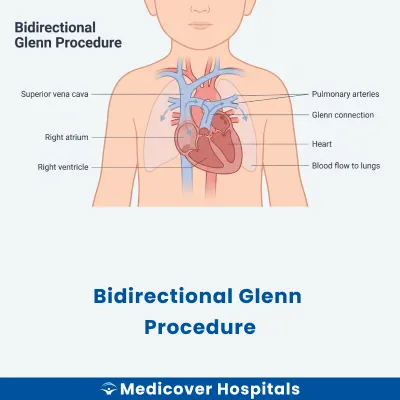
The Bidirectional Glenn procedure is a type of heart surgery. It involves connecting the superior vena cava (a large vein that carries blood from the upper body) to the right pulmonary artery. This helps improve blood flow to the lungs. It is often a part of staged surgeries for children with congenital heart defects, particularly those affecting the heart's ventricles.
This surgery is needed for conditions like single ventricle defects. These defects prevent the heart from pumping blood efficiently. If left untreated, it can lead to heart failure or other complications. The Bidirectional Glenn procedure is usually performed using modern surgical techniques such as minimally invasive surgery. These approaches aim to reduce recovery time and improve outcomes. Always consult a specialist for detailed advice.
Bidirectional Glenn Procedure Doctors Near You
Discover skilled CTVS specialists for the Bidirectional Glenn procedure at Medicover Hospitals across India. Choose your city and book a consultation to explore your treatment options today.
Why Choose Medicover Hospitals for Bidirectional Glenn Procedure?
Get a second opinion from trusted experts and makeconfident, informed decisions.
 Get Second Opinion
Complete Guide To Bidirectional Glenn Procedure
Everything you need to know about the procedure, preparation, and recovery
Bidirectional Glenn procedure Surgery Indications
The Bidirectional Glenn procedure is often recommended for patients with complex congenital heart defects. It is typically considered when there is a need to improve blood flow from the upper body to the lungs.
Single Ventricle Physiology
Patients with single ventricle physiology may experience blueness or low oxygen levels. Doctors may find abnormal heart structures on imaging tests. When medication and other treatments do not improve oxygenation, surgery is considered.
Tricuspid Atresia
In tricuspid atresia, patients often have difficulty breathing and fatigue. Echocardiograms may show a missing or blocked tricuspid valve. When these symptoms persist despite medical management, the Bidirectional Glenn procedure may be advised.
Hypoplastic Left Heart Syndrome
Patients with this syndrome may present with poor feeding and rapid breathing. Diagnostic tests can reveal underdeveloped left heart structures. Surgery becomes necessary when these symptoms are not manageable with conservative treatments.
Double Outlet Right Ventricle
Symptoms like cyanosis and heart murmurs are common in this condition. Imaging may show both major arteries arising from the right ventricle. When these findings lead to significant symptoms, surgical intervention is needed.
Pulmonary Atresia
Patients might experience severe cyanosis and breathlessness. Tests often reveal a blocked pulmonary valve. When medication fails to alleviate symptoms, the Bidirectional Glenn procedure is considered.
How to Prepare for Bidirectional Glenn procedure?
Preparation is crucial for the Bidirectional Glenn procedure to ensure a smooth surgery and recovery. Proper preparation can help reduce risks and improve outcomes.
- Medication Review: Consult your doctor about stopping NSAIDs, anticoagulants, and herbal supplements at least a week before surgery.
- Fasting Guidelines: Do not eat or drink anything for at least 6-8 hours before the procedure to ensure safety during anaesthesia.
- Pre-Surgical Tests: Complete all required blood tests, imaging, and other evaluations as instructed by your healthcare provider.
- Clothing: Wear loose, comfortable clothing on the day of the surgery for ease of changing and comfort post-surgery.
- Transportation: Arrange for someone to drive you home after the procedure, as you will not be able to drive yourself.
- Medication List: Bring a list of all medications you are currently taking, including dosages, for the medical team's reference.
- Hydration: Stay well-hydrated in the days leading up to the surgery, unless otherwise directed by your doctor.
- Emotional Preparation: Discuss any concerns with your doctor to alleviate anxiety and understand the procedure better.
Bidirectional Glenn procedure Surgery (Step-by-Step)
Overview: Performed by CTVS (Cardiothoracic and Vascular Surgery) specialists, this procedure typically lasts 3-4 hours under general anaesthesia.
- Preparation: The patient is placed under general anaesthesia. Vital signs are monitored continuously. The chest area is cleaned and sterilised.
- Incision: A midline incision of about 10-15 cm is made on the chest to access the heart. The sternum is carefully divided using a sternal saw.
- Exposure: The heart and major blood vessels are exposed. Surgical retractors are used to hold the chest open, providing a clear view for the surgeon.
- Connection: The superior vena cava (SVC) is disconnected from the heart. It is then connected to the right pulmonary artery using sutures. This allows blood to flow directly to the lungs for oxygenation.
- Closure: After ensuring proper blood flow, the incision is closed with sutures. The sternum is wired back together, and the skin is stitched or stapled.
- Recovery: The patient is moved to the ICU for monitoring. Pain management and ventilation support are provided as needed.
Who Performs Bidirectional Glenn procedure Surgery?
This surgery is performed by cardiothoracic and vascular surgeons. They have specialised training in heart and blood vessel surgeries. Their expertise ensures the procedure is conducted with precision. Please contact the hospital for current details as insurance panels may change.
Recovery After Bidirectional Glenn procedure Surgery
The recovery period after a Bidirectional Glenn procedure is crucial for healing and ensuring optimal outcomes. Patients can expect a gradual return to normal activities, with careful monitoring and follow-up care.
Day 1-3:
- Hospital stay is common. Medical staff will monitor vital signs and manage pain.
- Fluid intake is encouraged. Light meals like soups and moong dal can be introduced.
Day 4-7:
- Discharge from the hospital may occur if stable. Continue with light activities at home.
- Soft foods like curd, dal-rice, and khichdi are recommended to aid digestion.
Week 2-4:
- Gradual increase in physical activity. Avoid strenuous activities.
- Regular follow-up appointments to monitor recovery progress.
- Return to school or work may be considered based on individual recovery and doctor's advice.
Month 1-3:
- Most patients can resume normal activities, but heavy lifting and intense exercise should still be avoided.
- Continue with a balanced diet, including Indian staples like dal and rice, to maintain energy levels.
When to Seek Urgent Help:
- Signs of infection such as fever or redness around the incision site.
- Difficulty breathing or sudden chest pain.
- Unusual swelling or persistent vomiting.
Always follow your healthcare provider's advice and attend scheduled follow-ups. For any concerns, contact your healthcare team promptly.
Benefits of Bidirectional Glenn procedure Surgery
The Bidirectional Glenn procedure is a crucial surgery for children with certain congenital heart defects. It helps improve blood flow and oxygenation.
- Improved Oxygenation: Enhances oxygen levels in the blood by directing venous blood to the lungs.
- Reduced Heart Workload: Decreases the workload on the heart by bypassing the right ventricle.
- Better Growth and Development: Supports normal growth and development by improving oxygen delivery to the body.
- Preparation for Future Surgery: Acts as a step towards more complex surgeries like the Fontan procedure.
Risks and Complications of Bidirectional Glenn procedure Surgery
While the Bidirectional Glenn procedure is generally safe, like any surgery, it carries certain risks and potential complications.
Common Risks
- Pleural effusion, which is fluid accumulation around the lungs.
- Arrhythmias or irregular heartbeats may occur post-surgery.
Rare Risks
- Superior vena cava syndrome, causing swelling and discomfort.
- Thrombosis or blood clots in the veins.
- Neurological complications due to altered blood flow.
- Infection at the surgical site.
Cost of Bidirectional Glenn procedure Surgery
The cost of Bidirectional Glenn procedure surgery varies fromINR 1,60,000 to INR 6,95,000, based on several factors, including the surgical approach, duration of hospital stay, room category, diagnostics, and post-operative care.
At Medicover Hospitals, we ensure transparent pricing for all procedures. We offer insurance and TPA support, accepting CGHS, ESI, and major TPAs. A cashless facility is available for added convenience. Please contact the hospital for the latest insurance panel details as these may change periodically.
Frequently Asked Questions
1. How much does Bidirectional Glenn procedure surgery cost at Medicover Hospitals?
The cost of the Bidirectional Glenn procedure varies from INR 1,60,000 to INR 6,95,
2. Please contact Medicover Hospitals for detailed pricing information. 2. Is Bidirectional Glenn procedure surgery covered under health insurance at Medicover?
Many insurance plans, including CGHS and ESI, may cover this procedure. Please contact the hospital for current panel details.
3. What organ is involved in the Bidirectional Glenn procedure?
The Bidirectional Glenn procedure involves the heart. It specifically connects the superior vena cava to the pulmonary arteries.
4. What is a common complication after the Bidirectional Glenn procedure?
A common complication is pleural effusion, where fluid accumulates around the lungs. This may require additional medical intervention.
5. How does the Bidirectional Glenn procedure affect physical activity?
Post-surgery, patients may need to limit strenuous activities. Gradual increase in activity is advised under medical supervision.
6. What dietary changes are needed after the Bidirectional Glenn procedure?
A balanced diet with foods like dal-rice and curd is recommended. Avoid high-sodium foods to support heart health.
7. How long is the hospital stay after the Bidirectional Glenn procedure?
Patients typically stay in the hospital for about a week. This allows for close monitoring and recovery support.


