 Call
Call Patient Reports
Best Hospital for Atrial Septal Defect Device Closure Procedure with Advanced Cardiology Care
Atrial Septal Defect Device Closure at Medicover Hospitals is performed using a minimally invasive endoscopic approach. Our team of DM and DNB qualified cardiologists specialise in treating cardiac birth defects. This procedure typically results in shorter hospital stays and smaller incisions for patients across India.
Expert Specialists
Yearly Procedures
Patient Satisfaction
What is Atrial Septal Defect Device Closure?
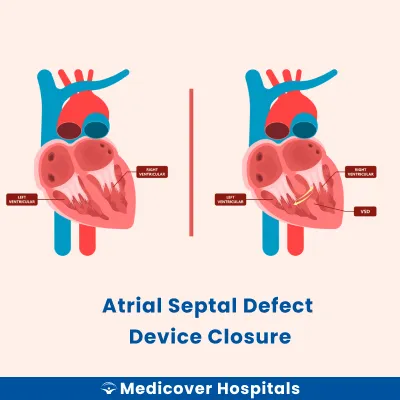
Atrial Septal Defect Device Closure is a medical procedure to correct a hole in the heart's septum (the wall between the heart's upper chambers). This defect allows blood to flow between the left and right atria, which can lead to complications. The procedure involves placing a device to close this hole, restoring normal blood flow.
This surgery is needed when the atrial septal defect (ASD) causes symptoms like shortness of breath or heart palpitations. If left untreated, it can lead to heart failure or stroke. Modern approaches include minimally invasive techniques, such as catheter-based closure, which reduces recovery time and complications. Early intervention can prevent long-term health issues.
Atrial Septal Defect Device Closure Doctors Near You
Find experienced cardiologists for atrial septal defect device closure at Medicover Hospitals across India. Choose your city and book a consultation to discuss your treatment options today.
Why Choose Medicover Hospitals for Atrial Septal Defect Device Closure?
Get a second opinion from trusted experts and makeconfident, informed decisions.
 Get Second Opinion
Complete Guide To Atrial Septal Defect Device Closure
Everything you need to know about the procedure, preparation, and recovery
Atrial Septal Defect Device Closure procedure Indications
Doctors recommend Atrial Septal Defect (ASD) Device Closure when the defect causes significant symptoms or complications. This procedure is often suggested when non-surgical methods are insufficient to manage the condition.
Significant Right Heart Enlargement
Patients may experience fatigue or shortness of breath. Doctors find enlarged right heart chambers on imaging tests. When these changes persist despite medical management, device closure is considered.
Increased Pulmonary Blood Flow
Symptoms include frequent respiratory infections and difficulty breathing. Imaging shows increased blood flow to the lungs. When medications fail to reduce symptoms, the procedure is recommended.
Paradoxical Embolism
Patients might have unexplained strokes or transient ischemic attacks. Doctors detect an ASD with right-to-left shunt on heart ultrasound. Device closure is advised to prevent further embolic events.
Exercise Intolerance
Patients report fatigue and breathlessness during physical activity. Stress tests reveal reduced exercise capacity. When lifestyle changes and medications do not improve symptoms, closure is suggested.
Heart Failure Symptoms
Signs include swelling, fatigue, and breathlessness. Echocardiograms show heart strain due to ASD. When conservative treatments do not alleviate symptoms, device closure is considered.
How to Prepare for Atrial Septal Defect Device Closure?
Proper preparation is crucial for a successful Atrial Septal Defect Device Closure. It helps minimise risks and ensures a smooth procedure and recovery.
- Medication Review: Stop NSAIDs, anticoagulants, and herbal supplements as advised by your doctor.
- Fasting: Do not eat or drink anything for at least 6-8 hours before the procedure.
- Pre-Procedure Tests: Complete all required blood tests, ECG, and imaging studies as scheduled.
- Clothing: Wear loose, comfortable clothing on the day of the procedure.
- Transportation: Arrange for someone to drive you home after the procedure.
- Medication List: Bring a list of your current medications, including dosages, to the hospital.
- Pre-Admission: Complete any necessary hospital admission forms in advance.
- Health Status: Inform your doctor of any recent illnesses or changes in health.
Atrial Septal Defect Device Closure procedure (Step-by-Step)
Overview: This procedure is performed by cardiologists. It typically lasts 1-2 hours and is done under general anaesthesia.
- Preparation: The patient is positioned on the operating table. General anaesthesia is administered to ensure comfort and immobility.
- Access: A small incision (1-2 cm) is made in the groin area. A catheter is inserted into a blood vessel using a guide wire.
- Catheter Navigation: The catheter, equipped with a balloon and the closure device, is carefully guided through the blood vessels to the heart using fluoroscopy for real-time imaging.
- Device Deployment: Once the catheter reaches the atrial septal defect, the closure device is deployed. The device expands to cover the defect, sealing the hole.
- Verification: The position and stability of the device are checked using echocardiography. Adjustments are made if necessary to ensure proper placement.
- Catheter Removal: The catheter is gently withdrawn. The incision site is closed with sutures or adhesive strips.
- Recovery: The patient is moved to a recovery area. Vital signs are monitored as the anaesthesia wears off. Most patients can expect to stay in the hospital for observation.
Who Performs Atrial Septal Defect Device Closure procedure?
This procedure is performed by interventional cardiologists. They specialise in minimally invasive techniques for heart conditions. Their expertise ensures precise device placement and successful outcomes.
Recovery After Atrial Septal Defect Device Closure procedure
Recovery from an Atrial Septal Defect (ASD) Device Closure is generally smooth. Most patients return to regular activities within a few weeks. It's important to follow your doctor's advice and attend follow-up appointments for optimal recovery.
Day 1-3:
- Rest is crucial. Avoid strenuous activities.
- Expect mild discomfort at the catheter insertion site.
- Stick to light meals. Opt for soft foods like curd, dal-rice, and soups.
Day 4-7:
- Gradually increase light activities like walking.
- Continue with a balanced diet. Include moong dal and khichdi for easy digestion.
- Avoid lifting heavy objects.
Week 2-4:
- Most patients can resume work or school, provided the environment is not physically demanding.
- Continue eating a heart-healthy diet. Incorporate fruits, vegetables, and whole grains.
- Follow up with your doctor to monitor recovery progress.
When to Seek Urgent Help
- Severe chest pain or shortness of breath.
- Fever or signs of infection at the catheter site.
- Irregular heartbeats or palpitations.
- Sudden swelling in the legs or feet.
If you experience any of these symptoms, contact us immediately.
Benefits of Atrial Septal Defect Device Closure procedure
Atrial Septal Defect (ASD) Device Closure is a minimally invasive procedure to correct heart defects.
- Improved Heart Function: Helps restore normal blood flow, reducing strain on the heart.
- Quick Recovery: Being minimally invasive, it typically allows for a faster recovery compared to open-heart surgery.
- Reduced Symptoms: Alleviates symptoms like shortness of breath and fatigue, improving quality of life.
- Lower Risk of Complications: Minimises the risk of complications associated with untreated ASD, such as arrhythmias.
Risks and Complications of Atrial Septal Defect Device Closure procedure
While generally safe, the ASD Device Closure procedure carries certain risks and potential complications.
- Minor bleeding or bruising at the catheter insertion site.
- Temporary arrhythmias may occur post-procedure.
- Device migration or malpositioning, requiring further intervention.
- Infection at the catheter site or within the heart.
- Allergic reaction to the materials used in the device or contrast dye.
- Blood clots forming on the device, potentially leading to stroke.
What is the Cost of Atrial Septal Defect Device Closure Procedure?
The cost of the Atrial Septal Defect Device Closure procedure at Medicover Hospitals ranges from Rs. 70,000 to Rs. 282,000. The price varies based on the ward category chosen, such as day care, general, private, or suite options. Medicover Hospitals offers transparent pricing, and supports insurance and TPA services, including CGHS, ESI, and major TPAs. A cashless facility is also available for your convenience. Please contact the hospital for the latest insurance panel details as these may change periodically.
Frequently Asked Questions
1. How much does Atrial Septal Defect Device Closure procedure cost at Medicover Hospitals?
The cost for Atrial Septal Defect Device Closure ranges from Rs. 70,000 to Rs. 282,000 across Medicover Hospitals, depending on the room type and care level.
2. Is Atrial Septal Defect Device Closure procedure covered under health insurance at Medicover?
Yes, it is often covered by CGHS, ESI, and major TPAs with cashless options. Please contact the hospital for current panel details.
3. Will I feel breathless after ASD device closure?
Some patients may experience mild breathlessness initially. It usually resolves as the heart adjusts over a few weeks.
4. Can I exercise after ASD device closure?
Light activities are recommended for the first month. Gradually increase intensity under medical guidance after recovery.
5. Will I need lifelong medication after ASD closure?
Most patients do not require lifelong medication. Follow-up visits will determine if any medication is necessary.
6. Can ASD device closure affect my heart rhythm?
There is a small risk of arrhythmias post-procedure. Regular monitoring helps manage any such complications effectively.
7. What diet should I follow after ASD device closure?
Consume soft foods like curd, dal-rice, and khichdi. Avoid spicy and oily foods for the first week to aid recovery.


