 Call
Call Patient Reports
Best Abdominal Skin Flaps Surgery Hospital with Advanced Care
Abdominal skin flaps at Medicover Hospitals are performed using the open surgical approach. Our team includes specialists with qualifications like DNB and MD, ensuring expert care for critical conditions. This method often results in reduced blood loss, contributing to a smoother recovery process.
Expert Surgeons
Yearly Surgeries
Patient Satisfaction
What is Abdominal Skin Flaps?
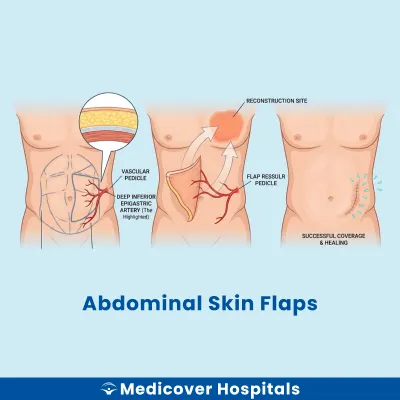
Abdominal skin flaps involve the surgical procedure of transferring skin and underlying tissue from the abdomen to another area of the body. This technique is often used in reconstructive surgeries. The abdominal skin (epidermis and dermis) and subcutaneous tissue are mobilised to cover defects or wounds elsewhere.
This surgery is needed for patients with large wounds, burns, or after mastectomy (breast removal). It helps in restoring the form and function of the affected area. If untreated, these conditions can lead to infection or impaired healing. Modern surgical approaches include pedicled flaps and free flap techniques. These methods ensure better blood supply and integration with the recipient site.
Abdominal Skin Flaps Doctors Near You
Discover Plastic Surgeons for abdominal skin flaps at Medicover Hospitals across India. Choose your city and book a consultation to receive expert care tailored to your needs.
Why Choose Medicover Hospitals for Abdominal Skin Flaps?
Get a second opinion from trusted experts and makeconfident, informed decisions.
 Get Second Opinion
Complete Guide To Abdominal Skin Flaps
Everything you need to know about the procedure, preparation, and recovery
Abdominal skin flaps Surgery Indications
Abdominal skin flaps surgery is often recommended when there is a need to cover large defects or wounds in the abdominal area. This procedure is considered when other treatments fail to provide adequate healing or coverage.
Complex Abdominal Wounds
Patients may experience persistent pain, infection, or non-healing wounds in the abdominal region. Doctors may find extensive tissue loss or necrosis during examination. When wound care and antibiotics do not resolve the issue, surgery is considered.
Abdominal Tumour Resection
After tumour removal, patients might have significant tissue loss leading to functional or cosmetic concerns. Imaging may show large defects post-resection. Surgery is advised when reconstruction with skin flaps is necessary for recovery.
Traumatic Abdominal Injuries
Severe trauma can result in deep wounds or tissue avulsion. Patients may have visible tissue loss and bleeding. When primary closure is not possible, and healing stalls, skin flap surgery is needed.
Infected Surgical Sites
Post-surgical infections can lead to wound breakdown and pus formation. Patients may report pain and fever. If debridement and antibiotics fail, skin flap surgery is required to close the wound.
Chronic Ulcers
Patients with chronic ulcers may experience persistent pain and discharge. Examination shows non-healing ulcers despite conservative care. Surgery is considered when ulcers do not respond to other treatments.
How to Prepare for Abdominal Skin Flaps?
Proper preparation is crucial for a smooth abdominal skin flap surgery and recovery. It helps minimise risks and ensures optimal healing.
- Medication Review: Stop NSAIDs, anticoagulants, and herbal supplements at least one week before surgery.
- Fasting Guidelines: Do not eat or drink anything for at least 8 hours before the procedure.
- Pre-Surgery Hygiene: Shower with antiseptic soap the night before and the morning of the surgery.
- Comfortable Clothing: Wear loose, comfortable clothing on the day of surgery for easy dressing post-operation.
- Transportation: Arrange for someone to drive you home after the procedure, as you will not be able to drive yourself.
- Medication List: Bring a list of all medications you take, including dosages, to the hospital.
- Smoking Cessation: Stop smoking at least two weeks before surgery to promote better healing.
- Home Preparation: Set up a comfortable recovery area at home with necessary supplies within easy reach.
Abdominal skin flaps Surgery (Step-by-Step)
Abdominal skin flaps surgery is performed by critical-care specialists. The procedure typically lasts 2-4 hours and is done under general anaesthesia.
- Preparation: The patient is placed under general anaesthesia. The surgical area is sterilised to prevent infection.
- Incision: A horizontal incision, usually 10-15 cm, is made on the lower abdomen. This provides access to the underlying tissues.
- Flap Elevation: Using a scalpel and bipolar cautery, the surgeon carefully elevates the skin flap. This involves separating the skin and fat from the underlying muscles.
- Positioning: The skin flap is positioned to cover the desired area. This may involve rotating or moving the flap to ensure proper coverage.
- Securing the Flap: The flap is secured in place using sutures. The surgeon ensures that the blood supply to the flap is intact.
- Closure: The incision is closed with sutures or staples. A drain may be placed to remove excess fluid.
- Recovery: The patient is monitored in the recovery room. Pain management and wound care instructions are provided.
Who Performs Abdominal skin flaps Surgery?
This surgery is performed by plastic surgeons with expertise in reconstructive procedures. They have specialised training in handling complex tissue rearrangements and ensuring optimal healing.
Recovery After Abdominal Skin Flaps Surgery
Recovery from abdominal skin flaps surgery involves careful monitoring and gradual return to normal activities. Patients can expect some discomfort and swelling initially, but these should improve over time.
Day 1-3:
- Rest is crucial. Avoid any strenuous activities.
- Follow the prescribed pain management plan.
- Stick to a light diet. Opt for easily digestible foods like curd, dal-rice, and soups.
Day 4-7:
- Swelling and bruising should start to decrease.
- Continue with a soft diet. Include khichdi and moong dal for protein and energy.
- Gentle walking is encouraged to promote circulation.
Day 8-14:
- Most patients can resume light activities.
- Gradually introduce regular foods, but avoid spicy or heavy meals.
- Stitches or staples may be removed, depending on healing.
Phase 3 (Week 3-6):
- Return to work or school is possible, depending on the nature of the job.
- Avoid heavy lifting or intense exercise until cleared by your doctor.
- Focus on balanced meals to support healing.
When to Seek Urgent Help
- Severe pain not relieved by medication.
- Signs of infection: fever, redness, or pus at the incision site.
- Sudden swelling or bleeding.
If any of these symptoms occur, contact your healthcare provider immediately.
Benefits of Abdominal skin flaps Surgery
Abdominal skin flap surgery is a reconstructive procedure often used in breast reconstruction and other surgeries. It offers several benefits:
- Natural Appearance: Utilises the patient's own tissue for a more natural look and feel.
- Improved Blood Supply: Enhances healing due to better blood circulation in the transplanted tissue.
- Reduced Rejection Risk: Lower risk of rejection as the tissue is from the patient's own body.
- Simultaneous Abdominoplasty: Can result in a flatter abdomen as excess skin and fat are removed.
Risks and Complications of Abdominal skin flaps Surgery
While generally safe, abdominal skin flap surgery carries potential risks and complications. It's important to be aware of them:
- Common: Infection at the surgical site.
- Common: Scarring, which may be noticeable.
- Rare: Flap failure due to inadequate blood supply.
- Rare: Blood clots forming in the legs or lungs.
- Rare: Abdominal wall weakness or hernia.
- Rare: Fat necrosis, where fat tissue dies and forms lumps.
Cost of Abdominal skin flaps Surgery
The cost of abdominal skin flaps surgery varies from Rs.100000 to Rs.350000 based on factors such as the surgical approach, duration of hospital stay, room category, required diagnostics, and post-operative care.
At Medicover Hospitals, we ensure transparent pricing for all procedures. We offer support for insurance and TPA, including CGHS, ESI, and major TPAs. A cashless facility is also available for your convenience. Please contact the hospital for the latest insurance panel details as these may change periodically.
Frequently Asked Questions
1. How much does Abdominal skin flaps surgery cost at Medicover Hospitals?
The cost of Abdominal skin flaps surgery varies from Rs.100000 to Rs.
2. Please contact Medicover Hospitals for detailed pricing information. 2. Is Abdominal skin flaps surgery covered under health insurance at Medicover?
Abdominal skin flaps surgery may be covered by CGHS, ESI, and major TPAs. Please contact the hospital for current panel details.
3. Will I have visible scars after the surgery?
Abdominal skin flaps surgery may leave scars, but they usually fade over time. Proper care and follow-up can help minimize their appearance.
4. Can I wear tight clothing after the surgery?
It's advisable to avoid tight clothing for a few weeks post-surgery. This helps reduce pressure on the surgical site and aids healing.
5. Will I experience numbness in the abdominal area?
Temporary numbness in the abdominal area is common after the surgery. Sensation typically returns gradually over a few months.
6. Can I resume exercise immediately after surgery?
Strenuous exercise should be avoided for at least six weeks post-surgery. Light activities can be resumed earlier as advised by your doctor.
7. What foods should I avoid post-surgery?
Avoid spicy and oily foods post-surgery. Opt for easily digestible meals like dal-rice, khichdi, and curd for optimal recovery.
8. Is flap surgery a major surgery?
Yes, flap surgery is generally considered a major procedure because it involves transferring tissue (skin, muscle, or bone) from one part of the body to another. It is commonly used in reconstruction after trauma, burns, or cancer surgery.
9. What are the disadvantages of flap surgery?
Disadvantages of flap surgery include a longer surgery time, risk of infection, flap failure (poor blood supply), and scarring at both donor and recipient sites. Recovery can also be longer compared to simpler procedures.
10. What is the success rate of flap surgery?
The success rate of flap surgery is generally high, often around 90–95% depending on the type of flap and patient condition. Outcomes improve with experienced surgical teams and proper postoperative care.


