 Call
Call Patient Reports
2D External Beam Radiation Therapy Procedure at Medicover Hospitals
At Medicover Hospitals, 2D External Beam Radiation Therapy is performed using open surgical techniques by skilled oncologists with qualifications such as MS, DNB, and MCh. This approach targets various cancers, ensuring precise treatment. Patients benefit from reduced recovery times and improved clinical outcomes.
Expert Specialists
Yearly Treatments
Patient Satisfaction
What is 2D External Beam Radiation Therapy?
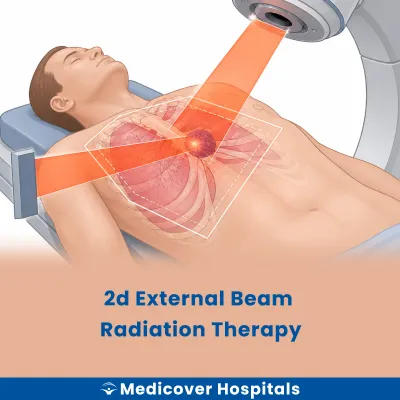
2D External Beam Radiation Therapy is a type of radiation treatment used to target cancerous cells. It involves directing radiation beams from outside the body to a specific area, such as the prostate, breast, or head and neck. The "2D" refers to the two-dimensional planning used to guide the radiation beams. This method helps in focusing the treatment on the tumour while sparing surrounding healthy tissues.
This therapy is essential for treating various cancers. It is often used when surgery is not an option. Conditions like prostate cancer, breast cancer, and head and neck cancers may require this treatment. If left untreated, these cancers can spread, leading to severe health complications. Modern approaches include Intensity-Modulated Radiation Therapy (IMRT) and Image-Guided Radiation Therapy (IGRT), which offer more precise targeting.
2D External Beam Radiation Therapy Doctors Near You
Discover skilled oncologists for 2D External Beam Radiation Therapy at Medicover Hospitals across India. Choose your city and book a consultation to explore treatment options tailored to your needs.
Why Choose Medicover Hospitals for 2D External Beam Radiation Therapy?
Get a second opinion from trusted experts and makeconfident, informed decisions.
 Get Second Opinion
Complete Guide To 2D External Beam Radiation Therapy
Everything you need to know about the procedure, preparation, and recovery
2D External Beam Radiation Therapy procedure Indications
Oncologists may recommend 2D External Beam Radiation Therapy for certain cancers when precise targeting is not critical. This procedure is often chosen when the tumour is in a location that allows for effective treatment with minimal impact on surrounding tissues.
Breast Cancer
Patients may experience a lump or thickening in the breast, changes in breast shape, or nipple discharge. Imaging tests like mammograms or ultrasounds reveal abnormal growths. When surgery or chemotherapy alone is insufficient, radiation therapy may be advised.
Prostate Cancer
Symptoms include difficulty urinating, blood in urine, or pelvic discomfort. Elevated prostate-specific antigen (PSA) levels or abnormal digital rectal exams prompt further investigation. If cancer is localized and surgery isn't viable, radiation therapy is considered.
Head and Neck Cancers
Signs include persistent sore throat, difficulty swallowing, or unexplained weight loss. Imaging and biopsy confirm malignancy. When surgery isn't feasible due to tumour location, radiation therapy becomes an option.
Lung Cancer
Symptoms such as persistent cough, chest pain, or shortness of breath may occur. Chest X-rays or CT scans reveal suspicious masses. If the tumour is inoperable or the patient is unfit for surgery, radiation therapy is recommended.
Pelvic Tumours
Patients may report pelvic pain, abnormal bleeding, or bowel changes. Imaging studies like CT or MRI scans show tumour presence. When surgical removal is not possible, radiation therapy is considered to manage the tumour.
How to Prepare for 2D External Beam Radiation Therapy?
Proper preparation for 2D External Beam Radiation Therapy ensures effective treatment and minimizes side effects. Follow these steps to get ready for your therapy sessions.
- Medication Review: Inform your doctor about all medications. You may need to stop NSAIDs, anticoagulants, and herbal supplements.
- Fasting Instructions: Typically, fasting is not required for this procedure as it does not involve anaesthesia.
- Skin Care: Avoid applying lotions, powders, or deodorants on the treatment area to prevent skin irritation.
- Clothing Choice: Wear loose, comfortable clothing to avoid irritation on the skin around the treatment area.
- Transport Arrangement: Arrange for someone to drive you home after the session, especially if you feel fatigued.
- Hydration: Stay well-hydrated before and after the treatment to help your body cope with the therapy.
- Medication List: Bring a list of your current medications, including dosages, to each appointment.
- Emotional Support: Consider bringing a friend or family member for support during your initial sessions.
2D External Beam Radiation Therapy procedure (Step-by-Step)
Overview: 2D External Beam Radiation Therapy is performed by oncologists. The typical duration ranges from a few minutes to an hour per session. It is a non-invasive procedure, so no anaesthesia is required.
- Consultation and Planning: The oncologist discusses the treatment plan with the patient. Imaging tests like X-rays or CT scans are used to map the tumour location.
- Simulation: The patient lies on a treatment table. Marks may be placed on the skin to guide the radiation beams. Immobilisation devices might be used to keep the patient still.
- Beam Alignment: The radiation therapist aligns the external beam equipment. This ensures precise targeting of the tumour. The patient must remain still during this process.
- Radiation Delivery: The linear accelerator machine delivers radiation beams to the tumour. The patient does not feel the radiation. The machine may rotate around the patient.
- Monitoring: The therapist monitors the patient from another room. Communication is possible through an intercom. The patient can alert the therapist if needed.
- Post-Treatment: The patient can resume normal activities immediately. Side effects, if any, are discussed. Follow-up appointments are scheduled.
Who Performs 2D External Beam Radiation Therapy procedure?
2D External Beam Radiation Therapy is performed by radiation oncology doctors. These specialists are trained in using radiation to treat cancer. They work with a team of radiation therapists and medical physicists to ensure accurate treatment delivery.
Recovery After 2D External Beam Radiation Therapy procedure
Recovery from 2D External Beam Radiation Therapy varies for each person. Some may experience mild side effects, while others might need more time to adjust. It is important to follow your doctor's advice and attend all follow-up appointments.
Day 1-3:
- Rest is crucial. Avoid strenuous activities.
- Consume light meals like khichdi or moong dal to ease digestion.
- Stay hydrated with plenty of water and soups.
Day 4-7:
- Gradually increase light activities as tolerated.
- Include curd and dal-rice in your diet for better nutrition.
- Continue to avoid heavy lifting or intense exercise.
Week 2:
- Most can resume work or school if feeling well, but listen to your body.
- Maintain a balanced diet with fruits, vegetables, and proteins.
- Monitor for any unusual symptoms and report them to your doctor.
Phase 3-4 Weeks:
- Gradual return to normal activities is expected.
- Continue to eat a balanced diet and stay hydrated.
- Regular follow-ups with your healthcare provider are essential.
When to Seek Urgent Help:
- Severe fatigue or weakness that doesn't improve.
- Unexplained weight loss or persistent nausea.
- Any new or worsening symptoms like skin changes or unusual pain.
Please contact the hospital for current details as insurance panels may change.
Benefits of 2D External Beam Radiation Therapy procedure
2D External Beam Radiation Therapy is a common treatment for various cancers. It uses high-energy rays to target and destroy cancer cells.
- Non-invasive: This procedure does not require surgery, reducing recovery time.
- Precision targeting: It focuses radiation on the tumour, sparing surrounding healthy tissue.
- Outpatient procedure: Often performed on an outpatient basis, allowing patients to return home the same day.
- Proven effectiveness: Widely used with a track record of success in treating different cancers.
Risks and Complications of 2D External Beam Radiation Therapy procedure
While effective, 2D External Beam Radiation Therapy may have some risks and complications. It's important to be informed.
Common Risks
- Skin irritation or redness in the treated area.
- Fatigue is often experienced during the treatment course.
- Temporary hair loss in the treated area.
Rare Risks
- Damage to nearby organs or tissues.
- Long-term changes in skin texture or colour.
- Secondary cancers due to radiation exposure.
Cost of 2D External Beam Radiation Therapy procedure
The cost of 2D External Beam Radiation Therapy at Medicover Hospitals ranges from ₹30,000 to ₹60,000. The price varies depending on the ward category chosen. We offer transparent pricing and support for insurance and TPA, including CGHS, ESI, and major TPAs. Cashless facilities are available for your convenience. Please contact the hospital for the latest insurance panel details as these may change periodically.
Frequently Asked Questions
1. How much does 2D External Beam Radiation Therapy procedure cost at Medicover Hospitals?
The cost of 2D External Beam Radiation Therapy at Medicover Hospitals ranges from ₹30,000 to ₹60,000, depending on the facility type.
2. Is 2D External Beam Radiation Therapy procedure covered under health insurance at Medicover?
2D External Beam Radiation Therapy may be covered by CGHS, ESI, and major TPAs for cashless treatment. Please contact the hospital for current panel details.
3. Will I lose hair after 2D External Beam Radiation Therapy?
Hair loss can occur in the treated area during 2D External Beam Radiation Therapy. It is usually temporary and hair may regrow after treatment.
4. Can I eat spicy food after 2D External Beam Radiation Therapy?
It's advisable to avoid spicy foods like chillies and masalas. Opt for bland foods like curd rice, dal-rice, and khichdi to ease digestion.
5. Will I feel tired during 2D External Beam Radiation Therapy?
Fatigue is a common side effect during 2D External Beam Radiation Therapy. Rest and a balanced diet can help manage this fatigue effectively.
6. Can 2D External Beam Radiation Therapy affect my fertility?
Radiation near reproductive organs may impact fertility. Discuss fertility preservation options with your doctor before starting treatment.
7. Is skin irritation common with 2D External Beam Radiation Therapy?
Skin irritation or redness can occur at the treatment site. Use gentle skin care products and avoid sun exposure to manage irritation.


