 Call
Call Patient Reports
- Cardiology 84
- Dermatology 45
- Endocrinology 33
- ENT 16
- Fertility 190
- Gastroenterology 78
- General-Medicine 81
- Gynecology 80
- Hematology 19
- Infectious-Diseases 33
- Neurology 52
- Oncology 34
- Ophthalmology 23
- Orthopedics 69
- Pediatrics 31
- Procedure 23
- Public-Health 144
- Pulmonology 59
- Radiology 8
- Urology 68
- Wellness 161
- Woman-and-child 77
- 2148
- 3.1 Minute
Written by Medicover Team and Medically Reviewed by Dr Sindhuri Gorantla, Consultant Obstetrician & Gynaecologist
Understanding PMOS: The Complete Guide to the Evolution of PCOS
If you or someone diagnosed with Polycystic Ovary Syndrome (PCOS) you are likely familiar with how frustrating, confusing and misunderstood the condition can be. For decades, the medical community viewed it primarily as a "fertility issue" or a problem confined to the ovaries.
The global medical community officially rebranded the condition PCOS to PMOS, which stands for Polyendocrine Metabolic Ovarian Syndrome.
This wasn't just a superficial cosmetic change. It represents a massive, fundamental shift in how doctors diagnose, treat and talk about this lifelong health condition.
Why the Move from PCOS to PMOS?
The term "Polycystic Ovary Syndrome" was coined in the mid-20th century, but as science advanced, the name increasingly failed to match reality.
1. The Ovaries Aren't Actually Covered in "Cysts"
The most misleading part of the old name was the word "cystic." In a standard medical context, a cyst is an abnormal, fluid-filled sac that often requires monitoring or surgical removal. However, the "cysts" seen on an ultrasound of someone with this condition are actually just immature egg follicles that stopped growing before they could release an egg. They are entirely benign and do not burst or require surgery.
2. You Can Have the Condition with "Normal" Ovaries
Because the old name focused so heavily on the ovaries, many women were denied a diagnosis because their pelvic ultrasounds looked perfectly normal. Conversely, plenty of women with healthy, normal hormone profiles naturally have an "arrow" of multiple small follicles on their ovaries.
3. It Completely Ignored the Rest of the Body
Perhaps the biggest flaw of the old name was that it trapped a complex, full-body metabolic disorder inside a "gynecological box." The medical world treated it purely as a pregnancy or period issue.
Women were routinely dismissed with advice like, "Come back and see us when you're ready to have a baby." Meanwhile, they were left completely on their own to struggle with the actual everyday problems of the condition, like frustrating, stubborn weight gain, exhausting chronic fatigue and intense mood swings, because no one was looking at the bigger picture.
Breaking Down the New Name: What is PMOS?
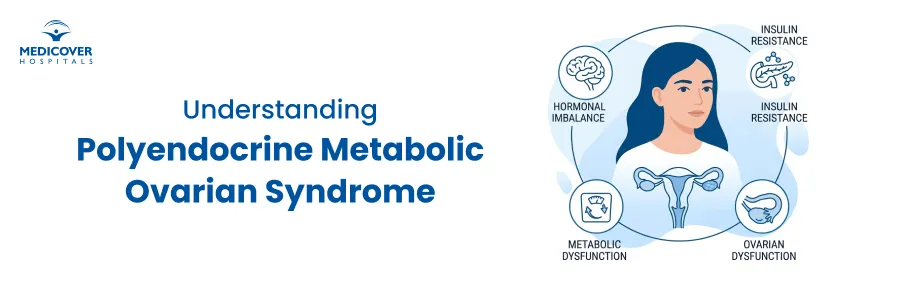
The new acronym, Polyendocrine Metabolic Ovarian Syndrome, perfectly maps out how the condition actually works across your entire system.
P - Polyendocrine (Multiple Hormone Systems)
"Poly" means many and "endocrine" refers to your hormone system. PMOS isn't caused by a malfunction in just one gland. It is a synchronised imbalance involving:
- The Ovaries and Adrenal Glands: Overproduce androgens (male hormones like testosterone).
- The Pituitary Gland: Sending mismatched signals (LH and FSH) to the ovaries, which disrupts the monthly ovulation cycle.
M - Metabolic (How Your Body Uses Energy)
This is the core engine of PMOS. The vast majority of people with this condition have insulin resistance.
- Insulin is the hormone that unlocks your cells to let glucose (sugar) in for energy.
- In PMOS, the cells lock up and resist insulin.
- To compensate, your pancreas pumps out massive amounts of extra insulin.
- High insulin signals your body to store fat (especially around the abdomen) and simultaneously triggers the ovaries to produce even more testosterone. It is a vicious, interconnected cycle.
O - Ovarian (The Reproductive Aspect)
The ovaries are a major target of these hormonal and metabolic disruptions. Because of high insulin & testosterone, egg follicles struggle to mature fully. This leads to irregular ovulation, missed periods and potential difficulties with natural conception.
S - Syndrome (A Collection of Symptoms)
A syndrome is a group of symptoms that consistently occur together. Because everyone's genetic makeup and lifestyle are different, PMOS looks completely different from one person to the next.
Get a second opinion from trusted experts and makeconfident, informed decisions.
Get Second OpinionNot sure where to start?
Talk to a patient care advisor — free, confidential, 24/7. We'll match you to the right specialist and book your appointment in minutes.
The Core Symptoms of PMOS
Because PMOS impacts both hormones and metabolism, its signs show up in several different ways:
- Ovulatory Disruptions:Irregular periods, completely missed cycles, or unusually heavy bleeding.
- Metabolic Signs: Rapid, unexplained weight gain, extreme difficulty losing weight, intense sugar cravings and patches of darkened, velvety skin (called acanthosis nigricans) usually found around the neck or armpits.
- Androgenic (High-Testosterone) Signs: Excess hair growth on the face, chin, chest, or abdomen (hirsutism), severe adult cystic acne and male-pattern hair thinning on the scalp.
- Mental Health Impacts: Elevated rates of anxiety, depression, brain fog and severe fatigue due to erratic blood sugar crashes and hormonal swings.
How PMOS is Diagnosed Today
With the transition to PMOS, diagnosis has moved away from just looking at an ultrasound machine. Doctors now focus on a comprehensive clinical picture, looking for at least two of the following criteria:
- Irregular Periods or lack of ovulation.
- Clinical or Biochemical Signs of High Androgens (either visible symptoms like facial hair/acne, or confirmed via blood work showing elevated free testosterone).
- Confirmed Metabolic Dysfunction (such as insulin resistance, elevated fasting glucose, or high cholesterol) and/or the classic "polycystic" appearance of the ovaries on an ultrasound.
By elevating metabolic markers to a primary diagnostic tool, providers can catch the condition much earlier, even in patients who have regular periods or clear ultrasounds.
A Modern Approach to Treating PMOS
Under the PMOS framework, treatment is no longer just about taking a birth control pill to force a monthly bleed. Management is now holistic, personalised and focused heavily on long-term metabolic health.
1. Metabolic Management
Because insulin resistance drives the condition, managing blood sugar is priority number one.
- Medication & Supplements: Doctors frequently prescribe insulin sensitisers like Metformin, or recommend evidence-based supplements like Inositol (specifically a 40:1 ratio of Myo-inositol to D-chiro-inositol), which helps cells respond to insulin naturally.
- Nutrition: Moving away from restrictive, crash dieting and focusing instead on blood-sugar balance, pairing complex carbohydrates with healthy proteins and fats to prevent steep insulin spikes.
2. Strategic Movement
Exercise for PMOS isn't about burning calories through gruelling, stressful cardio, which can sometimes spike stress hormones (cortisol) and worsen symptoms. Instead, the focus is on progressive strength training (building muscle increases the number of insulin receptors in your body, naturally lowering insulin resistance) and low-intensity steady-state movement such as walking.
3. Targeted Symptom Control
- For Hair and Acne: Spironolactone or specific anti-androgenic birth control pills can be used to block excess testosterone at the skin level.
- For Fertility: Ovulation-inducing medications like Letrozole or Clomiphene are highly effective at helping the ovaries mature and release an egg when a patient is ready to conceive.
Your health is everything - prioritize your well-being today.
Schedule Your AppointmentThe Takeaway: A Lifelong Safety Net
The evolution from PCOS to PMOS is a massive victory for patient advocacy. It ensures that healthcare providers monitor your cardiovascular health, cholesterol and blood sugar levels long after your childbearing years are over.
PMOS frames the condition exactly for what it is: a manageable, full-body metabolic and hormonal puzzle that can be successfully navigated with the right, comprehensive toolkit.
References
- The Lancet (Official Publication): You can access the official global consensus paper detailing the 14-year research initiative and multi-step stakeholder consensus framework directly via The Lancet announcement summary or read the publication overview detailing the change on EurekAlert!, which catalogs the study under DOI: 10.1016/S0140-6736(26)00717-8.
- The Endocrine Society: Read the official, full press release highlighting the collaborative effort of over 50 international healthcare and patient advocacy organizations on the Endocrine Society Newsroom.
- Mayo Clinic Clinical Overview: To view the updated patient-facing clinical breakdown of symptoms, causes, and multi-system metabolic criteria under the new diagnostic framework, visit the Mayo Clinic PMOS Guide.
- Patient Advocacy & Support Groups: For an understanding of how this change is being integrated into community support and what the three-year transition period means for everyday patients, check out the clinical updates published by Endometriosis UK.
- Cardiology
- Case Studies
- Dermatology
- Endocrinology
- ENT
- Fertility
- Gastroenterology
- General
- General-Medicine
- Gynecology
- Hematology
- Infectious-Diseases
- Medical News
- Neurology
- Oncology
- Ophthalmology
- Orthopedics
- Pediatrics
- Procedure
- Public-Health
- Pulmonology
- Radiology
- Second Opinion
- Urology
- Wellness
- Woman-and-child
Related Blogs
Still have questions? Speak with our experts now!
040-68334455


