 Call
Call Patient Reports
- Cardiology 84
- Dermatology 45
- Endocrinology 33
- ENT 16
- Fertility 190
- Gastroenterology 78
- General-Medicine 81
- Gynecology 80
- Hematology 19
- Infectious-Diseases 33
- Neurology 52
- Oncology 34
- Ophthalmology 23
- Orthopedics 69
- Pediatrics 31
- Procedure 23
- Public-Health 144
- Pulmonology 59
- Radiology 8
- Urology 68
- Wellness 161
- Woman-and-child 77
- 3759
- 3.5 Minute
Understanding Marjolin Ulcers: Causes and Treatment
Marjolin ulcers are a rare but serious form of skin cancer that typically arise from chronic wounds, scars, or burns. Recognizing and treating these malignant ulcers early is critical for patient outcomes. In this article, we will delve into the causes, symptoms, diagnosis, and treatment options for Marjolin ulcers, providing a comprehensive understanding of this condition.
What is a Marjolin Ulcer?
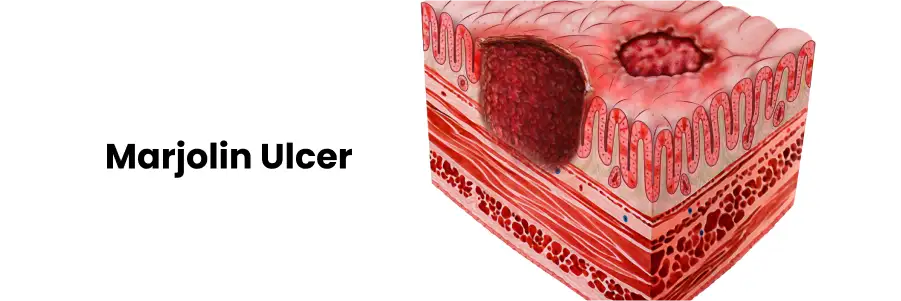
A Marjolin ulcer is a type of squamous cell carcinoma that develops in chronic wounds or scars. Named after the French surgeon Jean-Nicolas Marjolin, who first described it in the early 19th century, these ulcers can be highly aggressive and are often diagnosed at a late stage, making early recognition and treatment crucial.
Marjolin Ulcer Definition
Marjolin ulcers are malignant transformations that occur in previously benign conditions, such as chronic wounds, scars, or burns. These ulcers are characterized by their aggressive nature and potential for metastasis.
Types of Marjolin Ulcers
Marjolin ulcers can be categorized based on their origin and histological characteristics. Understanding the different types helps in determining the most effective treatment approach.
Acute Marjolin Ulcers
Acute Marjolin ulcers develop relatively quickly after the initial injury, usually within a few months to a year. They are often seen in wounds with severe inflammation and rapid cellular changes.
Chronic Marjolin Ulcers
Chronic Marjolin ulcers have a longer latency period, typically developing years or even decades after the initial injury. They are often associated with long-standing scars or wounds that have failed to heal properly.
Get a second opinion from trusted experts and makeconfident, informed decisions.
Get Second OpinionNot sure where to start?
Talk to a patient care advisor — free, confidential, 24/7. We'll match you to the right specialist and book your appointment in minutes.
Causes of Marjolin Ulcers
Chronic Inflammation
Chronic inflammation is a key factor in the development of Marjolin ulcers. Prolonged irritation and inflammation can lead to cellular changes and malignancy. Chronic wounds, such as those resulting from burns, pressure ulcers, or venous ulcers, are particularly prone to this transformation.
Scar Tissue
Old scars are another common site for Marjolin ulcers. Scar tissue, especially from burns or traumatic injuries, can undergo malignant changes over time. The latency period between the initial injury and the appearance of the ulcer can be several years or even decades.
Immune System Factors
The immune system plays a crucial role in monitoring and eliminating abnormal cells. In individuals with compromised immune systems, the risk of developing Marjolin ulcers increases. This includes patients with HIV/AIDS, those on immunosuppressive therapy, and the elderly.
Symptoms of Marjolin Ulcers
Early Signs
Marjolin ulcer early symptoms can be subtle, making early diagnosis challenging. Some initial signs to watch for include:
- A persistent non-healing wound
- Changes in the color or texture of a scar
- Itching or pain in a scar or chronic wound
- Development of a mass or nodule
Advanced Symptoms
As the ulcer progresses, more noticeable symptoms may appear, such as:
- A foul-smelling discharge
- Ulceration with raised, rolled edges
- Rapid increase in size
- Bleeding and crusting
Your health is everything - prioritize your well-being today.
Schedule Your AppointmentDiagnosis of Marjolin Ulcers
Clinical Examination
A thorough clinical examination is the first step in diagnosing Marjolin ulcers. Physicians should carefully evaluate any chronic wounds or scars that show signs of change.
Biopsy
A biopsy is essential for confirming the diagnosis of a Marjolin ulcer. A sample of the suspicious tissue is taken and examined under a microscope to identify malignant cells. Various types of biopsies can be performed, including punch biopsy, excisional biopsy, and incisional biopsy.
Imaging Studies
Imaging studies such as MRI, CT scans, and X-rays can help assess the extent of the ulcer and detect any metastasis. These studies provide valuable information for planning the appropriate treatment strategy.
Treatment Options for Marjolin Ulcers
Surgical Intervention
Surgery for Marjolin ulcer is the primary treatment option. The goal is to remove the malignant tissue completely while preserving as much healthy tissue as possible. Surgical options include:
- Wide Local Excision: Removal of the ulcer along with a margin of healthy tissue to ensure complete excision.
- Mohs Micrographic Surgery: A precise technique where layers of cancerous tissue are removed and examined until only cancer-free tissue remains.
- Amputation: In severe cases where the ulcer has invaded deep tissues or bones, amputation may be necessary.
Radiation Therapy
Radiation therapy can be used as an adjunct to surgery or as a primary treatment in cases where surgery is not feasible. It helps destroy remaining cancer cells and reduce the risk of recurrence.
Chemotherapy
Chemotherapy may be considered for advanced Marjolin ulcers that have metastasized. It involves the use of drugs to kill cancer cells or stop their growth. However, its effectiveness varies and is often used in combination with other treatments.
Prognosis and Follow-Up
Prognosis
The prognosis for Marjolin ulcers depends on several factors, including the stage at diagnosis, the size and location of the ulcer, and whether it has metastasized. Early diagnosis and treatment are crucial for improving outcomes.
Follow-Up Care
Regular follow-up is essential for monitoring the patient's recovery and detecting any signs of recurrence. This typically involves periodic clinical examinations, imaging studies, and possibly additional biopsies.
Conclusion
Marjolin ulcers are a rare but aggressive form of skin cancer that require prompt attention and treatment. Understanding the causes, symptoms, and treatment options is crucial for early diagnosis and improving patient outcomes. By recognizing the signs early and seeking appropriate medical care, individuals can significantly reduce the risk of severe complications associated with Marjolin ulcers.
Frequently Asked Questions
The survival rate for Marjolin ulcers varies depending on factors such as the stage of the ulcer at diagnosis and the presence of metastasis. Early detection and treatment significantly improve outcomes. However, the prognosis can be poor if the cancer has spread.
Yes, Marjolin ulcers can metastasize. These ulcers are aggressive and have a higher risk of spreading to other parts of the body compared to other types of squamous cell carcinoma.
Marjolin ulcers can take years to develop, often appearing decades after the initial injury or chronic inflammation. They typically arise in areas of previously injured or chronically inflamed skin.
The most common cause of Marjolin ulcers is chronic wounds or scars, particularly those from burns. Other causes include long-standing ulcers, pressure sores, and areas of chronic inflammation.
- Cardiology
- Case Studies
- Dermatology
- Endocrinology
- ENT
- Fertility
- Gastroenterology
- General
- General-Medicine
- Gynecology
- Hematology
- Infectious-Diseases
- Medical News
- Neurology
- Oncology
- Ophthalmology
- Orthopedics
- Pediatrics
- Procedure
- Public-Health
- Pulmonology
- Radiology
- Second Opinion
- Urology
- Wellness
- Woman-and-child
Related Blogs
Still have questions? Speak with our experts now!
040-68334455


