 Call
Call Patient Reports
- Cardiology 84
- Dermatology 45
- Endocrinology 33
- ENT 16
- Fertility 190
- Gastroenterology 78
- General-Medicine 81
- Gynecology 80
- Hematology 19
- Infectious-Diseases 33
- Neurology 52
- Oncology 34
- Ophthalmology 23
- Orthopedics 69
- Pediatrics 31
- Procedure 23
- Public-Health 144
- Pulmonology 59
- Radiology 8
- Urology 68
- Wellness 161
- Woman-and-child 77
- 3874
- 3.3 Minute
Identifying Scabies: Key Symptoms and Diagnosis
Scabies, a highly contagious skin condition caused by the Sarcoptes scabies mite, continues to affect millions of individuals worldwide. Early detection and diagnosis are essential for effective treatment and to prevent further spread. In this comprehensive guide, we will delve into the signs and symptoms of scabies, provide tips on how to identify scabies and offer insights into the diagnosis process.
Get a second opinion from trusted experts and makeconfident, informed decisions.
Get Second OpinionNot sure where to start?
Talk to a patient care advisor — free, confidential, 24/7. We'll match you to the right specialist and book your appointment in minutes.
Understanding Scabies
Scabies is an infestation of the skin by the human itch mite Sarcoptes scabiei. These mites burrow into the upper layer of the skin, where they live and lay their eggs. The presence of these mites leads to intense itching and a rash, which are the primary symptoms of scabies.
How Scabies Spreads
Scabies are highly contagious and can spread through direct skin-to-skin contact with an infected person, infested clothing, bedding, or furniture. Due to its contagious nature, prompt identification and treatment are critical to controlling outbreaks.
Scabies Signs and Symptoms
Recognizing the signs and symptoms of scabies is the first step toward effective diagnosis and treatment. Below are the key indicators:
Intense Itching
One of the hallmark symptoms of scabies is intense itching, which is often more severe at night. The itching is caused by the body's allergic reaction to the mites, their eggs, and their waste.
Rash and Burrow Tracks
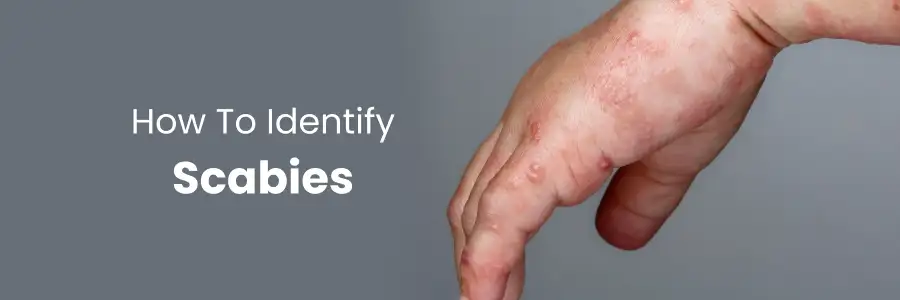
A scabies rash typically consists of small, red bumps that may form a line or a cluster. These bumps can evolve into blisters or pimples and are commonly found on:
- The webbing between the fingers
- The wrists
- The elbows
- The armpits
- The waistline
- The inner thighs
- The buttocks
Burrow tracks are another significant visual clue in diagnosing scabies. These thin, grayish-white lines on the skin surface indicate where the mites have burrowed.
Nodules
In some cases, individuals may develop small, raised nodules that can be red, brown, or skin-colored. These nodules are often found in areas with thicker skin, such as the armpits, groin, or genital area.
Secondary Infections
Due to intense scratching, secondary bacterial infections can occur. Signs of secondary infection include increased redness, swelling, pain, and pus.
How to Identify Scabies
Visual Examination
The primary method for identifying scabies is a thorough visual examination of the affected areas. Look for the characteristic rash, burrow tracks, and nodules. It is crucial to examine common sites of infestation, such as the webbing between the fingers, wrists, and waistline.
Dermatoscopy
Dermatoscopy, also known as chemiluminescence microscopy, is a diagnostic tool that allows healthcare providers to examine the skin in greater detail. This non-invasive method can help identify burrow tracks and mites, aiding in the diagnosis of scabies.
Skin Scraping
Skin scraping is a procedure in which a healthcare provider gently scrapes the affected skin to collect a sample. The sample is then examined under a microscope to detect the presence of mites, eggs, or mite feces. Skin scraping is a definitive diagnostic method for scabies.
Ink Test
The ink test is a simple method for visualizing burrow tracks. Washable ink, such as from a fountain pen, is applied to the suspected area and then wiped off. The ink penetrates the burrows, making them more visible. This method can be particularly useful in identifying scabies in hard-to-see areas.
Scabies Diagnosis Tips
Accurate diagnosis of scabies requires careful consideration of the patient's history, symptoms, and examination findings. Here are some tips to aid in the diagnosis process:
Patient History
Gathering a detailed patient history is crucial. Inquire about the onset and duration of symptoms, recent travel, close contacts with similar symptoms, and any previous treatments. Understanding the patient's history can provide valuable clues for diagnosis.
Differential Diagnosis
Several skin conditions can mimic scabies, making differential diagnosis essential. Conditions such as eczema, contact dermatitis, psoriasis, and impetigo can present with similar symptoms. A thorough examination and consideration of these conditions are necessary to avoid misdiagnosis.
Consider Close Contacts
Scabies often spreads to close contacts, such as family members or sexual partners. It is essential to assess and, if necessary, treat these individuals to prevent reinfestation and further spread.
Persistent Itching
If a patient presents with persistent itching that does not respond to standard treatments, consider scabies as a potential cause. The intense itching characteristic of scabies often leads patients to seek medical attention.
Treatment and Prevention
Topical Medications
The primary treatment for scabies involves topical medications that kill the mites and their eggs. Commonly prescribed medications include permethrin cream and benzyl benzoate lotion. These treatments are applied to the entire body and left on for a specified period before being washed off.
Oral Medications
In some cases, oral medications such as ivermectin may be prescribed. Ivermectin is particularly useful for individuals who do not respond to topical treatments or for those with widespread infestations.
Treating Close Contacts
To prevent reinfestation, it is essential to treat all close contacts of the infested individual, even if they do not exhibit symptoms. Scabies can spread quickly, and treating close contacts helps to break the cycle of transmission.
Cleaning and Disinfection
Thorough cleaning and disinfection are necessary to eliminate mites from the environment. Wash all clothing, bedding, and towels used by the infested individual in hot water and dry them on high heat. Items that cannot be washed should be sealed in a plastic bag for at least 72 hours to kill the mites.
Conclusion
Recognising the signs and symptoms of scabies is vital for timely diagnosis and treatment. By understanding the visual clues, employing diagnostic tools, and following best practices, healthcare providers can accurately identify scabies and prevent their spread. Early detection and appropriate treatment are vital in alleviating the intense itching and discomfort associated with scabies and ensuring the well-being of affected individuals and their close contacts.
Your health is everything - prioritize your well-being today.
Schedule Your AppointmentFrequently Asked Questions
Common symptoms of scabies include intense itching, a rash that may appear as small red bumps or blisters, and burrows in the skin.
Scabies rash is often found in specific areas such as between fingers, on wrists, elbows, and the genital area, and may present as small, red, itchy bumps.
Visual clues include small, pimple-like bumps, blisters, and visible burrows in the skin where mites have tunneled.
Scabies can be spotted by examining the characteristic rash and burrows, especially in areas typically affected.
Diagnosis is usually confirmed by a healthcare professional through a skin scraping or biopsy to identify the presence of mites or their eggs.
- Cardiology
- Case Studies
- Dermatology
- Endocrinology
- ENT
- Fertility
- Gastroenterology
- General
- General-Medicine
- Gynecology
- Hematology
- Infectious-Diseases
- Medical News
- Neurology
- Oncology
- Ophthalmology
- Orthopedics
- Pediatrics
- Procedure
- Public-Health
- Pulmonology
- Radiology
- Second Opinion
- Urology
- Wellness
- Woman-and-child
Related Blogs
Still have questions? Speak with our experts now!
040-68334455


