 Call
Call Patient Reports
- Cardiology 84
- Dermatology 45
- Endocrinology 33
- ENT 16
- Fertility 190
- Gastroenterology 78
- General-Medicine 81
- Gynecology 80
- Hematology 19
- Infectious-Diseases 33
- Neurology 52
- Oncology 34
- Ophthalmology 23
- Orthopedics 69
- Pediatrics 31
- Procedure 23
- Public-Health 144
- Pulmonology 59
- Radiology 8
- Urology 68
- Wellness 161
- Woman-and-child 77
- 1258
- 3.7 Minute
Written by Medicover Team and Medically Reviewed by Dr Devendra Pal, Consultant Medical & Hemato Oncologist
Bone Marrow Transplant Myths: Clear Answers from a Medical Perspective
Bone Marrow Transplant (BMT) is one of the most advanced treatments available for many serious blood-related conditions. Even today, many people hesitate to consider it because of old beliefs, misinformation, or stories they have heard from others. These bone marrow transplant myths often create confusion and delay timely treatment, especially for patients who actually need it for conditions such as leukemia, lymphoma, myeloma, thalassemia, and severe aplastic anemia.
This guide addresses common Bone Marrow Transplant myths using simple explanations based on current medical advancements. The facts provided here follow standard transplant guidelines used internationally and by bone marrow transplant doctors.
Myth 1: Bone Marrow Transplant is Always the Last Option for Every Blood Disorder
Fact:
A bone marrow transplant is not used for all blood problems. It is recommended only for specific conditions where the bone marrow stops functioning properly or produces abnormal cells. Some conditions improve with medications, targeted therapies, or supportive treatment. A transplant is considered only after evaluating the type of disease, severity, and response to existing treatment options.
Get a second opinion from trusted experts and makeconfident, informed decisions.
Get Second OpinionNot sure where to start?
Talk to a patient care advisor — free, confidential, 24/7. We'll match you to the right specialist and book your appointment in minutes.
Myth 2: Donating Bone Marrow is Extremely Painful and Unsafe
Fact:
Bone marrow donation is a safe medical procedure. Most donors return to their daily activities within a few days. The body naturally replenishes the donated cells. Discomfort varies from person to person, but severe pain is uncommon.
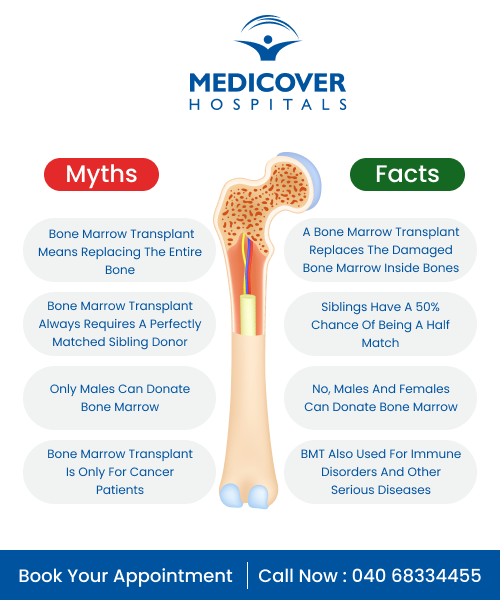
Myth 3: Bone Marrow Transplant means Replacing the Entire Bone
Fact:
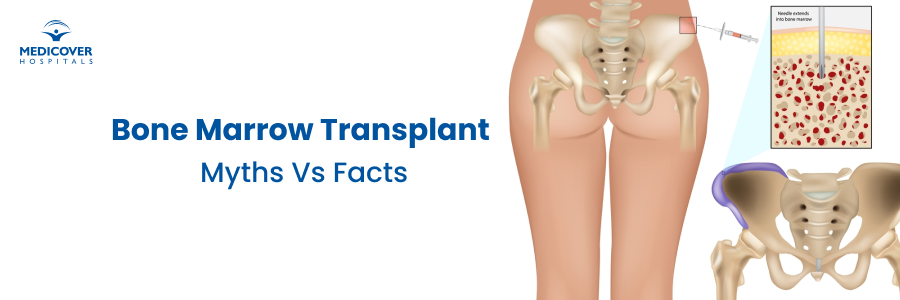
A bone marrow transplant does not involve removing or replacing bones. It focuses only on healthy blood-forming stem cells. These cells restart healthy blood production inside the existing bone structure. This is why the procedure is also called a stem cell transplant.
Myth 4: Bone Marrow Transplant Always Requires a Perfectly Matched Sibling Donor
Fact:
While a matched sibling donor is ideal, it is not the only option. Many patients undergo successful transplants using matched unrelated donors, haploidentical (half-matched) family donors, or umbilical cord blood. Matching is evaluated scientifically before deciding the safest option.
Myth 5: Only Males can Donate Bone Marrow
Fact:
Both males and females can donate peripheral blood stem cells (PBSC) and bone marrow if they meet the medical requirements. Donation eligibility is based on health, not gender.
Screening includes:
- Age
- Medical history
- Physical fitness.
Women can safely register as donors, and many successful transplants worldwide have used stem cells donated by female volunteers.
Myth 6: Gay Men cannot join the Registry
Fact:
Sexual orientation does not determine donor eligibility. Modern donor registries evaluate people based on their overall health, medical screening, and risk assessment, not their sexual orientation.
Gay men can join the registry if they meet the standard health criteria. The key requirement is that donors should not have any current health conditions that may put them or the recipient at risk.
Myth 7: The Success Rates of Bone Marrow Transplants are Very Low
Fact:
Advancements in imaging, infection control, conditioning techniques, and supportive care have improved transplant outcomes significantly. The success rate depends on the underlying disease, age, donor match, and overall health. Early diagnosis and timely referral to experienced bone marrow transplant doctors in Bangalore improve outcomes.
Your health is everything - prioritize your well-being today.
Schedule Your AppointmentMyth 8: Bone Marrow Transplant is only for Cancer Patients
Fact:
It is used for several non-cancer conditions too. This includes severe aplastic anemia, thalassemia, immune deficiencies, metabolic disorders, and bone marrow failure syndromes. The decision is based on medical need, not just cancer diagnosis.
Myth 9: Bone Marrow Transplant Guarantees A Cure For Every Condition
Fact:
A bone marrow transplant offers a potential cure or long-term disease control for several conditions, but not all diseases have the same response. Success depends on the biology of the condition, the timing of the transplant, and the post-transplant care.
Myth 10: Bone Marrow Transplant Causes Lifelong Weakness
Fact:
After the initial recovery phase, most people return to school, work, and normal activities. Recovery takes time, but long-term weakness is not the desired outcome for most people. A supervised diet, infection prevention plan, and regular follow-up with doctors in Bengaluru support safe recovery.
Myth 11: People above 50 cannot Donate Bone Marrow
Fact:
Age is one factor, but it is not the only deciding element for bone marrow donation. Many carefully selected older adults undergo successful bone marrow transplants. What matters more is overall fitness, organ function, and the type of transplant needed. Doctors evaluate each case using international assessment protocols.
Myth 12: Donating Bone Marrow Permanently Weakens The Body
Fact:
Bone marrow donation does not weaken the immune system. The body naturally replaces the donated cells within a short period. Donors can return to normal routines soon after recovery. This process is monitored carefully in all accredited hospitals in Bangalore that follow strict donor safety guidelines.

Frequently Asked Questions
A transplant is evaluated and performed by hematologists in Bengaluru and transplant specialists with experience in blood cancers, immune disorders, and marrow failure conditions.
You should consult doctors when blood counts remain consistently low, infections keep recurring, or when conditions such as leukemia, lymphoma, aplastic anemia, or thalassemia are diagnosed.
Yes, Bone marrow transplant is safe in older adults. Safety is assessed based on medical fitness, heart and lung function, and disease status. Age alone does not determine eligibility.
Most people stay between 3 and 5 weeks depending on recovery, immune strength, and type of transplant performed.
Yes. Several hospitals in Bangalore offer advanced bone marrow transplant units with isolation facilities, infection control support, and dedicated transplant teams.
- Cardiology
- Case Studies
- Dermatology
- Endocrinology
- ENT
- Fertility
- Gastroenterology
- General
- General-Medicine
- Gynecology
- Hematology
- Infectious-Diseases
- Medical News
- Neurology
- Oncology
- Ophthalmology
- Orthopedics
- Pediatrics
- Procedure
- Public-Health
- Pulmonology
- Radiology
- Second Opinion
- Urology
- Wellness
- Woman-and-child
Related Blogs
Still have questions? Speak with our experts now!
040-68334455


