 Call
Call Patient Reports
Find Doctors
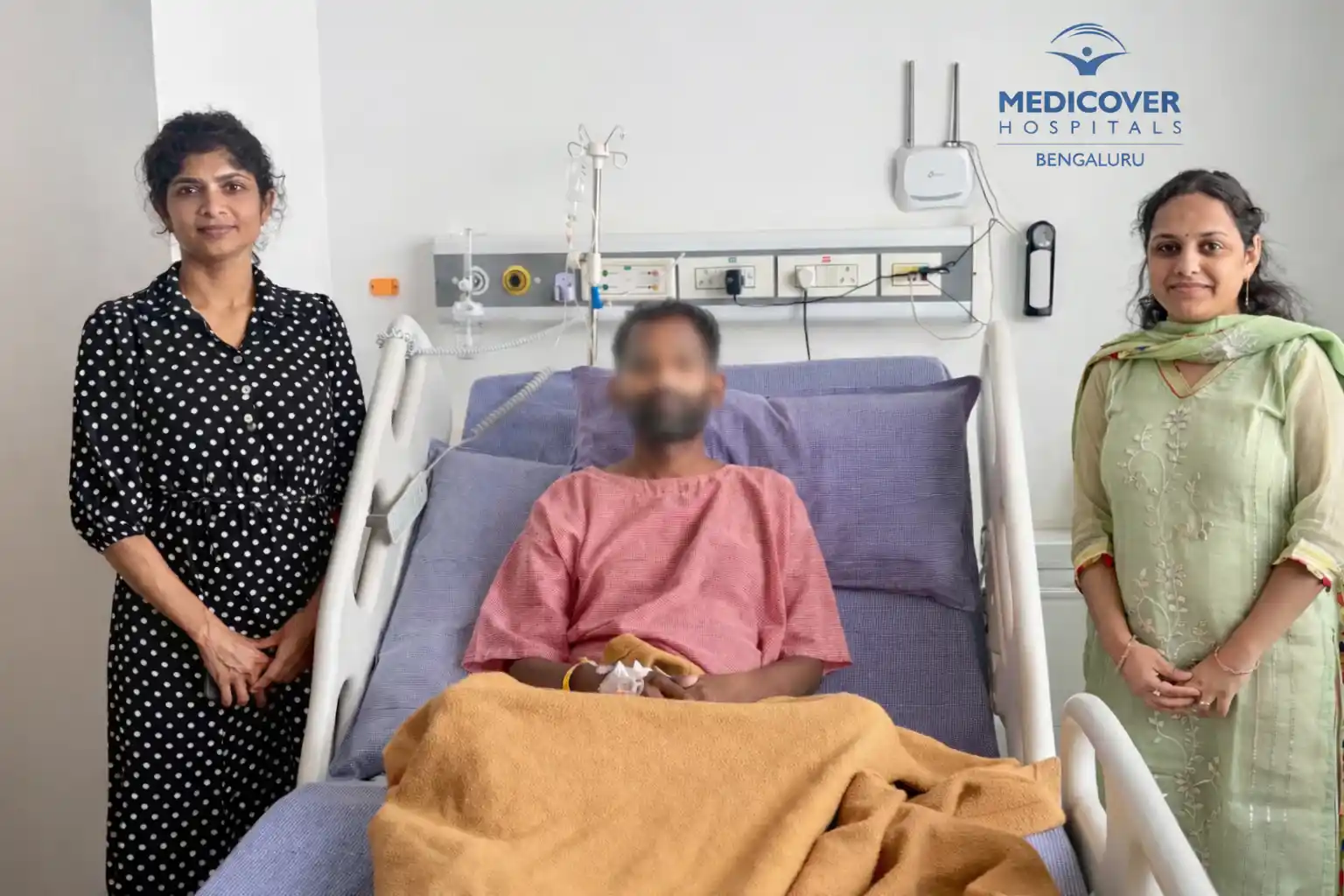
At Medicover Hospital in Whitefield, our neurology and critical care teams successfully saved the life of a 35-year-old man who developed a severe myasthenic crisis complicated by a rare autoimmune overlap syndrome. This is one of the most complex and high-risk neurological emergencies in modern medicine.
This case exemplifies not only a medical triumph but also the importance of early clinical insight, rapid escalation of care, and seamless multidisciplinary coordination in a situation where delay could be fatal.
Early Symptoms That Masked a Serious Disease
The patient first noticed symptoms in February 2025. A drooping eyelid appeared to be a common problem, but it was actually an early sign of a serious neuromuscular disorder.
Subsequent blood tests confirmed the presence of acetylcholine receptor antibodies. It led to a diagnosis of myasthenia gravis (MG).
Myasthenia gravis is a rare autoimmune disorder that disrupts communication between nerves and muscles. Worldwide, it affects approximately 14-20 people per 100,000, and while treatable, it can be life-threatening when the respiratory muscles are involved.
A Rare and Dangerous Autoimmune Combination
As part of a comprehensive evaluation, the patient was diagnosed with Graves' disease, an autoimmune thyroid disorder. He underwent radioiodine ablation, followed by thyroid hormone replacement therapy.
Given the established benefits in MG patients, he subsequently underwent thymectomy to improve long-term disease control. However, despite these interventions, his condition continued to deteriorate.
Upon arrival at Medicover Hospital, he presented with symptoms:
- Bilateral ptosis (drooping eyelids)
- Severe difficulty swallowing
- Generalized muscle weakness
- Shortness of breath
Advanced autoimmune testing revealed the presence of anti-SSA and anti-SSB antibodies, confirming a rare autoimmune overlap syndrome. Such overlap conditions are uncommon and are known to dramatically increase disease severity, unpredictability, and treatment complexity.
The Turning Point: A Myasthenic Crisis
Despite receiving primary medical treatment, the patient's condition suddenly deteriorated. He developed acute respiratory failure and went into a myasthenic crisis. A myasthenic crisis occurs in only 15-20% of patients with myasthenia gravis, yet it carries a high risk of death if not managed promptly and expertly.
Within minutes:
- He was transferred to the Intensive Care Unit
- Placed on mechanical ventilator support
- Started on intravenous immunoglobulin (IVIg)
- Continuously monitored with advanced critical care protocols
This stage demands absolute precision; any delay or misjudgment could lead to irreversible brain damage or death.
Expert Coordination and Intensive Care
The patient's care was jointly led by:
- Neurology, to control autoimmune neuromuscular activity
- Critical Care, to manage respiratory failure and systemic stability
This tight coordination was the cornerstone of survival.
Within three days, the patient showed clear signs of neurological improvement. Ventilator support was gradually withdrawn. Swallowing, muscle strength, and breathing improved steadily.
Patient Recovery
The patient was discharged in a stable condition. Follow-up assessments showed complete neurological recovery.
- Returned to normal daily activities
- Regained full muscle strength
- Achieved stable disease control
Clinical Perspective
Dr Surbhi Chaturvedi, Consultant Neurologist and Stroke Specialist, Medicover Hospital, said:
"Although myasthenia gravis is known to coexist with thyroid disorders, the presence of additional autoimmune conditions such as Sjogren's syndrome is very rare. These overlapping syndromes significantly worsen the severity of the disease. Early diagnosis, comprehensive evaluation, and coordinated multidisciplinary care are crucial in saving this patient's life."
Dr Nithya C Achaiah, HOD & Consultant Critical Care, added:
"Early recognition of respiratory failure and immediate ICU intervention made the difference between survival and disaster. This case highlights the importance of preparedness and teamwork in neurological emergencies."
Why This Case Matters?
This victory underscores several crucial truths:
- Myasthenia gravis is rapidly increasing, even among young patients
- Autoimmune overlap syndromes require advanced diagnostic insight
- Myasthenic crisis is survivable only with timely ICU-level care
- Outcomes depend on coordination, not isolated treatment
Our Commitment
At Medicover Hospital in Bangalore, we are committed to:
- Managing rare and high-risk neurological emergencies
- Providing 24/7 critical care readiness
- Treating not just the disease, but the whole patient
- Delivering outcomes that restore life, dignity, and independence
This case stands as a powerful reminder that expertise, urgency, and teamwork save lives, even in the most complex medical crises.
Contributors


Read this page in:


