 Call
Call Patient Reports
Find Doctors
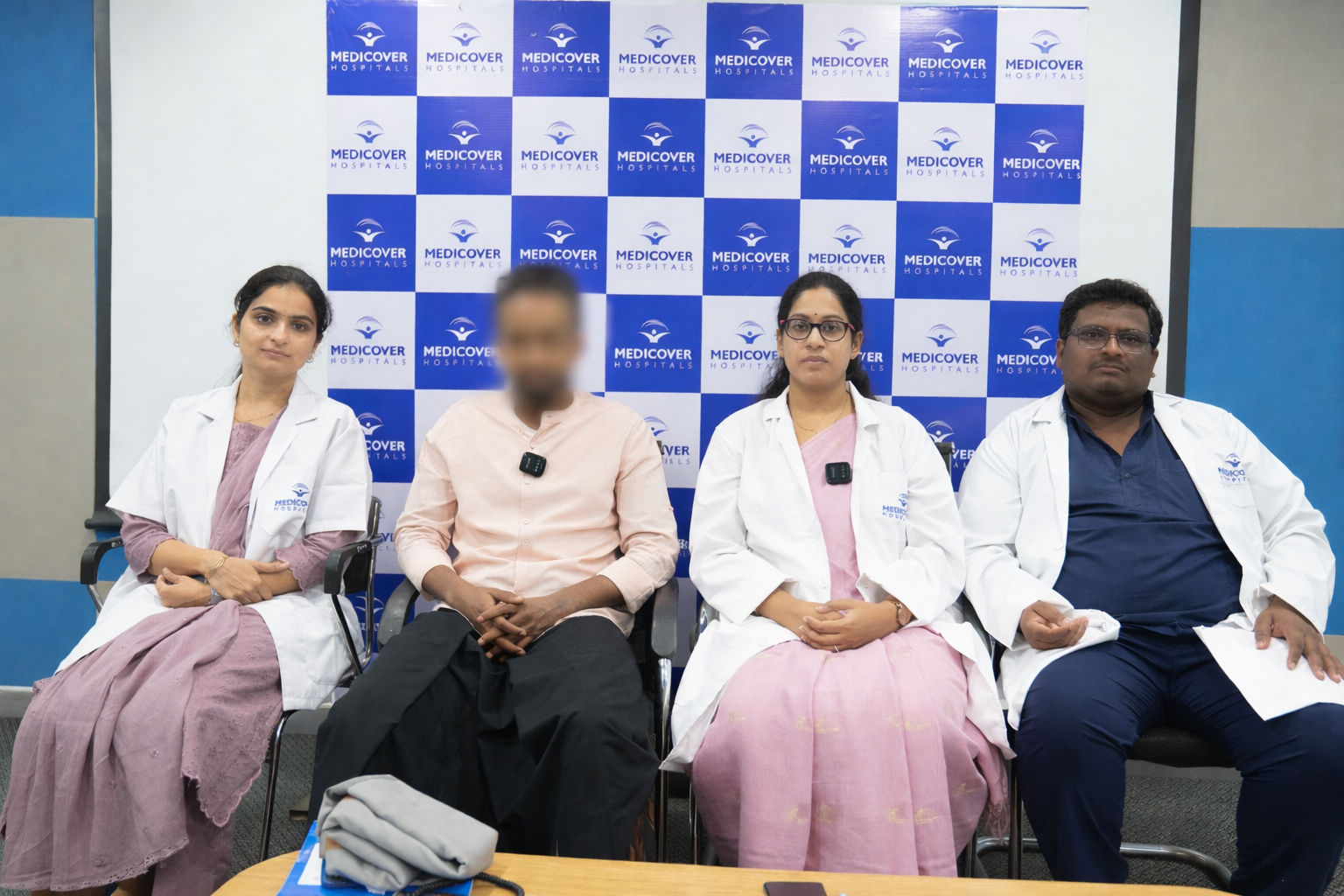
At Medicover Cancer Institute in Hitech City, a 31-year-old male patient from Somalia was diagnosed with a large and complex brain arteriovenous malformation (AVM) and successfully treated using advanced stereotactic radiosurgery (SRS) without open surgery.
The patient had been experiencing recurrent headaches and seizure episodes for nearly a year. Like many patients with neurological symptoms, these warning signs were initially ignored and attributed to stress and fatigue. The delayed evaluation increased the risk of complications.
What is the Brain AVM?
A brain AVM is an abnormal tangle of blood vessels between arteries and veins that disrupts normal blood flow. Such malformations can lead to:
- Persistent headaches
- Seizures
- Brain hemorrhage
- Permanent neurological damage
In India, AVMs occur in approximately 1-2 people per 100,000, and seizures are the first symptom in about 40% of patients. Due to a lack of awareness and limited access to advanced neurological healthcare, particularly in rural and semi-urban areas, diagnosis is often delayed.
Clinical Evaluation at Medicover Cancer Institute
At Medicover Cancer Institute in Hitech City, detailed imaging and neurological assessment is done. A 5.5 cm AVM located in the left temporo-parietal region of the brain. This region is responsible for speech, memory, and motor coordination, making traditional open surgery highly risky.
Given the size, complexity, and location of the AVM, and the patient's preference to avoid invasive surgery, our multidisciplinary team carefully planned a non-surgical treatment strategy.
How We Treated the Patient?
Our neurosurgery and radiation oncology teams jointly decided that Stereotactic Radiosurgery (SRS) was the safest and most precise treatment option.
The patient received:
- 30 Gy in 5 fractions
- Delivered with high precision using advanced SRS technology
- Targeting only the abnormal blood vessels
- Protecting the surrounding healthy brain tissue
This approach allows gradual closure of the AVM over time while minimizing risks to critical brain functions.
Outcome and Recovery
He was able to safely resume normal activities with planned ongoing follow-up to monitor the long-term AVM response.
- The patient reported a significant reduction in the headache severity.
- Seizure episodes decreased significantly.
- Improvement in the daily functions.
- Quality of life improved without surgical scars or prolonged hospital stays.
Doctor's Words
Dr Kavitha Uppala, Radiation Oncologist at Medicover Cancer Institute, shared:
“Persistent headaches, dizziness, and seizures are often ignored until daily life is affected. This case highlights why early neurological evaluation is critical. With advanced technologies like Stereotactic Radiosurgery, we can now treat complex brain conditions safely, effectively, and without invasive surgery.”
Our Commitment to International Patients
At Medicover Cancer Institute, Hi-Tech City, we are deeply committed to delivering world-class medical care to international patients seeking advanced, safe, and effective treatment solutions.
- Providing advanced, non-invasive and minimally invasive treatments, including state-of-the-art technologies such as Stereotactic Radiosurgery (SRS)
- Managing complex neurological, vascular, and oncological conditions that require high precision and multidisciplinary expertise
- Offering personalized, patient-centered treatment plans tailored to each individual's medical condition and expectations
- Ensuring international standards of safety, accuracy, and clinical outcomes in all treatments
- Making world-class technology and expert care accessible to patients worldwide, including those from Africa, the Middle East, and other international regions
This successful treatment shows our strong commitment to medical innovation, precision-driven care, and support, helping international patients regain their health, confidence, and quality of life without the need for invasive surgery.
Contributors

Read this page in:


