 Call
Call Patient Reports
Find Doctors
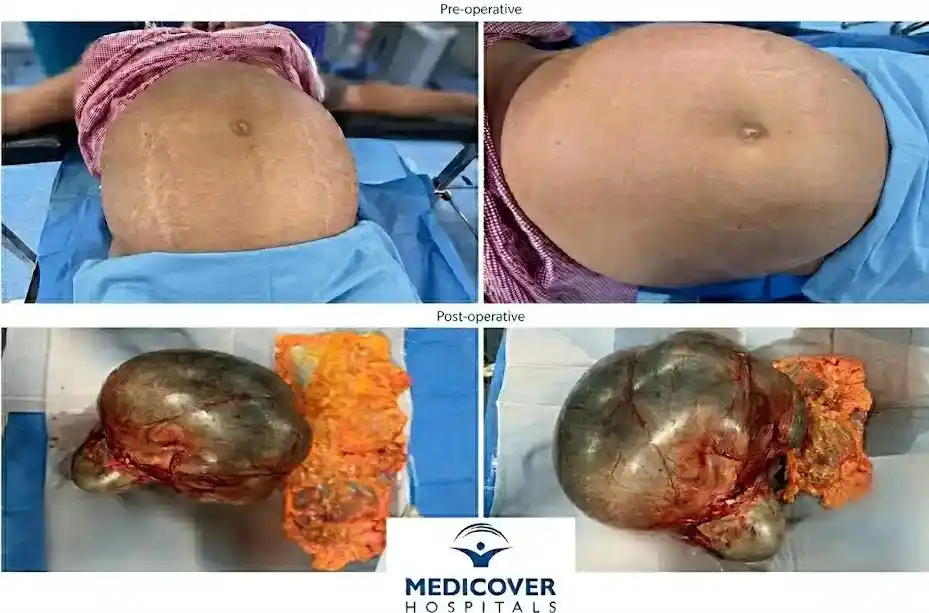
Medicover Hospitals, Srikakulam, successfully removed a massive 35 cm abdominal tumor weighing nearly 10 kilograms from a 78-year-old woman, a highly risky surgical success. She had a history of previous coronary artery bypass graft (CABG) surgery.
The case was considered high-risk due to the patient's age and underlying heart disease. Despite these challenges, our multidisciplinary team safely performed the procedure. This reaffirms Medicover Hospitals as a trusted center for complex surgical care in the region.
Months of Worsening Symptoms
The patient had been experiencing:
- Progressive abdominal distension
- Persistent abdominal pain
- Loss of appetite
- Difficulty breathing
- Inability to consume adequate food
Initially, the symptoms were dismissed as age-related issues. However, as her abdominal swelling increased significantly, she sought medical evaluation at Medicover Hospitals.
A CT scan revealed a massive tumor occupying almost the entire abdominal cavity. It compresses surrounding organs and poses potential life-threatening complications.
A High-Risk Surgical Challenge
Performing major stomach tumor removal surgery in a patient with a history of heart bypass surgery carries a significant risk. Such cases require careful planning due to:
- Increased cardiac stress during surgery
- Risk of blood pressure fluctuations
- Potential cardiac rhythm disturbances
- Higher risk of intraoperative bleeding
Recognizing these complexities, a comprehensive surgical plan was developed involving specialists from:
- Surgical Oncology
- Cardiology
- Anaesthesia
- Critical Care
A thorough preoperative cardiac evaluation was performed to assess cardiac function and surgical fitness.
The Challenging Procedure
The surgery was led by Dr. Bammidi Sandeep, Consultant Surgical Oncologist, and coordinated by a multidisciplinary team.
Dr. Sandeep, an abdominal cancer specialist, explained:
"The tumor was exceptionally large, measuring approximately 35 cm and weighing nearly 10 kg. Tumors of this size can compress abdominal organs, impair breathing, and lead to serious complications. Performing surgery on a patient who has previously undergone heart bypass surgery adds another layer of complexity. Special attention was given to bleeding control, protection of vital organs, and continuous cardiac monitoring throughout the procedure."
During the surgery:
- The tumor was carefully separated from the surrounding organs
- Bleeding was meticulously controlled
- Vital structures were preserved
- Continuous cardiac and hemodynamic monitoring was maintained
The tumor was successfully removed in total without intraoperative complications.
Intensive Post-Operative Care
Following the procedure, the patient was closely monitored in the ICU for five days.
Key post-operative measures included:
- Continuous heart monitoring
- Strict blood pressure and oxygen control
- Pain management
- Gradual nutritional rehabilitation
The patient's heart function remained stable, and her recovery progressed steadily. She is currently stable, tolerating oral intake, and recovering well.
Strengthening High-Risk Surgical Care in Srikakulam
This case highlights the growing capability of Medicover Hospitals, Srikakulam, in managing:
- Large abdominal tumors
- High-risk elderly patients
- Post-cardiac surgery cases
- Complex multidisciplinary surgical interventions
With advanced infrastructure, experienced specialists, and coordinated perioperative care, our hospital continues to safely handle complex and high-risk surgical cases locally.
This successful outcome stands as a testament to the power of surgical precision, careful cardiac assessment, and coordinated multidisciplinary care.
Contributors
Read this page in:


