 Call
Call Patient Reports
Best Hospital for Zygomatic Fracture Repair Surgery: Advanced Ortho Care
At Medicover Hospitals, our orthopaedic team, with qualifications like MS and DNB, specialises in open Zygomatic Fracture Repair. This procedure effectively addresses facial trauma, leading to faster recovery and reduced complications. Patients benefit from shorter hospital stays and improved outcomes across India.
Expert Surgeons
Yearly Surgeries
Patient Satisfaction
What is Zygomatic Fracture Repair?
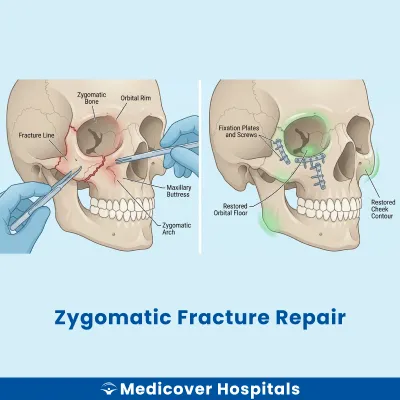
Zygomatic Fracture Repair is a surgical procedure to fix fractures of the zygomatic bone (cheekbone). This bone is a crucial part of the facial structure, contributing to the shape and function of the face. The surgery involves repositioning the bone fragments and securing them, often using plates and screws, to restore the normal anatomy.
This surgery is needed when the zygomatic bone is fractured due to trauma, such as accidents or sports injuries. If left untreated, it can lead to facial asymmetry, vision problems, or difficulty in jaw movement. Modern surgical approaches include open reduction and internal fixation (ORIF) and minimally invasive techniques. These methods aim to restore function and appearance effectively. Early intervention is crucial for optimal recovery.
Zygomatic Fracture Repair Doctors Near You
Discover expert orthopedics for zygomatic fracture repair at Medicover Hospitals across India. Choose your city and book a consultation to receive specialized care tailored to your needs.
Why Choose Medicover Hospitals for Zygomatic Fracture Repair?
Get a second opinion from trusted experts and makeconfident, informed decisions.
 Get Second Opinion
Complete Guide To Zygomatic Fracture Repair
Everything you need to know about the procedure, preparation, and recovery
Zygomatic Fracture Repair Surgery Indications
Zygomatic fracture repair surgery is recommended when there is a break or crack in the zygomatic bone, affecting facial symmetry and function. Doctors suggest this procedure when non-surgical methods cannot adequately address the fracture.
Facial Asymmetry
Patients may notice a visible change in facial appearance, such as uneven cheekbones. Doctors confirm this through physical examination and imaging tests like X-rays or CT scans. Surgery is advised when the asymmetry affects facial aesthetics or function.
Restricted Jaw Movement
Difficulty in opening or closing the mouth can occur due to zygomatic fractures. This is often accompanied by pain during jaw movement. If conservative treatments like pain management and rest do not restore function, surgery is considered.
Double Vision
Patients may experience double vision or blurred vision due to the fracture affecting the eye socket. Eye examinations and imaging confirm the displacement. Surgery is needed when vision issues persist despite initial treatments.
Numbness in the Cheek
Nerve damage from the fracture can lead to numbness or tingling in the cheek area. Doctors detect this through sensory tests. If symptoms do not improve with medication or therapy, surgical intervention is necessary.
Depressed Cheekbone
A sunken appearance of the cheekbone may occur, causing cosmetic and functional concerns. Physical examination and imaging reveal the extent of depression. Surgery is recommended when the depression does not resolve with non-surgical methods.
How to Prepare for Zygomatic Fracture Repair?
Proper preparation is crucial for a smooth zygomatic fracture repair and recovery. It helps minimise complications and ensures a successful outcome.
- Medication Review: Stop NSAIDs, anticoagulants, and herbal supplements a week before surgery.
- Fasting Guidelines: Fast for at least 8 hours before the procedure if general anaesthesia is used.
- Pre-Surgery Tests: Complete any required blood tests or imaging studies as advised by your doctor.
- Personal Items: Wear loose, comfortable clothing on the day of surgery.
- Transportation: Arrange for someone to drive you home post-surgery.
- Medication List: Bring a list of current medications with dosages for hospital records.
- Smoking and Alcohol: Avoid smoking and alcohol for at least 48 hours before the procedure.
- Hygiene: Follow any specific instructions for facial hygiene or cleansing before the surgery.
Zygomatic Fracture Repair Surgery (Step-by-Step)
Zygomatic fracture repair is performed by orthopaedic surgeons. The procedure typically lasts 1-3 hours. It is usually done under general anaesthesia to ensure the patient is asleep and pain-free.
- Preparation: The patient is positioned comfortably on the operating table. Anaesthesia is administered to induce sleep.
- Incision: A small incision, usually 1-2 cm, is made near the fracture site. This allows access to the zygomatic bone.
- Exposure: Surgical instruments like retractors and curettes are used to gently expose the fracture area. This step ensures clear visibility for the surgeon.
- Reduction: The fractured bone is carefully realigned. The surgeon may use tools like a harmonic scalpel for precise adjustments.
- Fixation: Plates and screws are used to secure the bone in place. This stabilises the fracture and promotes healing.
- Closure: The incision is closed with sutures. The area is cleaned, and a dressing is applied to protect the site.
- Recovery: The patient is moved to a recovery area. They are monitored as they wake up from anaesthesia.
Who Performs Zygomatic Fracture Repair Surgery?
Zygomatic fracture repair is performed by orthopaedic surgeons with expertise in facial trauma. These specialists are trained to handle complex bone injuries and use specific surgical instruments to ensure proper alignment and healing of the zygomatic bone.
Recovery After Zygomatic Fracture Repair Surgery
Recovery from zygomatic fracture repair surgery involves gradual healing and care. It is important to follow your surgeon's instructions to ensure a smooth recovery process. Expect some swelling and discomfort initially, which will decrease over time.
Day 1-3:
- Rest is crucial. Keep your head elevated to reduce swelling.
- Apply cold compresses as advised to manage swelling.
- Stick to a soft diet. Include foods like curd, dal-rice, and soups.
Day 4-7:
- Continue with soft foods. Khichdi and moong dal are good options.
- Avoid strenuous activities. Short walks are okay if you feel up to it.
- Attend follow-up appointments to monitor healing.
Day 8-14:
- Swelling should reduce significantly. You may start gentle facial exercises if advised.
- Gradually reintroduce regular foods, but avoid hard or chewy items.
- You may resume work or school if you feel comfortable and your doctor agrees.
Phase 3 (Week 3-6):
- Most daily activities can be resumed, but avoid contact sports.
- Continue to follow dietary recommendations to aid healing.
- Regular check-ups are important to ensure proper recovery.
When to Seek Urgent Help
- Severe pain not relieved by medication.
- Sudden increase in swelling or redness.
- Fever or signs of infection around the surgical site.
- Vision changes or difficulty breathing.
Benefits of Zygomatic Fracture Repair Surgery
Zygomatic fracture repair surgery helps restore the normal structure and function of the cheekbone area.
- Facial Symmetry Restoration: Helps in achieving a balanced facial appearance.
- Improved Vision: Corrects any vision issues caused by the fracture.
- Enhanced Chewing Function: Restores proper alignment for better chewing.
- Pain Relief: Reduces discomfort and pain associated with the fracture.
- Prevention of Long-term Issues: Minimises the risk of future complications related to untreated fractures.
Risks and Complications of Zygomatic Fracture Repair Surgery
While generally safe, zygomatic fracture repair surgery carries some risks and potential complications.
Common Risks and Complications:
- Swelling and bruising around the surgical site.
- Temporary numbness or tingling in the cheek area.
- Infection at the incision site.
- Asymmetry or misalignment post-surgery.
- Rare: Vision disturbances if the orbital area is affected.
- Rare: Scarring at the incision site.
- Rare: Need for additional surgery if initial repair is unsuccessful.
Cost of Zygomatic Fracture Repair Surgery
The cost of Zygomatic Fracture Repair Surgery at Medicover Hospitals ranges from Rs. 90,000 to Rs. 144,000. The price varies depending on the ward category chosen, such as general, private, or deluxe accommodations. We offer transparent pricing to ensure clarity for our patients.
Insurance and TPA support are available, with acceptance of CGHS, ESI, and major TPAs. A cashless facility is also offered for added convenience. Please contact the hospital for the latest insurance panel details as these may change periodically.
Frequently Asked Questions
1. How much does Zygomatic Fracture Repair surgery cost at Medicover Hospitals?
The cost ranges from Rs. 90,000 to Rs. 144,000 across Medicover Hospitals, depending on the type of care and room chosen.
2. Is Zygomatic Fracture Repair surgery covered under health insurance at Medicover?
Yes, it is often covered by CGHS, ESI, and major TPAs, offering cashless options. Please contact the hospital for current panel details.
3. Will my facial symmetry be affected after surgery?
Facial symmetry is typically restored with Zygomatic Fracture Repair. However, minor asymmetries may persist and should be discussed with your surgeon.
4. Can I chew solid food immediately after surgery?
You should avoid solid foods initially and opt for soft foods like dal-rice and khichdi. Gradually reintroduce solids as advised by your doctor.
5. Will I experience numbness in my face post-surgery?
Temporary numbness around the cheek area is common after surgery. Sensation usually returns over weeks, but discuss persistent numbness with your doctor.
6. When can I resume physical activities post-surgery?
Avoid strenuous activities for at least 4-6 weeks post-surgery. Light activities may be resumed earlier, based on your doctor's advice.
7. Is there a risk of infection after Zygomatic Fracture Repair?
Infection is a potential risk, but it is minimized with proper care and antibiotics. Report any signs of infection, like redness or swelling, to your doctor.


