 Call
Call Patient Reports
Best Hospital for Wound Debridement with Collagen Application
Wound debridement with collagen application at Medicover Hospitals is performed using open surgical techniques by our skilled plastic surgeons. With qualifications such as MS, MCh, and DNB, our team ensures precise treatment. This approach often results in reduced healing time and improved wound recovery.
Expert Surgeons
Yearly Procedures
Patient Satisfaction
What is Wound Debridement With Collagen Application?
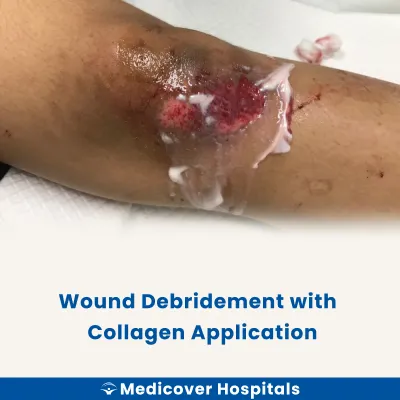
Wound debridement with collagen application is a medical procedure involving the removal of dead or infected tissue from a wound (injury or sore) to promote healing. This process often involves the skin and underlying tissues. Collagen, a protein found in the body, is applied to the wound to support tissue growth and repair.
This procedure is essential for wounds that do not heal properly, such as diabetic ulcers, pressure sores, or traumatic injuries. If left untreated, these wounds can lead to severe infections or complications. Modern surgical approaches for this procedure include enzymatic debridement, autolytic debridement, and surgical debridement. These methods help ensure effective removal of unhealthy tissue and promote faster healing.
Wound Debridement With Collagen Application Doctors Near You
Find skilled plastic-surgeons for wound debridement with collagen application at Medicover Hospitals across India. Choose your city and book a consultation to begin your healing journey today.
Why Choose Medicover Hospitals for Wound Debridement With Collagen Application?
Get a second opinion from trusted experts and makeconfident, informed decisions.
 Get Second Opinion
Complete Guide To Wound Debridement With Collagen Application
Everything you need to know about the procedure, preparation, and recovery
Wound Debridement with Collagen Application Procedure Indications
Doctors recommend wound debridement with collagen application when a wound fails to heal with standard treatments. This procedure helps remove dead tissue and promote healing in complex wounds.
Chronic Non-Healing Wounds
Patients may experience persistent pain and drainage from a wound that does not improve over weeks. On examination, there is often necrotic tissue present. When topical treatments and dressings fail, debridement with collagen can aid healing.
Diabetic Foot Ulcers
Individuals with diabetes might notice ulcers on their feet that are slow to heal. Doctors find these ulcers have poor blood flow and may be infected. If offloading and antibiotics do not work, this procedure can be beneficial.
Pressure Ulcers
Patients with limited mobility may develop painful pressure sores. These sores often show signs of tissue death and infection. When repositioning and special mattresses are insufficient, surgical intervention is considered.
Venous Leg Ulcers
Swelling and aching in the legs can accompany these ulcers. Examination reveals poor circulation and tissue breakdown. Compression therapy may not suffice, necessitating debridement with collagen.
Traumatic Wounds
After an injury, wounds may not heal properly, leading to pain and infection. Doctors find debris and dead tissue in the wound. When cleaning and antibiotics are ineffective, this procedure is recommended.
How to Prepare for Wound Debridement with Collagen Application?
Proper preparation is crucial for the success of wound debridement with collagen application. It helps minimise risks and ensures a smoother recovery process.
- Medication Review: Discuss all medications with your doctor. Stop NSAIDs, anticoagulants, and herbal supplements as advised.
- Fasting Instructions: If general anaesthesia is used, fast for at least 8 hours before the procedure.
- Pre-Surgical Hygiene: Clean the wound area as instructed by your healthcare provider to reduce infection risk.
- Clothing Choice: Wear loose, comfortable clothing on the day of the procedure for easy access to the wound area.
- Transportation Plan: Arrange for someone to drive you home post-procedure, as you may feel drowsy from anaesthesia.
- Medication List: Bring a list of all medications, including dosages, to share with the medical team.
- Hydration: Stay well-hydrated before fasting begins, unless otherwise directed by your doctor.
- Follow-Up Care: Schedule any necessary follow-up appointments in advance to monitor healing progress.
Wound Debridement with Collagen Application Procedure (Step-by-Step)
This procedure is performed by plastic surgeons. It typically lasts between 30 to 90 minutes. It can be done under local, regional, or general anaesthesia, depending on the wound's severity and location.
- Preparation: The patient is positioned comfortably. The area around the wound is cleaned and sterilised to prevent infection.
- Local Anaesthesia: If local anaesthesia is used, it is administered around the wound site to numb the area. The patient remains awake but should not feel pain.
- Debridement: The surgeon uses instruments like a curette or harmonic scalpel to remove dead tissue. This step is crucial for promoting healing and preventing infection.
- Wound Assessment: After debridement, the surgeon assesses the wound for any remaining necrotic tissue. Additional debridement may be performed if necessary.
- Collagen Application: A collagen dressing is applied to the wound. This helps in promoting tissue growth and healing. The patient may feel a slight pressure during this application.
- Wound Dressing: The wound is covered with a sterile dressing. This protects the area and aids in the healing process.
- Post-Procedure Care: The patient is monitored for a short period. Instructions on wound care and follow-up visits are provided before discharge.
Who Performs Wound Debridement with Collagen Application Procedure?
This procedure is performed by plastic surgeons. They are trained in handling complex wounds and applying advanced techniques like collagen application to enhance healing. Their expertise ensures that the procedure is done safely and effectively.
Recovery After Wound Debridement with Collagen Application Procedure
Recovery from wound debridement with collagen application involves careful monitoring and care to promote healing. Patients can expect some discomfort and need to follow specific guidelines for optimal recovery.
Day 1-3:
- Rest is crucial. Keep the wound area elevated to reduce swelling.
- Follow the doctor's instructions for wound care and dressing changes.
- Consume soft, nutritious foods like curd, dal-rice, and soups to support healing.
- Avoid strenuous activities and keep the wound dry.
Day 4-7:
- Continue with prescribed medications and wound care routine.
- Introduce light activities as tolerated, but avoid heavy lifting or exercise.
- Include protein-rich foods like moong dal and khichdi in your diet to aid recovery.
- Monitor the wound for any unusual changes.
Day 8-14:
- Gradually resume normal activities, but avoid activities that may stress the wound area.
- Maintain a balanced diet with plenty of fluids to stay hydrated.
- Check with your doctor about returning to work or school, usually possible by the end of this period.
- Continue to observe the wound for signs of healing.
Phase 3 (Week 3-4):
- Most patients can resume regular activities, but should still avoid high-impact sports.
- Focus on a balanced diet to maintain overall health and support tissue repair.
- Attend follow-up appointments to ensure proper healing.
When to Seek Urgent Help:
- Increased redness, swelling, or warmth around the wound.
- Foul-smelling discharge or excessive bleeding.
- Fever or chills indicating possible infection.
- Severe pain unrelieved by prescribed medication.
Benefits of Wound Debridement with Collagen Application Procedure
Wound debridement with collagen application is a procedure aimed at enhancing the healing process of wounds.
- Enhanced Healing: Collagen provides a scaffold that supports new tissue growth.
- Reduced Infection Risk: Removing dead tissue decreases the chance of infection.
- Pain Reduction: Debridement can alleviate pain by removing irritating tissue.
- Improved Wound Appearance: Collagen can help in achieving better cosmetic outcomes.
Risks and Complications of Wound Debridement with Collagen Application Procedure
While generally safe, wound debridement with collagen application does carry some risks and potential complications.
- Mild pain or discomfort at the site of debridement.
- Temporary redness or swelling around the wound area.
- Allergic reaction to collagen products.
- Delayed wound healing in some cases.
- Infection if the wound is not properly cared for post-procedure.
Cost of Wound Debridement with Collagen Application Procedure
The cost of Wound Debridement with Collagen Application at Medicover Hospitals varies depending on the ward category. Prices range from Rs. 18,000 to Rs. 1,50,000. The cost is influenced by the type of accommodation chosen, such as day care, general, or private wards.
We offer transparent pricing and support for insurance and TPA services, including CGHS, ESI, and major TPAs. Cashless facilities are available for your convenience. Please contact the hospital for the latest insurance panel details as these may change periodically.
Frequently Asked Questions
1. How much does Wound Debridement with Collagen Application procedure cost at Medicover Hospitals?
The cost for Wound Debridement with Collagen Application ranges from Rs. 18,000 to Rs. 1,50,000 across Medicover Hospitals, depending on the type of room and care required.
2. Is Wound Debridement with Collagen Application procedure covered under health insurance at Medicover?
This procedure is often covered by CGHS, ESI, and major TPAs, offering cashless options. Please contact the hospital for current panel details.
3. Will collagen application help in faster wound healing?
Yes, collagen application can promote faster healing by providing a scaffold for new tissue growth. It helps in reducing healing time and improving skin regeneration.
4. Can I shower immediately after the procedure?
It is advisable to avoid showering for the first 48 hours to protect the wound. Follow your doctor's instructions for wound care and hygiene.
5. Will there be any dietary restrictions post-procedure?
A balanced diet including curd, dal-rice, and khichdi can aid recovery. Avoid spicy and oily foods to prevent irritation and support healing.
6. Is there a risk of infection after debridement?
There is a potential risk of infection, which can be minimized with proper wound care. Follow your doctor's advice and keep the wound clean and dry.
7. How long does it take for the wound to fully heal?
Complete healing can take several weeks, depending on the wound's severity. Regular follow-ups and proper care can ensure optimal recovery.


