 Call
Call Patient Reports
Advanced Wolfe Graft Surgery Hospital with Expert Care
Wolfe graft, an open surgical procedure, is performed by plastic surgeons with qualifications like MS, MCh, and DNB at Medicover Hospitals. This technique is effective for skin restoration, offering benefits like improved healing and reduced complications, ensuring a smoother recovery for patients across India.
Expert Surgeons
Yearly Surgeries
Patient Satisfaction
What is Wolfe Graft?
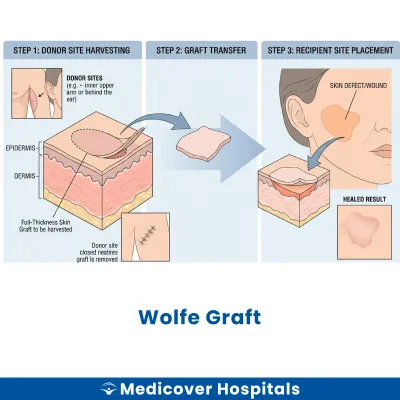
A Wolfe graft is a surgical procedure involving the skin. It is a full-thickness skin graft, meaning it includes both the epidermis (outer skin layer) and dermis (inner skin layer). This graft is typically used to cover areas where skin has been lost or damaged, ensuring proper healing and restoration of function.
This surgery is often needed for conditions like severe burns, trauma, or skin cancer removal. If left untreated, these conditions can lead to infection or impaired function. Modern surgical approaches for Wolfe grafts include advanced techniques to improve graft survival and integration. These methods help in achieving better cosmetic and functional outcomes.
Wolfe Graft Doctors Near You
Discover skilled plastic-surgeons for Wolfe graft procedures at Medicover Hospitals across India. Choose your city and book a consultation to explore expert care tailored to your needs.
Why Choose Medicover Hospitals for Wolfe Graft?
Get a second opinion from trusted experts and makeconfident, informed decisions.
 Get Second Opinion
Complete Guide To Wolfe Graft
Everything you need to know about the procedure, preparation, and recovery
Wolfe graft Surgery Indications
Doctors recommend Wolfe graft surgery when skin defects require full-thickness skin coverage. This procedure is often considered when other treatments are insufficient to restore skin integrity and function.
Chronic Ulcers
Patients experience persistent open sores that do not heal with standard wound care. Examination reveals deep tissue involvement. When ulcers fail to improve with conservative measures like dressings and topical treatments, Wolfe graft surgery may be advised.
Burn Scars
Severe burn scars can cause restricted movement and cosmetic concerns. Patients may report tightness and discomfort. If physical therapy and scar management do not alleviate symptoms, a Wolfe graft can help restore skin flexibility and appearance.
Traumatic Skin Loss
After an injury, patients may have areas of skin loss that do not regenerate naturally. Doctors find exposed underlying tissues during examination. When healing stalls despite wound care, a Wolfe graft can provide necessary skin coverage.
Skin Cancer Excision
After removal of skin cancer, patients may have significant skin defects. Pathology reports confirm complete excision, but large defects remain. If primary closure is not possible, a Wolfe graft is used to cover the area effectively.
Congenital Skin Defects
Some patients are born with skin defects that do not improve with time. These defects may lead to functional or aesthetic issues. When non-surgical options are ineffective, Wolfe graft surgery can offer a solution for skin restoration.
How to Prepare for Wolfe graft?
Proper preparation is crucial for a successful Wolfe graft, as it helps minimise risks and ensures a smoother recovery. Following these steps can aid in achieving the best possible outcomes.
- Medication Adjustment: Stop NSAIDs, anticoagulants, and herbal supplements at least 7 days before the procedure.
- Fasting: Begin fasting 8 hours before the surgery. This is important for general anaesthesia.
- Skin Preparation: Clean the area where the graft will be applied as instructed by your healthcare provider.
- Clothing: Wear loose, comfortable clothing on the day of the procedure to avoid irritation and allow easy access to the surgical site.
- Transportation: Arrange for someone to drive you home post-surgery, as anaesthesia can impair your ability to drive.
- Medication List: Bring a list of all medications you are currently taking, including dosages, to share with your healthcare team.
- Pre-Surgery Consultation: Attend all pre-surgery appointments to discuss any concerns and confirm all instructions with your surgeon.
- Rest and Hydration: Ensure you are well-rested and hydrated before the procedure for optimal recovery.
Wolfe graft Surgery (Step-by-Step)
Wolfe graft surgery is performed by plastic surgeons. It typically lasts 1-2 hours. The procedure is usually done under local anaesthesia.
- Preparation: The patient is positioned comfortably. Local anaesthesia is administered to numb the area.
- Donor Site Selection: The surgeon identifies a suitable area for skin harvesting, often from the inner thigh or behind the ear.
- Harvesting the Graft: Using a scalpel, the surgeon carefully removes a thin layer of skin, usually 1-2 cm in size, from the donor site.
- Recipient Site Preparation: The recipient area is cleaned and prepared. A curette may be used to remove any unhealthy tissue.
- Graft Placement: The harvested skin is placed over the recipient site. The surgeon ensures it fits well and covers the area completely.
- Securing the Graft: The graft is secured using fine sutures or surgical adhesive. A dressing is applied to protect the area.
- Post-Operative Care: The patient is advised on wound care and follow-up visits. Pain management and activity restrictions are discussed.
Who Performs Wolfe graft Surgery?
Wolfe graft surgery is performed by plastic surgeons. These specialists are trained in reconstructive and cosmetic procedures. They have expertise in skin grafting techniques. They ensure the graft integrates well with the surrounding tissue. Their skills help achieve optimal healing and aesthetic results.
Recovery After Wolfe graft Surgery
Recovery from Wolfe graft surgery involves careful monitoring and gradual return to normal activities. It's essential to follow your surgeon's advice to ensure proper healing and avoid complications.
Day 1-3:
- Rest is crucial. Keep the graft area elevated to reduce swelling.
- Stick to a soft diet. Include foods like curd, dal-rice, and soups.
- Avoid strenuous activities. Focus on light movements as advised.
Day 4-7:
- Continue with a nutritious diet. Add moong dal and khichdi for easy digestion.
- Gradually increase light activities. Avoid bending or lifting heavy objects.
- Monitor the graft site for any signs of infection or unusual changes.
Week 2-4:
- Swelling and discomfort should decrease. Continue with a balanced diet.
- Resume work or school if your job or studies do not involve physical exertion.
- Follow up with your doctor for any concerns or scheduled check-ups.
Phase 2 (Month 2-3):
- Normal activities can be gradually resumed. Avoid high-impact sports.
- Maintain a healthy diet to support healing.
- Regular check-ups are important to assess graft integration.
When to Seek Urgent Help
- Severe pain or swelling at the graft site.
- Fever or chills indicating possible infection.
- Redness or discharge from the graft area.
- Sudden changes in sensation or movement.
If you experience any of these symptoms, contact your healthcare provider immediately.
Benefits of Wolfe graft Surgery
Wolfe graft surgery is a skin grafting technique used to repair skin defects. It offers several advantages for patients needing skin restoration.
- Improved Healing: This procedure promotes faster healing by covering wounds with healthy skin.
- Reduced Scarring: It helps minimise scarring, leading to better cosmetic outcomes.
- Versatility: Suitable for various skin defects, including burns and trauma-related injuries.
- Enhanced Functionality: Restores the function of damaged skin areas, improving mobility and sensation.
Risks and Complications of Wolfe graft Surgery
While Wolfe graft surgery is generally safe, it carries some risks and potential complications. Patients should be aware of these before proceeding.
- Common: Infection at the graft site, which may require additional treatment.
- Common: Graft failure, where the transplanted skin does not adhere properly.
- Rare: Bleeding or hematoma formation under the graft.
- Rare: Allergic reaction to anaesthesia used during the procedure.
- Rare: Changes in skin colour or texture at the graft site.
Cost of Wolfe graft Surgery
The cost of Wolfe graft surgery at Medicover Hospitals ranges from Rs. 35,500 to Rs. 195,500. The price varies based on the ward category chosen, such as day care, general, private, or suite options. Medicover Hospitals offers transparent pricing with support for insurance and TPA, including CGHS, ESI, and major TPAs. A cashless facility is also available for convenience. Please contact the hospital for the latest insurance panel details as these may change periodically.
Frequently Asked Questions
1. How much does Wolfe graft surgery cost?
The cost of Wolfe graft surgery at Medicover Hospitals ranges from Rs. 35,500 to Rs. 195,500, depending on the room type and care level.
2. Is Wolfe graft surgery covered under insurance?
Wolfe graft surgery may be covered by CGHS, ESI, and major TPAs, offering cashless options. Please contact the hospital for current panel details.
3. Will I have scarring after Wolfe graft?
Scarring is possible after Wolfe graft surgery, but it usually fades over time. Proper wound care can help minimize the appearance of scars.
4. Can I wear glasses after nose Wolfe graft?
Avoid wearing glasses directly on the nose for at least 4 weeks after a Wolfe graft. This helps ensure proper healing and graft stability.
5. Will my sense of smell change post-surgery?
Temporary changes in the sense of smell can occur after Wolfe graft surgery. It usually returns to normal as healing progresses.
6. What foods should I avoid post-surgery?
Avoid spicy foods and opt for soft, bland meals like dal-rice and khichdi. These foods support healing and reduce discomfort.
7. How long before I can exercise again?
Light activities can resume after 2 weeks, but avoid strenuous exercise for at least 6 weeks. This ensures proper healing of the graft.


