 Call
Call Patient Reports
Best Hospital for Wide Local Excision with Frozen Section with Advanced Onco-Surgical Care
Wide local excision with frozen section at Medicover Hospitals is performed using the open surgical approach. Our team of oncologists, with qualifications like MS, DNB, and MCh, ensure precise removal of cancerous tissues. This method often results in reduced blood loss and shorter hospital stays.
Expert Surgeons
Yearly Surgeries
Patient Satisfaction
What is Wide Local Excision With Frozen Section?
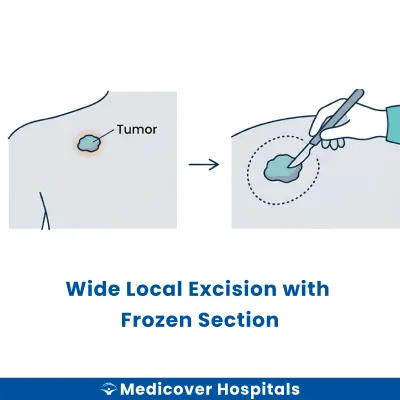
Wide local excision with frozen section is a surgical procedure primarily used in the treatment of skin cancers, particularly melanoma. It involves removing the cancerous tissue along with some surrounding healthy tissue (margins) to ensure complete excision. During the procedure, a frozen section (rapid tissue analysis) is performed to check if cancer cells are present at the margins. This helps in determining if further tissue removal is necessary.
This surgery is essential for conditions like melanoma, basal cell carcinoma, and squamous cell carcinoma. If left untreated, these cancers can spread to other parts of the body. Modern surgical approaches include Mohs micrographic surgery, which allows for precise removal of cancerous tissue while preserving healthy tissue. Early intervention is crucial to prevent complications and improve outcomes.
Wide Local Excision With Frozen Section Doctors Near You
Find skilled oncologists for wide local excision with frozen section at Medicover Hospitals across India. Choose your city and book a consultation to discuss your treatment options today.
Why Choose Medicover Hospitals for Wide Local Excision With Frozen Section?
Get a second opinion from trusted experts and makeconfident, informed decisions.
 Get Second Opinion
Complete Guide To Wide Local Excision With Frozen Section
Everything you need to know about the procedure, preparation, and recovery
Wide local excision with Frozen Section Surgery Indications
Doctors recommend wide local excision with frozen section when precise removal of abnormal tissue is necessary. This procedure helps ensure complete excision while preserving healthy tissue.
Suspicious Skin Lesions
Patients may notice a new or changing mole, patch, or bump on the skin. Doctors find irregular borders, varied colours, or rapid growth during examination. When biopsy results suggest malignancy, surgery is advised.
Breast Lumps
Patients might feel a lump or experience breast pain. Imaging tests like mammograms reveal suspicious masses. If needle biopsy results are inconclusive or cancerous, surgery is considered.
Oral Lesions
Persistent mouth sores or white patches can cause discomfort. Examination may show lesions that do not heal. If biopsy indicates pre-cancerous or cancerous changes, surgical excision is needed.
Soft Tissue Tumours
Patients may report swelling or pain in soft tissues. MRI or CT scans reveal abnormal growths. When non-cancerous tumours grow or show suspicious features, surgery is recommended.
Recurrent Skin Cancers
Patients with a history of skin cancer may notice new lesions. Doctors find changes in previously treated areas. If conservative treatments fail, surgery ensures thorough removal.
How to Prepare for Wide Local Excision with Frozen Section?
Proper preparation is crucial for a successful wide local excision with frozen section. It helps minimise risks and ensures a smoother recovery.
- Medication Review: Discuss with your doctor about stopping NSAIDs, anticoagulants, and herbal supplements at least a week before surgery.
- Fasting Guidelines: Do not eat or drink anything for at least 6-8 hours before the procedure, as general anaesthesia is typically used.
- Skin Preparation: Clean the surgical area as advised by your healthcare provider to reduce infection risk.
- Comfortable Clothing: Wear loose, comfortable clothes on the day of the surgery for easy dressing post-procedure.
- Transportation: Arrange for someone to drive you home after the surgery, as you may feel drowsy from anaesthesia.
- Medication List: Bring a list of all medications you are currently taking, including dosages, for the medical team's reference.
- Pre-Surgical Instructions: Follow any additional instructions provided by your surgeon, such as avoiding lotions or creams on the surgical area.
- Emotional Support: Consider having a friend or family member accompany you for emotional support before and after the procedure.
Wide Local Excision with Frozen Section Surgery (Step-by-Step)
Wide local excision with frozen-section analysis is performed by experienced specialists in the Oncology department. The procedure usually takes 1-2 hours and is commonly carried out under general anaesthesia.
- Preparation: The patient is positioned comfortably on the operating table, and anaesthesia is administered to ensure a pain-free procedure while vital signs are continuously monitored.
- Incision: An incision is carefully made around the tumour along with a margin of surrounding healthy tissue to support complete removal.
- Tissue Removal: The tumour and adjacent tissue are excised using specialised surgical instruments while preserving as much healthy tissue as possible.
- Frozen Section Analysis: The removed tissue is immediately sent for rapid pathological examination to evaluate whether cancer cells are present at the tissue margins.
- Additional Excision: If abnormal cells are detected at the margins, additional tissue may be removed until clear margins are achieved.
- Closure: Once adequate clearance is confirmed, the incision is closed using sutures or staples, and a sterile dressing is applied.
- Recovery: After surgery, the patient is monitored in the recovery area, and pain management, along with post-operative care instructions, is provided.
Who Performs Wide Local Excision with Frozen Section Surgery?
This surgery is performed by skilled surgical oncologists trained in advanced cancer surgeries and tumour removal procedures with precise margin assessment techniques.
Recovery After Wide local excision with frozen section Surgery
Recovery from a wide local excision with frozen section surgery involves gradual healing and regular follow-ups. Patients can expect some discomfort and need to follow specific guidelines to ensure proper recovery.
Day 1-3:
- Rest is crucial. Avoid strenuous activities.
- Keep the surgical site clean and dry. Follow dressing change instructions.
- Consume soft, easy-to-digest foods like curd, dal-rice, and soups.
- Take prescribed medications to manage pain and prevent infection.
Day 4-7:
- Gradually increase light activities as tolerated.
- Continue with a balanced diet. Include moong dal and khichdi for protein and energy.
- Monitor the incision site for any signs of infection.
Day 8-14:
- Most patients can resume work or school, depending on the nature of their activities.
- Engage in gentle exercises, but avoid heavy lifting or vigorous workouts.
- Regular follow-up appointments are essential to monitor healing.
Phase: Week 3-4:
- Resume normal activities gradually, based on comfort and doctor's advice.
- Continue with a nutritious diet to support recovery.
- Scarring may begin to reduce, but complete healing can take several weeks.
When to Seek Urgent Help
- Severe pain not relieved by medication.
- Redness, swelling, or pus at the incision site.
- Fever or chills indicating possible infection.
- Uncontrolled bleeding from the surgical area.
Benefits of Wide local excision with frozen section Surgery
Wide local excision with frozen section is a surgical technique used to remove cancerous tissues while ensuring clear margins. This procedure offers several benefits:
- Immediate Margin Assessment: The frozen section allows for real-time evaluation of tissue margins, reducing the need for additional surgeries.
- Conservation of Healthy Tissue: By precisely targeting cancerous cells, more healthy tissue can be preserved.
- Reduced Recurrence Risk: Ensuring clear margins decreases the likelihood of cancer returning.
- Quick Results: The frozen section process provides rapid results, aiding in timely decision-making during surgery.
Risks and Complications of Wide local excision with frozen section Surgery
While generally safe, wide local excision with frozen section surgery carries some risks and complications:
- Common: Bleeding at the surgical site may occur, requiring monitoring.
- Common: Infection risk is present, as with any surgical procedure.
- Rare: Nerve damage can occur, potentially affecting sensation or function.
- Rare: Scarring may develop, which could affect cosmetic appearance.
- Rare: Allergic reactions to anaesthesia or other medications used during the procedure.
Cost of Wide local excision with frozen section Surgery
The cost of Wide local excision with frozen section surgery at Medicover Hospitals ranges from Rs. 135,000 to Rs. 446,000. The price varies depending on the ward category chosen. We offer transparent pricing and support for insurance and TPA, including CGHS, ESI, and major TPAs. Cashless facilities are available for your convenience. Please contact the hospital for the latest insurance panel details as these may change periodically.
Frequently Asked Questions
1. How much does Wide local excision with frozen section surgery cost at Medicover Hospitals?
The cost for Wide local excision with frozen section surgery at Medicover Hospitals ranges from Rs.135000 to Rs.446000, depending on the facility and room type.
2. Is Wide local excision with frozen section surgery covered under health insurance at Medicover?
Yes, it is often covered by CGHS, ESI, and major TPAs, with cashless options. Please contact the hospital for current panel details.
3. Will I need skin grafting after wide local excision?
Skin grafting may be necessary if a large area is excised. This helps in proper healing and cosmetic appearance.
4. Can I shower immediately after the surgery?
You should avoid showering for the first 48 hours post-surgery. This helps in preventing infection and aids in proper healing.
5. Will I experience numbness after wide local excision?
Temporary numbness around the excision site is common. It usually resolves over time as the nerves heal.
6. What type of scar can I expect post-surgery?
The scar's appearance depends on the excision size and location. Proper wound care can minimise scarring over time.
7. Can I resume exercise after wide local excision?
Light activities can be resumed after a week, but avoid strenuous exercise for at least 4-6 weeks. Consult your doctor for personalised advice.
8. Is wide excision a major surgery?
Wide excision can be minor or major, depending on the size, location, and depth of the lesion. Small skin lesions may be removed as a minor procedure, while larger or cancer-related excisions can be more extensive.
9. What does frozen section mean in surgery?
A frozen section is a rapid biopsy technique performed during surgery where a tissue sample is quickly frozen, cut, and examined under a microscope to help guide immediate surgical decisions.
10. How accurate is a frozen section biopsy?
Frozen section biopsy is generally highly accurate (around 90-98%), but it may be slightly less precise than permanent biopsy due to time constraints and sample preparation.


