 Call
Call Patient Reports
Wide Local Excision or Resection or Limb Sparing Surgery Surgery by Expert Oncologists
Wide Local Excision or Resection, also known as Limb Sparing Surgery, is performed using open surgical techniques at Medicover Hospitals. Our team of oncologists, with qualifications like MS, DNB, MCh, and DM, ensures precise tumour removal. This approach often results in smaller incisions and reduced blood loss.
Expert Surgeons
Yearly Surgeries
Patient Satisfaction
What is Wide Local Excision or Resection or Limb Sparing Surgery?
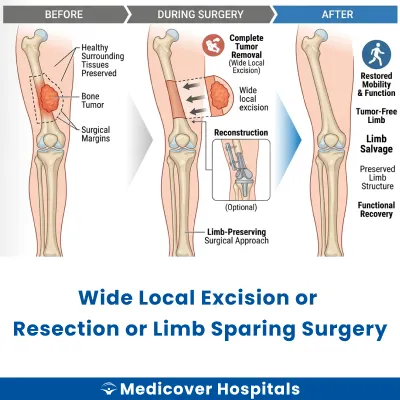
Wide Local Excision or Resection, also known as Limb Sparing Surgery, involves removing a tumour along with a margin of healthy tissue. This procedure is often performed on limbs (arms or legs) to treat bone or soft tissue sarcomas. The goal is to eliminate cancerous cells while preserving the limb's function and appearance.
This surgery is necessary for treating malignant tumours in the limbs. Conditions like osteosarcoma or soft tissue sarcoma may require this approach. If left untreated, these cancers can spread, leading to more severe health issues. Modern surgical techniques, such as minimally invasive surgery and robotic-assisted surgery, enhance precision and recovery in Wide Local Excision or Resection procedures.
Wide Local Excision or Resection or Limb Sparing Surgery Doctors Near You
Discover skilled oncologists for wide local excision or limb-sparing surgery at Medicover Hospitals across India. Choose your city and book a consultation to explore your treatment options today.
Why Choose Medicover Hospitals for Wide Local Excision or Resection or Limb Sparing Surgery?
Get a second opinion from trusted experts and makeconfident, informed decisions.
 Get Second Opinion
Complete Guide To Wide Local Excision Or Resection Or Limb Sparing Surgery
Everything you need to know about the procedure, preparation, and recovery
Wide Local Excision or Resection or Limb Sparing Surgery Indications
Doctors recommend Wide Local Excision or Resection or Limb Sparing Surgery when a tumour needs to be removed without amputating the limb. This procedure is often considered when preserving the limb's function is possible and beneficial for the patient's quality of life.
Soft Tissue Sarcoma
Patients may experience a noticeable lump or swelling, sometimes accompanied by pain. Imaging tests like MRI or CT scans reveal a tumour in the soft tissues. When the tumour does not respond to chemotherapy or radiotherapy, surgery becomes necessary.
Bone Tumours
Symptoms include persistent pain in the affected bone, swelling, and sometimes fractures. X-rays or MRI scans show abnormal growth in the bone. Surgery is considered when the tumour is resistant to other treatments and affects the bone's stability.
Melanoma
Patients may notice changes in a mole's size, shape, or colour. A biopsy confirms melanoma. If the cancer has not spread extensively, surgery is recommended to remove the tumour and some surrounding tissue.
Recurrent Tumours
After initial treatment, some tumours may recur, causing similar symptoms as before. Imaging and biopsy confirm recurrence. Surgery is advised when other treatments fail to control the tumour's growth.
Benign Tumours with Functional Impact
Patients might experience discomfort or functional impairment due to a benign tumour. Imaging shows a non-cancerous growth affecting limb function. Surgery is chosen when the tumour interferes with daily activities despite conservative management.
How to Prepare for Wide Local Excision or Resection or Limb Sparing Surgery?
Preparation is crucial for a successful surgery and smooth recovery. It helps reduce complications and ensures the body is ready for the procedure.
- Medication Review: Stop NSAIDs, anticoagulants, and herbal supplements at least a week before surgery. Consult your doctor for guidance.
- Fasting: Follow a fasting period of 8 hours before the surgery if general anaesthesia is used. This helps prevent complications during the procedure.
- Pre-Surgery Tests: Complete any required blood tests or imaging studies as advised by your healthcare provider.
- Clothing: Wear loose, comfortable clothing on the day of surgery to ease dressing and undressing.
- Transportation: Arrange for someone to drive you home post-surgery, as you may not be able to drive yourself.
- Medication List: Bring a list of all medications you are currently taking, including dosages, to the hospital.
- Smoking and Alcohol: Avoid smoking and alcohol consumption at least 24 hours before surgery to aid recovery.
- Pre-Surgery Instructions: Follow any specific instructions provided by your surgeon, such as skin preparation or dietary changes.
Wide Local Excision or Resection or Limb Sparing Surgery (Step-by-Step)
Overview: This procedure is performed by oncologists. It typically lasts 2-4 hours and is done under general anaesthesia.
- Preparation: The patient is positioned comfortably on the operating table. Anaesthesia is administered to ensure no pain during the procedure.
- Incision: A surgical incision, usually 1-2 cm larger than the tumour, is made using a scalpel to access the affected area.
- Tumour Removal: The surgeon uses instruments like a harmonic scalpel or bipolar cautery to excise the tumour along with a margin of healthy tissue.
- Tissue Examination: The excised tissue is sent for immediate pathological examination to ensure clear margins.
- Reconstruction: If necessary, the surgeon reconstructs the area using nearby tissue or grafts to maintain limb function and appearance.
- Closure: The incision is closed with sutures or staples. A sterile dressing is applied to protect the site.
- Recovery: The patient is moved to the recovery room. Vital signs are monitored as they wake from anaesthesia.
Who Performs Wide Local Excision or Resection or Limb Sparing Surgery?
This surgery is performed by surgical oncologists. They specialise in removing tumours while preserving as much of the limb as possible. Their expertise ensures the procedure is done with precision and care.
Recovery After Wide Local Excision or Resection or Limb Sparing Surgery Surgery
Recovery from Wide Local Excision or Resection or Limb Sparing Surgery involves gradual healing and rehabilitation. Patients can expect some discomfort, which can be managed with medication. Following the surgeon's advice is crucial for a smooth recovery.
Day 1-3:
- Rest is essential. Avoid putting weight on the affected limb.
- Consume soft, easy-to-digest foods like curd, dal-rice, and soups.
- Keep the surgical site clean and dry.
Day 4-7:
- Gradually increase mobility with the help of a physiotherapist.
- Continue with a balanced diet, including khichdi and moong dal for protein.
- Monitor for any signs of infection at the incision site.
Week 2-4:
- Begin light activities as advised by the doctor.
- Introduce more variety in meals, ensuring adequate nutrition.
- Attend follow-up appointments to assess healing progress.
Phase 1 (Month 1-2):
- Resume work or school if mobility allows, with necessary adjustments.
- Continue physiotherapy to regain strength and flexibility.
- Avoid strenuous activities and heavy lifting.
Phase 2 (Month 3 and beyond):
- Engage in regular exercise as recommended by the healthcare team.
- Maintain a nutritious diet to support overall health.
- Gradually return to normal activities, following medical advice.
When to Seek Urgent Help
- Severe pain unrelieved by medication.
- Redness, swelling, or discharge from the incision site.
- Fever or chills indicating possible infection.
- Sudden difficulty in moving the limb.
Benefits of Wide Local Excision or Resection or Limb Sparing Surgery
Wide Local Excision or Limb Sparing Surgery is a procedure aimed at removing cancerous tissues while preserving the limb's function.
- Preservation of Limb Function: This surgery helps maintain the functionality of the affected limb.
- Reduced Need for Amputation: It decreases the likelihood of needing a complete limb removal.
- Targeted Cancer Removal: The procedure focuses on excising only the cancerous tissue, sparing healthy tissues.
- Improved Quality of Life: Patients often experience better mobility and quality of life post-surgery.
Risks and Complications of Wide Local Excision or Resection or Limb Sparing Surgery
While this surgery offers significant benefits, it also carries potential risks and complications.
Common Risks
- Infection at the surgical site can occur, requiring medical attention.
- Bleeding during or after the procedure may necessitate further intervention.
Rare Risks
- Nerve damage could result in temporary or permanent loss of sensation.
- Incomplete removal of cancerous tissue might require additional treatments.
- Blood clots may develop, posing a risk to overall health.
Cost of Wide Local Excision or Resection or Limb Sparing Surgery Surgery
The cost of Wide Local Excision or Resection or Limb Sparing Surgery at Medicover Hospitals ranges from ₹25,000 and ₹2,50,000. The price varies depending on the ward category chosen, such as day care, general, or private rooms.
We offer transparent pricing and support for insurance and TPA, including CGHS, ESI, and major TPAs. Cashless facility is available for your convenience. Please contact the hospital for the latest insurance panel details as these may change periodically.
Frequently Asked Questions
1. How much does Wide Local Excision cost?
The cost for Wide Local Excision or Resection or Limb Sparing Surgery ranges from ₹25,000 and ₹2,50,000 at Medicover Hospitals.
2. Is Wide Local Excision covered by insurance?
Yes, it is often covered by CGHS, ESI, and major TPAs with cashless options. Please contact the hospital for current panel details.
3. Will I need physiotherapy after limb sparing?
Yes, physiotherapy is usually recommended to regain strength and mobility. It helps in adapting to lifestyle changes post-surgery.
4. Can I walk immediately after limb sparing surgery?
Walking may be limited immediately after surgery. Your doctor will guide you on when and how to start walking safely.
5. Will I need a special diet post-surgery?
A balanced diet including curd, dal-rice, and khichdi is recommended. Your doctor may provide specific dietary instructions based on recovery.
6. What are the risks of nerve damage?
Nerve damage is a potential risk, which may lead to numbness or weakness. Discuss with your surgeon about preventive measures and management.
7. How soon can I return to work?
Returning to work depends on the surgery's complexity and your recovery. Typically, it may take a few weeks; consult your doctor for a personalized timeline.


