 Call
Call Patient Reports
Wide Local Excision of Oral Cavity Tumor Surgery Hospital by Expert Oncologists
Wide Local Excision of Oral Cavity Tumor at Medicover Hospitals is performed using the open surgical approach. Our team includes specialists with qualifications like MS, DNB, and MCh, ensuring expertise in head and neck cancers. This approach results in reduced blood loss, enhancing recovery.
Expert Surgeons
Yearly Surgeries
Patient Satisfaction
What is Wide Local Excision of Oral Cavity Tumor?
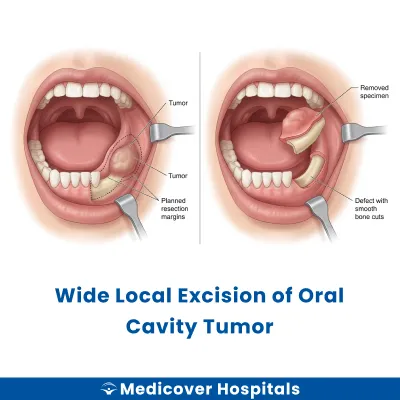
Wide Local Excision of Oral Cavity Tumor is a surgical procedure to remove cancerous tissue from the mouth. It involves excising (cutting out) the tumor along with some surrounding healthy tissue to ensure complete removal. This procedure targets areas such as the tongue, gums, or inner cheeks, depending on the tumor's location.
This surgery is needed to treat oral cavity cancers. Conditions like squamous cell carcinoma often lead to this procedure. If left untreated, these cancers can spread to other parts of the body. Modern surgical approaches for this procedure include laser surgery and robotic-assisted surgery, which aim to minimize damage to surrounding tissues while effectively removing the tumor.
Wide Local Excision of Oral Cavity Tumor Doctors Near You
Discover skilled oncologists for wide local excision of oral cavity tumors at Medicover Hospitals across India. Choose your city and book a consultation to discuss your treatment options today.
Why Choose Medicover Hospitals for Wide Local Excision of Oral Cavity Tumor?
Get a second opinion from trusted experts and makeconfident, informed decisions.
 Get Second Opinion
Complete Guide To Wide Local Excision Of Oral Cavity Tumor
Everything you need to know about the procedure, preparation, and recovery
Wide Local Excision of Oral Cavity Tumor Surgery Indications
Doctors recommend wide local excision of oral cavity tumors when less invasive treatments are not effective. This procedure is often necessary to remove cancerous tissues and prevent further spread.
Persistent Oral Lesions
Patients may notice non-healing ulcers or lesions in the mouth. If these persist despite medication, a biopsy might reveal malignancy. Surgery is advised when lesions do not respond to conservative treatments.
Visible Tumor Growth
Some patients experience noticeable lumps or growths in the oral cavity. Imaging or biopsy confirming a tumor, especially if it grows rapidly, often leads to surgical intervention.
Difficulty in Swallowing or Speaking
Patients might face challenges in swallowing or speaking due to tumor size or location. If these symptoms worsen and affect daily life, surgery becomes necessary to relieve obstruction.
Bleeding or Pain in the Mouth
Unexplained bleeding or persistent pain in the mouth can be alarming. When these symptoms are linked to a tumor through diagnostic tests, surgery is considered to alleviate discomfort and prevent complications.
Failed Non-Surgical Treatments
In some cases, radiation or chemotherapy may not shrink the tumor effectively. If the tumor remains or progresses, wide local excision is recommended to remove the affected tissue.
How to Prepare for Wide Local Excision of Oral Cavity Tumor?
Proper preparation is crucial for a successful wide local excision of an oral cavity tumor. It helps reduce complications and ensures a smoother recovery.
- Medication Review: Stop NSAIDs, anticoagulants, and herbal supplements at least a week before surgery.
- Fasting Instructions: Fast for at least 8 hours before the procedure if general anaesthesia is used.
- Oral Hygiene: Maintain good oral hygiene. Brush and floss regularly to reduce infection risk.
- Clothing: Wear loose, comfortable clothing on the day of the surgery for ease of movement.
- Transportation: Arrange for someone to drive you home post-surgery, as you may feel groggy from anaesthesia.
- Medication List: Bring a list of your current medications, including dosages, to the hospital.
- Smoking and Alcohol: Avoid smoking and alcohol for at least 48 hours before the surgery to aid healing.
- Pre-Surgical Instructions: Follow any additional instructions given by your healthcare provider.
Wide Local Excision of Oral Cavity Tumor Surgery (Step-by-Step)
Overview: This procedure is performed by oncologists. It typically lasts 1-3 hours and is done under general anesthesia.
- Preparation: The patient is given general anaesthesia to ensure they are asleep and pain-free. The surgical area is cleaned and sterilised.
- Incision: A precise incision, usually 1-2 cm beyond the tumor margins, is made using a scalpel. This ensures the removal of the tumor with a margin of healthy tissue.
- Tumor Removal: The surgeon uses instruments like a harmonic scalpel or curette to carefully excise the tumor. The aim is to remove the tumor entirely with clear margins.
- Bleeding Control: Bipolar cautery is used to control bleeding during the procedure. This helps in maintaining a clear surgical field.
- Reconstruction: Depending on the size and location of the excision, reconstruction may be needed. This could involve suturing or grafting to restore function and appearance.
- Closure: The incision is closed with sutures. The area is then cleaned and dressed to promote healing.
- Recovery: The patient is moved to a recovery area. They are monitored as they wake from anaesthesia, ensuring vital signs are stable.
Who Performs Wide Local Excision of Oral Cavity Tumor Surgery?
This surgery is performed by surgical oncologists. These specialists are trained in removing tumors from the oral cavity while preserving as much healthy tissue as possible.
Recovery After Wide Local Excision of Oral Cavity Tumor Surgery
Recovery from a wide local excision of an oral cavity tumor involves gradual healing and adjustment. Patients can expect some discomfort and swelling initially, which will improve over time. Following your surgeon's advice is crucial for a smooth recovery.
Day 1-3:
- Rest is essential. Avoid strenuous activities.
- Stick to a soft diet. Opt for foods like curd, dal-rice, and soups.
- Maintain oral hygiene as instructed by your healthcare provider.
Day 4-7:
- Swelling and discomfort should begin to decrease.
- Continue with soft foods. Include khichdi and moong dal for variety.
- Gentle oral rinses may be recommended.
Week 2:
- Gradually resume light activities. Avoid heavy lifting.
- Introduce more solid foods as tolerated. Chew on the opposite side of the surgery.
- Follow up with your doctor for a post-operative check-up.
Phase 3-4 Weeks:
- Most patients can return to work or school, depending on recovery.
- Continue to avoid very hard or spicy foods.
- Regular follow-ups are important to monitor healing.
When to Seek Urgent Help:
- Persistent or worsening pain or swelling.
- Fever or signs of infection, such as pus or unusual discharge.
- Difficulty breathing or swallowing.
Benefits of Wide Local Excision of Oral Cavity Tumor Surgery
Wide local excision is a surgical procedure aimed at removing oral cavity tumors effectively.
- Effective Tumor Removal: Helps in completely removing the tumor along with a margin of healthy tissue.
- Prevention of Spread: Reduces the risk of cancer disease spreading to other parts of the body.
- Improved Survival Rates: Increases the chances of long-term survival by addressing the tumor early.
- Preservation of Function: Aims to maintain as much oral function as possible.
Risks and Complications of Wide Local Excision of Oral Cavity Tumor Surgery
While this surgery is generally safe, it carries some risks and potential complications.
- Common: Bleeding during or after the procedure.
- Common: Infection at the surgical site.
- Common: Swelling and pain in the operated area.
- Rare: Nerve damage leading to numbness or loss of sensation.
- Rare: Difficulty in speaking or swallowing post-surgery.
- Rare: Changes in appearance due to tissue removal.
Cost of Wide Local Excision of Oral Cavity Tumor Surgery
The cost for Wide Local Excision of Oral Cavity Tumor Surgery at Medicover Hospitals ranges from Rs. 59,000 to Rs. 1,01,000. Prices vary depending on the ward category chosen, such as general, private, or deluxe. We offer transparent pricing and support for insurance and TPA, including CGHS, ESI, and major TPAs. Cashless facilities are available to ease the financial process. Please contact the hospital for the latest insurance panel details as these may change periodically.
Frequently Asked Questions
1. How much does Wide Local Excision of Oral Cavity Tumor surgery cost at Medicover Hospitals?
The cost ranges from Rs. 59,000 to Rs. 101,000 across Medicover Hospitals. Prices vary based on room type and care level.
2. Is Wide Local Excision of Oral Cavity Tumor surgery covered under health insurance at Medicover?
Many health insurance plans, including CGHS and ESI, may cover this surgery. Please contact the hospital for current panel details.
3. Will I have difficulty speaking after surgery?
Some patients may experience temporary speech difficulties post-surgery. Speech therapy can help in regaining normal speech function over time.
4. Can I eat spicy food after oral cavity tumor surgery?
Avoid spicy foods like curries and chillies for a few weeks post-surgery. Opt for soft foods like curd, dal-rice, and khichdi instead.
5. Is there a risk of infection after oral cavity tumor surgery?
Yes, there is a risk of infection, especially in the mouth area. Maintaining oral hygiene and following post-operative care instructions can reduce this risk.
6. Will I need reconstructive surgery after tumor excision?
Reconstructive surgery may be needed depending on the tumor size and location. Your surgeon will discuss this with you before the procedure.
7. Can I return to work immediately after surgery?
Returning to work depends on your recovery and job nature. Most patients need a few weeks of rest before resuming normal activities.


