 Call
Call Patient Reports
Best Wide Excision in Malignant Conditions Surgery Hospital with Expert Care
At Medicover Hospitals, our oncologists, with qualifications like MS, DNB, MCh, and DM, perform wide excision for malignant conditions using open surgical techniques. This approach ensures precise removal of cancerous tissues, often resulting in reduced blood loss and shorter hospital stays for patients.
Expert Surgeons
Yearly Surgeries
Patient Satisfaction
What is Wide Excision IN Malignant Conditions?
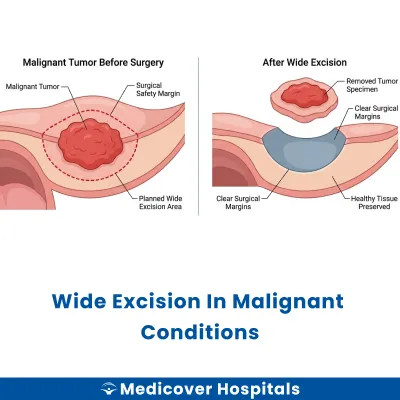
Wide excision in malignant conditions is a surgical procedure to remove cancerous tissues along with some surrounding healthy tissue. This is done to ensure that no cancer cells remain. The procedure can involve various organs or body parts, such as the breast, skin, or soft tissues. It is often used in cases where a tumour needs to be removed completely to prevent the spread of cancer.
This surgery is crucial for treating certain cancers. Conditions like melanoma, breast cancer, and sarcomas may require wide excision. If left untreated, these conditions can lead to the spread of cancer to other parts of the body. Modern surgical approaches, such as minimally invasive techniques and robotic-assisted surgery, are available for wide excision in malignant conditions. These methods aim to reduce recovery time and improve outcomes.
Wide Excision In Malignant Conditions Doctors Near You
Discover experienced oncologists for wide excision in malignant conditions at Medicover Hospitals across India. Choose your city and book a consultation to discuss your treatment options today.
Why Choose Medicover Hospitals for Wide Excision IN Malignant Conditions?
Get a second opinion from trusted experts and makeconfident, informed decisions.
 Get Second Opinion
Complete Guide To Wide Excision In Malignant Conditions
Everything you need to know about the procedure, preparation, and recovery
Wide Excision in Malignant Conditions Surgery Indications
Doctors recommend wide excision surgery when malignant conditions require removal of cancerous tissue with a margin of healthy tissue. This procedure is often considered when other treatments are insufficient or when the tumour is accessible for surgical removal.
Persistent Skin Lesions
Patients may notice a skin lesion that changes in size, colour, or shape. On examination, doctors may find irregular borders or bleeding. If topical treatments or minor procedures fail, wide excision may be necessary.
Breast Lump with Suspicious Features
A patient might feel a lump in the breast, often accompanied by changes in breast shape or skin texture. Imaging tests like mammograms may show irregular masses. If a biopsy confirms malignancy, wide excision is recommended.
Soft Tissue Sarcomas
Patients could experience a growing mass in the limbs or trunk. MRI or CT scans may reveal a tumour with unclear boundaries. When radiation or chemotherapy does not reduce the tumour, wide excision is advised.
Oral Cavity Tumours
Symptoms include persistent mouth sores or difficulty swallowing. Examination might show lesions or masses. If initial treatments like medication or radiation are ineffective, surgery is considered.
Melanoma
Patients may notice a mole that changes in appearance. Dermoscopic evaluation might reveal asymmetry or unusual colours. When less invasive treatments fail, wide excision is performed to prevent spread.
How to Prepare for Wide Excision in Malignant Conditions?
Proper preparation is crucial for a successful wide excision surgery. It helps reduce complications and ensures a smoother recovery. Follow these steps to prepare effectively.
- Medication Review: Inform your doctor about all medications. Stop NSAIDs, anticoagulants, and herbal supplements as advised.
- Fasting Guidelines: Follow the fasting instructions. Typically, no food or drink 8 hours before surgery.
- Pre-Surgical Tests: Complete any required blood tests, imaging, or other evaluations as scheduled.
- Clothing Choice: Wear loose, comfortable clothing on the day of surgery for ease of changing and comfort.
- Transportation: Arrange for someone to drive you home post-surgery, as you may not be able to drive yourself.
- Medication List: Bring a list of all medications with dosages to the hospital for reference.
- Smoking and Alcohol: Avoid smoking and alcohol for at least 24 hours before the procedure.
- Hygiene: Bathe with antibacterial soap the night before or morning of surgery to reduce infection risk.
Wide Excision in Malignant Conditions Surgery (Step-by-Step)
This procedure is performed by surgical oncologists. It typically lasts 1-3 hours and is done under general anaesthesia.
- Preparation: The patient is positioned comfortably on the operating table. General anaesthesia is administered to ensure the patient is asleep and pain-free.
- Incision: A surgical incision, usually 1-2 cm beyond the tumour margin, is made using a scalpel. This ensures removal of the tumour along with some surrounding healthy tissue.
- Tumour Removal: The oncologist uses instruments like a harmonic scalpel or bipolar cautery to carefully excise the tumour. The aim is to remove all malignant cells while preserving as much healthy tissue as possible.
- Margin Assessment: The excised tissue is sent to pathology to confirm clear margins. This step ensures no cancerous cells are left behind.
- Closure: The incision is closed using sutures or staples. The area is then cleaned and dressed to prevent infection.
- Recovery: The patient is moved to the recovery room. Vital signs are monitored as they wake from anaesthesia. Pain management is provided as needed.
Who Performs Wide Excision in Malignant Conditions Surgery?
This surgery is performed by oncologists, who are specialists in treating cancer. They have expertise in surgical techniques to remove tumours effectively while minimising impact on surrounding tissues.
Recovery After Wide Excision in Malignant Conditions Surgery
Recovery from wide excision surgery for malignant conditions varies based on the individual and the extent of the surgery. Patients can expect some discomfort, swelling, and a gradual return to normal activities. Adhering to medical advice is crucial for optimal healing.
Day 1-3:
- Rest is essential. Avoid strenuous activities.
- Follow a soft diet. Include foods like curd, dal-rice, and khichdi.
- Keep the surgical area clean and dry. Follow wound care instructions.
Day 4-7:
- Gradually increase light activities as tolerated.
- Continue with a balanced diet. Add moong dal and soups for nutrition.
- Attend follow-up appointments for wound assessment.
Week 2-4:
- Resume light work or school activities if approved by the doctor.
- Introduce more variety in diet, focusing on high-protein foods for healing.
- Avoid heavy lifting and intense physical activity.
Phase 2 (Week 4-6):
- Engage in regular, non-strenuous activities.
- Monitor the surgical site for any changes.
- Consult the doctor before resuming full physical activities.
When to Seek Urgent Help:
- Fever or chills indicating possible infection.
- Excessive bleeding or discharge from the surgical site.
- Severe pain not relieved by prescribed medication.
- Redness or swelling around the incision that worsens.
Benefits of Wide Excision in Malignant Conditions Surgery
Wide excision is a surgical procedure aimed at removing cancerous tissues along with some surrounding healthy tissue.
- Complete Removal: Helps in removing the entire tumour, reducing the risk of recurrence.
- Clear Margins: Ensures that cancer cells are not left behind, improving treatment outcomes.
- Localised Treatment: Targets only the affected area, preserving surrounding healthy tissues.
- Diagnostic Clarity: Provides tissue samples for further pathological examination to guide additional treatment.
Risks and Complications of Wide Excision in Malignant Conditions Surgery
Like any surgical procedure, wide excision carries certain risks and potential complications.
- Common: Infection at the surgical site, which may require antibiotics.
- Common: Bleeding during or after the procedure, potentially needing additional intervention.
- Rare: Damage to surrounding organs or tissues, depending on the tumour's location.
- Rare: Scarring, which may be noticeable and require cosmetic attention.
- Rare: Reaction to anaesthesia, which can vary in severity.
Cost of Wide Excision in Malignant Conditions Surgery
The cost of Wide Excision in Malignant Conditions surgery at Medicover Hospitals ranges from Rs. 54,000 to Rs. 331,000. The price varies based on the ward category chosen, such as day care, general, twin sharing, private, and more.
We offer transparent pricing and support for insurance and TPA, including CGHS, ESI, and major TPAs. Cashless facilities are available to ease your financial concerns. Please contact the hospital for the latest insurance panel details as these may change periodically.
Frequently Asked Questions
1. How much does Wide Excision In Malignant Conditions surgery cost at Medicover Hospitals?
The cost ranges from Rs. 54,000 to Rs. 331,000 across Medicover Hospitals. Prices vary based on room type and care level.
2. Is Wide Excision In Malignant Conditions surgery covered under health insurance at Medicover?
Yes, it is covered by CGHS, ESI, and major TPAs for cashless treatment. Please contact the hospital for current panel details.
3. Will I need speech therapy after laryngeal excision?
Yes, speech therapy may be necessary to regain voice function. It helps in adapting to changes post-surgery.
4. Can I eat spicy food after oesophageal tumour excision?
Avoid spicy food like chilli and masala for a few weeks. Opt for soft foods like curd, dal-rice, and khichdi initially.
5. Will I have difficulty swallowing after pharyngeal tumour excision?
Swallowing difficulties are common initially post-surgery. Gradual improvement is expected with therapy and dietary adjustments.
6. Can I return to work immediately after submandibular gland excision?
Most patients return to work within 1-2 weeks. Recovery depends on individual healing and the nature of your job.
7. Will thymoma excision affect my breathing?
Breathing difficulties can occur temporarily post-surgery. Regular follow-ups and breathing exercises aid in recovery.
8. What is a wide excision of a tumor?
Wide local excision is a surgical procedure where the tumor is removed along with a margin of healthy surrounding tissue to reduce the risk of recurrence. It is commonly used for skin cancers and soft tissue tumors.
9. Is wide excision surgery painful?
Wide local excision is usually performed under local or general anesthesia, so there is little to no pain during the procedure. Mild to moderate pain may occur after surgery but is generally manageable with medications.
10. How long does wide excision surgery take?
Wide local excision typically takes 30 minutes to 2 hours, depending on the size and location of the tumor.


