 Call
Call Patient Reports
Wide Excision and Reconstruction for Malignant Skin Tumors Surgery by Expert Dermatologists
At Medicover Hospitals, our dermatologists, with qualifications like MS, DNB, and MCh, perform open wide excision and reconstruction for malignant skin tumors. This surgical approach ensures precise removal and effective reconstruction. Patients benefit from reduced blood loss and improved recovery times across India.
Expert Surgeons
Yearly Surgeries
Patient Satisfaction
What is Wide Excision and Reconstruction for Malignant Skin Tumors?
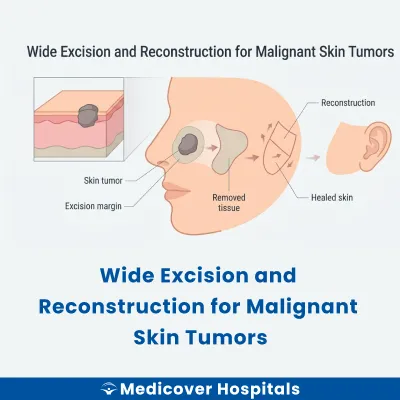
Wide excision and reconstruction for malignant skin tumors is a surgical procedure involving the removal of cancerous skin tissues. This procedure targets the skin, the body's largest organ. During wide excision, the surgeon removes the tumor along with a margin of healthy tissue to ensure all cancer cells are eliminated. Reconstruction follows to restore the skin's appearance and function, often using skin grafts or flaps.
This surgery is essential for treating malignant skin tumors like melanoma and squamous cell carcinoma. If left untreated, these tumors can spread to other parts of the body. Modern surgical approaches include Mohs micrographic surgery and sentinel lymph node biopsy. These techniques help achieve precise removal and assess cancer spread. Early intervention is crucial to prevent complications and improve outcomes.
Wide Excision and Reconstruction for Malignant Skin Tumors Doctors Near You
Find experienced dermatologists for wide excision and reconstruction of malignant skin tumors at Medicover Hospitals across India. Choose your city and book a consultation today for expert care.
Why Choose Medicover Hospitals for Wide Excision and Reconstruction for Malignant Skin Tumors?
Get a second opinion from trusted experts and makeconfident, informed decisions.
 Get Second Opinion
Complete Guide To Wide Excision And Reconstruction For Malignant Skin Tumors
Everything you need to know about the procedure, preparation, and recovery
Wide Excision and Reconstruction for Malignant Skin Tumors Surgery Indications
Doctors recommend wide excision and reconstruction for malignant skin tumors when the tumor is aggressive or has a high risk of spreading. This procedure is often suggested when conservative treatments are ineffective in managing the tumor.
Persistent Skin Lesions
Patients may notice a skin lesion that does not heal or changes in size, shape, or colour. On examination, doctors find irregular borders or multiple colours. When topical treatments or minor excisions fail to resolve the lesion, surgery becomes necessary.
Ulcerated Tumors
Some patients experience bleeding or ulceration in a skin lesion. Doctors may observe a non-healing ulcer with raised edges. If topical or less invasive treatments do not promote healing, wide excision is considered.
Rapidly Growing Tumors
Patients might report a sudden increase in the size of a skin lesion. Doctors find rapid growth on clinical examination or imaging. When growth continues despite conservative management, surgical intervention is required.
Infiltrative Tumors
Patients may feel a firm mass under the skin. Doctors detect infiltration into deeper tissues through imaging or Sample collection. Surgery is advised when the tumor invades beyond the skin surface.
Recurrent Tumors
Some patients have previously treated skin tumors that return. Doctors confirm recurrence through biopsy or imaging. When recurrence occurs despite previous treatments, wide excision is recommended.
How to Prepare for Wide Excision and Reconstruction for Malignant Skin Tumors?
Preparation is crucial for a successful wide excision and reconstruction. It helps minimize risks and ensures a smoother recovery process.
- Medication Review: Stop NSAIDs, anticoagulants, and herbal supplements at least a week before surgery. Consult your doctor for specific guidance.
- Fasting Guidelines: Fast for at least 8 hours before the procedure if general anaesthesia is used.
- Skin Care: Avoid applying lotions, creams, or makeup on the affected area on the day of surgery.
- Comfortable Clothing: Wear loose, comfortable clothing to the hospital. It makes changing easier post-surgery.
- Transportation: Arrange for someone to drive you home after the procedure. You may feel drowsy from anaesthesia.
- Medication List: Bring a list of all medications you are taking, including dosages, to the hospital.
- Smoking and Alcohol: Avoid smoking and alcohol for at least 48 hours before surgery to aid healing.
- Pre-Surgery Instructions: Follow any additional instructions given by your healthcare provider specific to your condition.
Wide Excision and Reconstruction for Malignant Skin Tumors Surgery (Step-by-Step)
Overview: This procedure is performed by oncologists. It typically lasts 1 to 3 hours. General or local anaesthesia is used, depending on the tumor condition's location and size.
- Preparation: The patient is positioned comfortably. Anaesthesia is administered to ensure no pain during the surgery.
- Marking the Area: The surgeon marks the tumor and surrounding tissue, usually 1-2 cm beyond the visible edges, to ensure complete removal.
- Incision: Using a scalpel, the surgeon makes an incision around the marked area. The size depends on the tumor's size and location.
- Excision: The tumor and a margin of healthy tissue are removed using surgical instruments like a curette or harmonic scalpel. This helps ensure all cancerous cells are excised.
- Tissue Examination: The excised tissue is sent for pathological examination to confirm complete removal of cancerous cells.
- Reconstruction: If needed, the surgeon reconstructs the area using skin grafts or flaps to restore appearance and function.
- Closure: The incision is closed with sutures or staples. A dressing is applied to protect the area and aid healing.
Who Performs Wide Excision and Reconstruction for Malignant Skin Tumors Surgery?
This surgery is performed by dermatologic surgeons. They have expertise in removing skin tumors and reconstructing the affected area to maintain functionality and appearance.
Recovery After Wide Excision and Reconstruction for Malignant Skin Tumors Surgery
Recovery from wide excision and reconstruction for malignant skin tumors involves careful monitoring and gradual resumption of daily activities. It's essential to follow your doctor's instructions to ensure proper healing.
Day 1-3:
- Rest is crucial. Keep the surgical area clean and dry.
- Take prescribed medications to manage pain and prevent infection.
- Consume soft, easy-to-digest foods like curd, dal-rice, and soups.
Day 4-7:
- Continue with light activities. Avoid strenuous exercises.
- Attend follow-up appointments to check the healing process.
- Introduce light meals such as khichdi and moong dal to your diet.
Day 8-14:
- Gradually increase activity levels as advised by your doctor.
- Most people can return to work or school, depending on the nature of their job.
- Maintain a balanced diet to support recovery.
Phase: Weeks 3-6
- Engage in regular, moderate activities. Avoid heavy lifting.
- Continue to monitor the surgical site for any changes.
- Follow a nutritious diet to aid in tissue repair and overall health.
When to Seek Urgent Help:
- Severe pain unrelieved by medication.
- Signs of infection such as redness, swelling, or discharge from the surgical site.
- Fever or chills.
- Sudden changes in the appearance of the surgical area.
Benefits of Wide Excision and Reconstruction for Malignant Skin Tumors Surgery
Wide excision and reconstruction is a surgical approach for treating malignant skin tumors. It offers several benefits:
- Complete Tumor Removal: This procedure aims to remove the entire tumor, reducing the risk of recurrence.
- Preservation of Healthy Tissue: By targeting only the affected area, it helps preserve surrounding healthy skin.
- Reconstruction for Aesthetic Outcomes: Reconstruction techniques can improve the cosmetic appearance post-surgery.
- Reduced Risk of Metastasis: Early and complete removal of the tumor can lower the chances of cancer spreading.
Risks and Complications of Wide Excision and Reconstruction for Malignant Skin Tumors Surgery
While this surgery is generally safe, it carries certain risks and complications:
Common Risks
- Infection at the surgical site can occur, requiring medical attention.
- Scarring is a typical outcome, though reconstruction aims to minimize its appearance.
Rare Risks
- Bleeding during or after the procedure may require intervention.
- Nerve damage could result in temporary or permanent loss of sensation.
- Delayed wound healing might occur, especially in patients with underlying health conditions.
Cost of Wide Excision and Reconstruction for Malignant Skin Tumors Surgery
The cost of Wide Excision and Reconstruction for Malignant Skin Tumors Surgery at Medicover Hospitals ranges from ₹50,000 to ₹3,50,000. The price varies based on the ward category chosen, such as day care, general, private, or suite options. We offer transparent pricing and support for insurance and TPA, including CGHS, ESI, and major TPAs. Cashless facilities are available for your convenience. Please contact the hospital for the latest insurance panel details as these may change periodically.
Frequently Asked Questions
1. How much does Wide Excision and Reconstruction for Malignant Skin Tumors surgery cost at Medicover Hospitals?
The surgery costs between ₹50,000 to ₹3,50,000 at Medicover Hospitals. Prices vary based on room type and care level.
2. Is Wide Excision and Reconstruction for Malignant Skin Tumors surgery covered under health insurance at Medicover?
Yes, it is often covered by CGHS, ESI, and major TPAs with cashless options. Please contact the hospital for current panel details.
3. Will I have visible scars after the surgery?
Scarring is possible after wide excision and reconstruction. Surgeons aim to minimise scars, but some may remain visible.
4. Can I go out in the sun after surgery?
Sun exposure should be limited after surgery to protect healing skin. Use sunscreen and cover the area when outdoors.
5. What foods help in healing after skin tumor surgery?
Include protein-rich foods like dal, curd, and green leafy vegetables. These can aid in faster recovery and tissue repair.
6. How soon can I resume physical activities?
Light activities can typically resume after 2 weeks. Strenuous exercises should be avoided for at least 4-6 weeks post-surgery.
7. Will I need follow-up treatments after surgery?
Follow-up treatments depend on the tumor type and margins. Regular check-ups are essential to monitor for any recurrence.


