 Call
Call Patient Reports
Best Hospital for Voice Prosthesis Insertion Surgery with Advanced ENT Care
At Medicover Hospitals, our Ent doctors, with qualifications like MS, DNB, MCh, and DM, perform voice prosthesis insertion using the open surgical approach. This procedure helps restore speech for patients post-laryngectomy. The open method ensures effective placement and results in a shorter hospital stay.
Expert Surgeons
Yearly Surgeries
Patient Satisfaction
What is Voice Prosthesis Insertion?
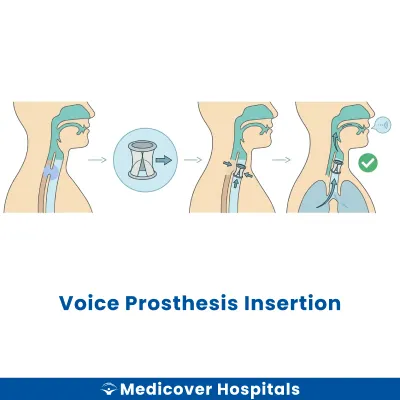
Voice prosthesis insertion is a surgical procedure to help individuals speak after losing their voice box (larynx). The larynx is removed due to conditions like cancer. A voice prosthesis, a small device, is placed between the trachea (windpipe) and the esophagus (food pipe). This device allows air to flow from the lungs to the esophagus, enabling speech.
This surgery is often needed after a total laryngectomy, where the larynx is removed. Conditions like laryngeal cancer can necessitate this procedure. Without it, patients may lose their ability to speak. Modern surgical approaches for voice prosthesis insertion include primary and secondary tracheoesophageal puncture. These methods help restore speech and improve quality of life.
Voice Prosthesis Insertion Doctors Near You
Find skilled ENT Doctors for voice prosthesis insertion at Medicover Hospitals across India. Choose your city and book a consultation to explore your options for effective treatment.
Why Choose Medicover Hospitals for Voice Prosthesis Insertion?
Get a second opinion from trusted experts and makeconfident, informed decisions.
 Get Second Opinion
Complete Guide To Voice Prosthesis Insertion
Everything you need to know about the procedure, preparation, and recovery
Voice Prosthesis Insertion Surgery Indications
Voice prosthesis insertion is recommended for patients who have undergone a laryngectomy procedure and wish to regain their ability to speak. This procedure is typically considered when other voice rehabilitation methods are ineffective or unsuitable.
Post-Laryngectomy Voice Loss
Patients experience complete loss of voice following a laryngectomy. Examination reveals the absence of vocal cords. When speech therapy and other non-surgical methods fail, voice prosthesis insertion is considered.
Tracheoesophageal Puncture (TEP) Failure
Some patients with TEP experience leakage or poor voice quality. Doctors find persistent leakage around the puncture site or inadequate voice production. When adjustments and conservative measures do not resolve these issues, surgery is recommended.
Severe Aspiration
Patients may experience frequent coughing and choking during swallowing. Tests show aspiration of food or liquids into the trachea. If dietary modifications and swallowing therapy do not help, voice prosthesis insertion may be advised.
Inadequate Esophageal Speech
Patients struggle with esophageal speech, resulting in low volume or unclear voice. Speech evaluations show insufficient air intake or control. When training and exercises are unsuccessful, a prosthesis can offer a solution.
Failed Electrolarynx Use
Some patients find the electrolarynx uncomfortable or ineffective. Observations include poor sound quality or difficulty in device handling. When alternative devices do not meet communication needs, voice prosthesis insertion is considered.
How to Prepare for Voice Prosthesis Insertion?
Proper preparation for voice prosthesis insertion is crucial to ensure a smooth procedure and recovery. It helps minimise risks and enhances the effectiveness of the surgery.
- Medication Review: Discuss all medications with your doctor. Stop NSAIDs, anticoagulants, and herbal supplements as advised.
- Fasting: Follow the fasting guidelines. Typically, no food or drink for at least 6-8 hours before the procedure.
- Medical History: Bring a list of current medications with dosages. Include any allergies or past surgeries.
- Clothing: Wear loose, comfortable clothing on the day of the procedure for ease of movement.
- Transportation: Arrange for someone to drive you home post-procedure, as you may feel drowsy from anaesthesia.
- Pre-Surgery Instructions: Follow any specific instructions given by your surgeon regarding throat care or voice rest.
- Post-Procedure Care: Understand the aftercare instructions, including voice rest and follow-up appointments.
- Insurance and Documentation: Check with the hospital regarding insurance coverage. Please contact the hospital for current details as insurance panels may change.
Voice Prosthesis Insertion Surgery (Step-by-Step)
Overview: Voice prosthesis insertion is performed by ENT specialists or oncologists. The procedure typically lasts 1-2 hours and is done under general anaesthesia.
- Preparation: The patient is positioned comfortably. General anaesthesia is administered to ensure the patient is asleep and pain-free.
- Incision: A small incision, about 1-2 cm, is made in the tracheoesophageal wall. This allows access for the prosthesis insertion.
- Tract Creation: A trocar is used to create a tract between the trachea and the oesophagus. This tract will hold the voice prosthesis.
- Prosthesis Insertion: The voice prosthesis is carefully inserted into the tract using a specialised inserter tool. The prosthesis allows air to pass from the lungs to the oesophagus, enabling speech.
- Positioning: The prosthesis is adjusted to ensure it fits snugly and functions properly. The surgeon checks for any leaks or discomfort.
- Closure: The incision is closed using sutures or adhesive strips. The area is cleaned and dressed to prevent infection.
- Recovery: The patient is moved to a recovery area. They are monitored as they wake up from anaesthesia. Initial discomfort is managed with medication.
Who Performs Voice prosthesis insertion Surgery?
This surgery is performed by ENT specialists or cancer specialists with expertise in head and neck procedures. They have the skills to handle the delicate structures involved and ensure proper placement of the prosthesis.
Recovery After Voice Prosthesis Insertion Surgery
Voice prosthesis insertion surgery is a significant procedure that requires careful attention during recovery. Patients can expect some adjustments as they adapt to the new prosthesis. It's important to follow medical advice closely to ensure a smooth recovery.
Day 1-3:
- Rest is crucial. Avoid speaking as much as possible to allow healing.
- Stick to a soft diet. Include foods like curd, dal-rice, and soups.
- Stay hydrated but avoid very hot or cold beverages.
Day 4-7:
- Gradually reintroduce speaking, but limit conversations to short durations.
- Continue with a soft diet. Khichdi and moong dal are good options.
- Avoid strenuous activities. Light walking is permissible.
Day 8-14:
- Speech therapy may begin. Follow the therapist's guidance for exercises.
- Slowly introduce more textured foods, ensuring they are easy to swallow.
- Most can resume work or school, depending on the nature of the job.
Phase 3 (Week 3-4):
- Increase speaking duration gradually. Continue speech therapy exercises.
- Return to a regular diet, avoiding very spicy or hard foods initially.
- Resume normal activities, but avoid heavy lifting or intense exercise.
When to Seek Urgent Help
- Difficulty breathing or swallowing
- Severe pain not relieved by prescribed medication
- Signs of infection: fever, increased redness, or swelling around the site
- Prosthesis displacement or malfunction
Benefits of Voice Prosthesis Insertion Surgery
Voice prosthesis insertion helps individuals regain their ability to speak after a laryngectomy. This procedure offers several benefits:
- Improved Communication: Enables patients to speak more naturally and be understood by others.
- Enhanced Quality of Life: Restores the ability to engage in conversations, boosting confidence and social interactions.
- Non-Invasive Maintenance: The prosthesis can be easily maintained and replaced without additional surgery.
- Quick Recovery: Most patients can resume normal activities shortly after the procedure.
Risks and Complications of Voice Prosthesis Insertion Surgery
While voice prosthesis insertion is generally safe, there are potential risks and complications:
- Common: Infection at the site of insertion.
- Common: Displacement or leakage of the prosthesis.
- Rare: Difficulty in fitting the prosthesis properly.
- Rare: Granulation tissue formation around the prosthesis.
- Rare: Aspiration of fluids through the prosthesis.
Cost of Voice prosthesis insertion Surgery
The cost of Voice prosthesis insertion surgery at Medicover Hospitals ranges from Rs. 27,500 to Rs. 64,000. The price varies depending on the ward category chosen, such as day care, general, private, or deluxe.
Medicover Hospitals offers transparent pricing and supports insurance and TPA services, including CGHS, ESI, and major TPAs. A cashless facility is also available for added convenience. Please contact the hospital for the latest insurance panel details as these may change periodically.
Frequently Asked Questions
1. How much does Voice prosthesis insertion cost?
The cost of Voice prosthesis insertion surgery at Medicover Hospitals ranges from Rs. 27,500 to Rs. 64,000, depending on the room type and care level.
2. Is Voice prosthesis insertion covered by insurance?
Voice prosthesis insertion may be covered under CGHS, ESI, and major TPAs. Please contact the hospital for current panel details.
3. Will I regain my voice immediately after surgery?
After Voice prosthesis insertion, it may take a few days to start speaking. Recovery varies, and voice therapy might be needed for optimal results.
4. Can I eat normally after Voice prosthesis insertion?
Post-surgery, start with soft foods like dal-rice and khichdi. Gradually reintroduce regular foods as advised by your doctor.
5. What complications can occur with Voice prosthesis?
Common complications include leakage around the prosthesis and infection. Regular follow-ups are essential to monitor and address any issues promptly.
6. Will I need speech therapy after the surgery?
Yes, speech therapy is often recommended to help you adapt to using the prosthesis effectively. It enhances communication and improves voice quality.
7. How long before I can speak clearly again?
Clear speech may take several weeks post-surgery. Consistent practice and therapy sessions will aid in achieving better voice clarity.
8. How do you insert a voice prosthesis?
A voice prosthesis is inserted by a specialist (ENT surgeon or speech therapist) through a tracheoesophageal puncture (TEP). The device is placed between the windpipe and food pipe, allowing air to pass and produce speech. It is a quick procedure, usually done under local or general anesthesia.
9. How long does a voice prosthesis last?
A voice prosthesis typically lasts about 3 to 6 months, although some may last longer depending on care, usage, and individual factors. Regular follow-up is needed for cleaning and replacement.
10. Can you talk with a voice prosthesis while eating?
Yes, but patients are usually advised to avoid speaking while swallowing to prevent discomfort or aspiration. The prosthesis has a valve that helps prevent food or liquid from entering the airway.


