 Call
Call Patient Reports
Best Hospital for Vesicovaginal Fistula Repair Surgery with Advanced Urogynecological Care
At Medicover Hospitals, our team of urologists, with qualifications like MS, DNB, and MCh, perform vesicovaginal fistula repair using advanced laparoscopic techniques. This approach ensures smaller incisions and reduced blood loss, leading to a shorter hospital stay for patients.
Expert Surgeons
Yearly Surgeries
Patient Satisfaction
What is Vesicovaginal Fistula Repair?
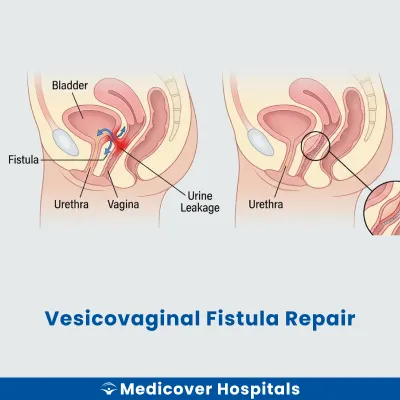
Vesicovaginal Fistula Repair is a surgical procedure to correct an abnormal connection between the bladder (vesico) and the vagina. This connection, known as a fistula, can cause urine to leak from the bladder into the vaginal canal. The repair involves closing this passage to restore normal function and prevent leakage.
This surgery is needed when a fistula develops due to childbirth complications, pelvic surgery, or radiation therapy. If left untreated, it can lead to infections and social discomfort. Modern surgical approaches for Vesicovaginal Fistula Repair include transvaginal and transabdominal techniques. These methods aim to effectively close the fistula and restore normal urinary function. Early intervention is crucial to avoid complications and improve quality of life.
Vesicovaginal Fistula Repair Doctors Near You
Find experienced urologists for vesicovaginal fistula repair at Medicover Hospitals across India. Choose your city and book a consultation to discuss your treatment options with our specialists.
Why Choose Medicover Hospitals for Vesicovaginal Fistula Repair?
Get a second opinion from trusted experts and makeconfident, informed decisions.
 Get Second Opinion
Complete Guide To Vesicovaginal Fistula Repair
Everything you need to know about the procedure, preparation, and recovery
Vesicovaginal Fistula Repair Surgery Indications
Doctors recommend vesicovaginal fistula repair surgery when a fistula forms between the bladder and the vagina. This condition often leads to continuous urinary leakage, affecting the patient's quality of life. Surgery is considered when conservative treatments fail to resolve the issue.
Persistent Urinary Leakage
Patients experience continuous urine leakage from the vagina, leading to discomfort and hygiene issues. Examination reveals a fistula connecting the bladder and vagina. When lifestyle changes and medications do not help, surgery is needed.
Recurrent Urinary Tract Infections (UTIs)
Frequent UTIs occur due to urine leakage into the vaginal area. Patients report burning sensation and frequent urination. Persistent infections despite antibiotics suggest the need for surgical repair.
Vaginal Discharge with Urine Odour
Patients notice an unusual discharge with a strong urine smell. This symptom indicates a possible fistula. When conservative measures fail to manage the discharge, surgery is advised.
Skin Irritation and Infections
Constant urine leakage causes skin irritation and infections around the genital area. Examination shows skin breakdown and redness. Surgery is recommended when topical treatments do not provide relief.
Failed Previous Surgical Repair
Some patients have undergone previous repair attempts without success. Persistent symptoms and imaging confirm the presence of a fistula. Further surgical intervention is necessary to address the issue.
How to Prepare for Vesicovaginal Fistula Repair?
Proper preparation is crucial for a successful vesicovaginal fistula repair. It helps minimise complications and ensures a smoother recovery.
- Medication Review: Stop NSAIDs, anticoagulants, and herbal supplements as advised by your doctor.
- Fasting Guidelines: Fast for at least 8 hours before the surgery to ensure safety during anaesthesia.
- Bowel Preparation: Follow any bowel prep instructions provided by your healthcare team to reduce infection risk.
- Pelvic Floor Exercises: Practice exercises if recommended to strengthen muscles before surgery.
- Comfortable Clothing: Wear loose clothing on the day of surgery for comfort and ease of movement.
- Transportation: Arrange for someone to drive you home post-surgery, as you may feel drowsy.
- Medication List: Bring a list of all medications with dosages to the hospital for reference.
- Pre-Surgery Consultation: Attend all pre-surgery appointments to discuss any concerns with your surgeon.
Vesicovaginal Fistula Repair Surgery (Step-by-Step)
This surgery is performed by skilled urologists. It typically lasts 2-4 hours. General anaesthesia is usually administered to ensure the patient is asleep and pain-free.
- Preparation: The patient is positioned on the operating table. General anaesthesia is administered for comfort.
- Incision: A small incision, usually 1-2 cm, is made in the vaginal wall to access the fistula. This allows the surgeon to reach the affected area.
- Fistula Exposure: The surgeon uses retractors to gently expose the fistula. This step is crucial for clear visibility.
- Fistula Repair: The surgeon carefully closes the fistula using sutures. Instruments like a bipolar cautery may be used to control bleeding.
- Tissue Reinforcement: Additional tissue, often from nearby areas, may be used to reinforce the repair. This helps in preventing recurrence.
- Closure: The incision is closed with sutures. The area is cleaned and dressed to promote healing.
- Recovery: The patient is moved to the recovery room. Vital signs are monitored as the anaesthesia wears off.
Who Performs Vesicovaginal Fistula Repair Surgery?
This surgery is performed by urologists. They specialise in the urinary tract and related structures. Their expertise ensures effective management of conditions like fistulas.
Recovery After Vesicovaginal Fistula Repair Surgery
Recovery from vesicovaginal fistula repair surgery involves gradual healing and care. Patients can expect to stay in the hospital for a few days post-surgery. It's important to follow medical advice for a smooth recovery.
Day 1-3:
- Hospital stay is common. Pain management and monitoring are priorities.
- Start with a liquid diet, gradually moving to soft foods like soups and dal-rice.
- Rest is crucial. Avoid any physical exertion.
Day 4-7:
- Transition to a light diet including khichdi, moong dal, and curd.
- Continue to avoid heavy lifting and strenuous activities.
- Walking short distances is encouraged to prevent blood clots.
Week 2-4:
- Gradually resume normal diet while avoiding spicy and oily foods.
- Light household activities may be resumed, but avoid bending or lifting.
- Most patients can return to work or school after 3-4 weeks, depending on recovery.
Phase 2 (Month 2-3):
- Regular activities can be resumed gradually. Avoid high-impact exercises.
- Continue with follow-up appointments to monitor healing.
When to Seek Urgent Help
- Fever or chills indicating possible infection.
- Severe abdominal pain or swelling.
- Unusual discharge or bleeding from the surgical site.
- Difficulty urinating or persistent leakage.
Benefits of Vesicovaginal Fistula Repair Surgery
Vesicovaginal fistula repair surgery aims to restore normal urinary function and improve quality of life.
- Restored Bladder Function: Helps in regaining control over urination.
- Improved Quality of Life: Reduces discomfort and social embarrassment.
- Prevention of Infections: Decreases the risk of recurrent urinary tract infections.
- Enhanced Emotional Well-being: Alleviates psychological stress associated with the condition.
Risks and Complications of Vesicovaginal Fistula Repair Surgery
While the surgery is generally safe, there are potential risks and complications to consider.
- Common: Infection at the surgical site.
- Common: Bleeding during or after the procedure.
- Rare: Recurrence of the fistula.
- Rare: Injury to surrounding organs such as the bladder or ureters.
- Rare: Anesthesia-related complications.
- Rare: Formation of scar tissue leading to urinary obstruction.
Cost of Vesicovaginal Fistula Repair Surgery
The cost of Vesicovaginal Fistula Repair Surgery across Medicover Hospitals ranges from Rs. 40,500 to Rs. 59,500, depending on the ward category chosen. Prices vary based on the type of accommodation, such as day care, general, private, and deluxe options.
We offer transparent pricing and support for insurance and TPA, including CGHS, ESI, and major TPAs. A cashless facility is also available. Please contact the hospital for the latest insurance panel details as these may change periodically.
Frequently Asked Questions
1. How much does Vesicovaginal Fistula Repair surgery cost at Medicover Hospitals?
The cost of Vesicovaginal Fistula Repair surgery at Medicover Hospitals ranges from Rs. 40,500 to Rs. 59,500, depending on the room type and care level.
2. Is Vesicovaginal Fistula Repair surgery covered under health insurance at Medicover?
Vesicovaginal Fistula Repair surgery may be covered under CGHS, ESI, and major TPAs, with cashless options available. Please contact the hospital for current panel details.
3. Will I need a catheter after Vesicovaginal Fistula Repair?
Yes, a catheter is often required after Vesicovaginal Fistula Repair to ensure proper healing. It is usually removed within a few weeks post-surgery.
4. Can I experience urinary incontinence post-surgery?
Some patients may experience temporary urinary incontinence after Vesicovaginal Fistula Repair. This usually improves as the surgical site heals.
5. What foods should I avoid after Vesicovaginal Fistula Repair?
Avoid spicy and acidic foods like pickles and citrus fruits. Opt for bland options like curd, dal-rice, and khichdi to aid recovery.
6. How soon can I resume sexual activity post-surgery?
It is generally advised to wait at least 6-8 weeks before resuming sexual activity after Vesicovaginal Fistula Repair. Consult your doctor for personalized advice.
7. Can Vesicovaginal Fistula recur after repair?
While recurrence is rare, it is possible after Vesicovaginal Fistula Repair. Regular follow-ups with your doctor can help monitor and manage any complications.
8. What is the success rate of VVF repair?
VVF repair surgery has a high success rate, typically around 85% to 95%, especially when performed by experienced surgeons and in properly selected cases. Early diagnosis and proper post-operative care further improve outcomes.
9. Is surgery always needed for VVF?
In most cases, surgery is required to close the fistula. Very small fistulas may sometimes heal with catheterization and conservative management, but this is uncommon.
10. What is the recovery time for VVF repair surgery?
Recovery usually takes about 4 to 6 weeks, during which a urinary catheter may be kept in place to allow proper healing. Patients are advised to avoid strenuous activities during this period.
11. Is fistula surgery a major or minor surgery?
VVF repair is generally considered a major surgery, as it involves delicate reconstruction of the bladder and vaginal wall, often requiring anesthesia and careful post-operative monitoring.


