 Call
Call Patient Reports
Ventricular Tachycardia Ablation Hospital With Expert Cardiologists & Trusted Surgical Care
At Medicover Hospitals, our cardiologists, holding qualifications like DM and DNB, perform Ventricular Tachycardia Ablation using advanced catheter-based techniques. This minimally invasive approach helps in managing heart rhythm disorders effectively, often resulting in shorter hospital stays and quicker recovery for patients across India.
Expert Specialists
Yearly Treatments
Patient Satisfaction
What is Ventricular Tachycardia Ablation?
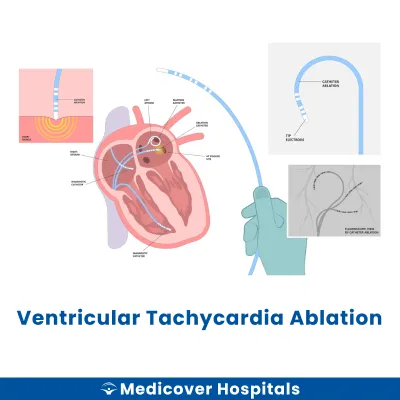
Ventricular Tachycardia Ablation is a medical procedure targeting the heart. It involves using energy to destroy small areas of heart tissue causing abnormal electrical signals. These signals lead to a fast heart rhythm known as ventricular tachycardia (VT). The procedure helps restore normal heart rhythm and is performed in a specialised setting.
This surgery is needed when VT poses a risk to heart health. Conditions like heart disease or previous heart attacks can lead to VT. If left untreated, VT can cause serious complications, including cardiac arrest. Modern approaches for this procedure include radiofrequency ablation and cryoablation. These methods offer precise treatment to manage and correct the abnormal heart rhythm.
Ventricular Tachycardia Ablation Doctors Near You
Discover skilled cardiologists for ventricular tachycardia ablation at Medicover Hospitals across India. Choose your city and book a consultation to address your heart health needs effectively.
Why Choose Medicover Hospitals for Ventricular Tachycardia Ablation?
Get a second opinion from trusted experts and makeconfident, informed decisions.
 Get Second Opinion
Complete Guide To Ventricular Tachycardia Ablation
Everything you need to know about the procedure, preparation, and recovery
Ventricular Tachycardia Ablation Procedure Indications
Doctors recommend Ventricular Tachycardia Ablation when patients experience recurrent episodes of rapid heartbeats originating from the lower chambers of the heart. This procedure is often considered when medication and other non-invasive treatments fail to control the condition effectively.
Recurrent Ventricular Tachycardia
Patients may experience frequent episodes of palpitations, dizziness, or fainting. Diagnostic tests like ECG or Holter monitoring show repeated instances of ventricular tachycardia. When medications do not adequately control these episodes, ablation is considered.
Drug-Resistant Ventricular Tachycardia
Some patients continue to have symptoms like chest pain or shortness of breath despite taking antiarrhythmic drugs. Doctors may find persistent abnormal heart rhythms on ECG. Ablation is recommended when drugs fail to manage the condition.
Structural Heart Disease
Individuals with conditions like cardiomyopathy may experience ventricular tachycardia. Symptoms include fatigue and palpitations. Imaging tests reveal structural abnormalities. Ablation is suggested when these abnormalities lead to uncontrollable arrhythmias.
Post-Myocardial Infarction
After a heart attack, some patients develop ventricular tachycardia. Symptoms can include sudden heart rate increases and fainting. ECG and imaging may show scar tissue in the heart. Ablation is considered when these arrhythmias are not managed by medication.
Idiopathic Ventricular Tachycardia
Patients without structural heart disease may still experience ventricular tachycardia. Symptoms include palpitations and lightheadedness. ECG findings confirm the arrhythmia. Ablation is an option when symptoms persist despite lifestyle changes.
How to Prepare for Ventricular Tachycardia Ablation?
Proper preparation for Ventricular Tachycardia Ablation is crucial for a smooth procedure and recovery. It helps minimise risks and ensures the best possible outcome.
- Medication Review: Consult your doctor about stopping NSAIDs, anticoagulants, and herbal supplements at least a week before the procedure.
- Fasting Instructions: Do not eat or drink anything for at least 6-8 hours before the procedure due to anaesthesia requirements.
- Pre-Procedure Tests: Complete any blood tests, ECG, or imaging studies as advised by your healthcare provider.
- Clothing: Wear loose, comfortable clothing on the day of the procedure to ease movement and comfort.
- Transportation: Arrange for someone to drive you home post-procedure, as you may feel drowsy from the anaesthesia.
- Medication List: Bring a list of all medications you are currently taking, including dosages, to the hospital.
- Allergy Check: Inform your doctor about any known allergies, especially to medications or anaesthesia.
- Hydration: Stay well-hydrated the day before the procedure, unless otherwise instructed by your doctor.
Ventricular Tachycardia Ablation Procedure (Step-by-Step)
Overview: Ventricular Tachycardia Ablation is performed by Heart care specialists. The procedure typically lasts 2-4 hours and is done under general anaesthesia.
- Preparation: The patient is taken to the procedure room. An intravenous (IV) line is placed for medications. Electrodes are attached to monitor heart activity.
- Access: Small incisions (1-2 cm) are made, usually in the groin area. Catheters are inserted through these incisions and guided to the heart.
- Mapping: A special catheter is used to map the heart's electrical signals. This helps locate the area causing the irregular heartbeat.
- Ablation: Once the problematic area is identified, radiofrequency energy is delivered through the catheter. This energy destroys the tissue causing the abnormal rhythm.
- Monitoring: The heart's rhythm is monitored to ensure the abnormal signals are eliminated. Adjustments are made if necessary.
- Completion: The catheters are removed. Pressure is applied to the incision sites to prevent bleeding. Bandages are placed over the incisions.
- Recovery: The patient is moved to a recovery area. Heart rhythm and vital signs are closely monitored. Patients may feel drowsy as the anaesthesia wears off.
Who Performs Ventricular Tachycardia Ablation procedure?
This procedure is performed by interventional cardiologists. They specialise in treating heart rhythm disorders using catheter-based techniques. Their expertise ensures precise targeting of the heart tissue causing the arrhythmia.
Recovery After Ventricular Tachycardia Ablation procedure
Recovery from a Ventricular Tachycardia Ablation procedure involves gradual healing and monitoring. Patients can expect to stay in the hospital for a short period for observation. It's essential to follow post-procedure guidelines for a smooth recovery.
Day 1-2:
- Rest is crucial. Avoid strenuous activities.
- Hospital stay for monitoring heart rhythm and vital signs.
- Light meals are recommended. Opt for easily digestible foods like curd, dal-rice, and soups.
Day 3-7:
- Continue resting at home. Short walks are encouraged.
- Gradually resume normal diet. Include soft foods like khichdi and moong dal.
- Avoid lifting heavy objects or engaging in intense physical activities.
Week 2-4:
- Most patients can return to work or school, depending on their comfort and doctor's advice.
- Regular follow-up appointments to check heart function.
- Continue with a balanced diet and stay hydrated.
Phase 2 (1-3 Months):
- Gradually increase physical activities as per doctor's guidance.
- Maintain a heart-healthy diet. Include fruits, vegetables, and whole grains.
- Attend all scheduled follow-up visits to monitor progress.
When to Seek Urgent Help:
- Persistent chest pain or discomfort.
- Shortness of breath or difficulty breathing.
- Severe dizziness or fainting spells.
- Swelling in the legs or sudden weight gain.
Benefits of Ventricular Tachycardia Ablation procedure
Ventricular Tachycardia Ablation is a procedure aimed at treating abnormal heart rhythms. It offers several benefits:
- Symptom Relief: Helps reduce or eliminate episodes of rapid heartbeats.
- Improved Heart Function: Can enhance the overall efficiency of the heart.
- Reduced Medication Dependence: May decrease the need for long-term medication.
- Enhanced Quality of Life: Allows patients to engage in daily activities with fewer restrictions.
Risks and Complications of Ventricular Tachycardia Ablation procedure
While generally safe, Ventricular Tachycardia Ablation carries some risks and potential complications:
- Common: Bleeding or bruising at the catheter insertion site.
- Common: Temporary chest pain or discomfort post-procedure.
- Rare: Damage to the heart's electrical system, possibly requiring a pacemaker.
- Rare: Blood clots that could lead to stroke or heart attack.
- Rare: Infection at the catheter insertion site.
- Rare: Perforation of the heart or blood vessels.
Cost of Ventricular Tachycardia Ablation procedure
The cost of the Ventricular Tachycardia Ablation procedure at Medicover Hospitals ranges from Rs. 41,000 to Rs. 223,000. The price varies based on the ward category chosen, such as outpatient, day care, general, and deluxe options. We offer transparent pricing to ensure clarity for our patients.
Insurance and TPA support, including CGHS, ESI, and major TPAs, are accepted. A cashless facility is also available for your convenience. Please contact the hospital for the latest insurance panel details as these may change periodically.
Frequently Asked Questions
1. How much does Ventricular Tachycardia Ablation procedure cost at Medicover Hospitals?
The cost of Ventricular Tachycardia Ablation at Medicover Hospitals ranges from Rs. 41,000 to Rs. 223,000 depending on the facility and room type.
2. Is Ventricular Tachycardia Ablation procedure covered under health insurance at Medicover?
Ventricular Tachycardia Ablation is often covered by CGHS, ESI, and major TPAs. Please contact the hospital for current panel details.
3. Will I feel palpitations after ablation?
Some patients may experience palpitations initially after the procedure. These usually subside within a few weeks as the heart heals.
4. Can I exercise after Ventricular Tachycardia Ablation?
Light activities can be resumed after a week, but vigorous exercise should wait for at least 4-6 weeks. Always consult your doctor before resuming exercise.
5. Will I need medication after the procedure?
Post-ablation, some patients may need medications to manage heart rhythm. Your cardiologist will guide you on the necessary medications.
6. Can Ventricular Tachycardia recur after ablation?
There is a possibility of recurrence, though many patients experience significant improvement. Regular follow-ups are crucial to monitor heart health.
7. What foods should I avoid post-ablation?
Avoid caffeine and high-sodium foods to support heart recovery. Opt for a balanced diet with curd, dal-rice, and fresh fruits.


