 Call
Call Patient Reports
Ventral Hernia Repair Surgery Hospital with Advanced Surgical Care
At Medicover Hospitals, our team of Consultant Surgical Gastroenterologists, with qualifications like MS, DNB, and MCh, perform ventral hernia repair using advanced laparoscopic techniques. This approach results in smaller incisions and reduced blood loss, enhancing recovery and minimizing hospital stay across India.
Expert Surgeons
Yearly Surgeries
Patient Satisfaction
What is Ventral Hernia Repair?
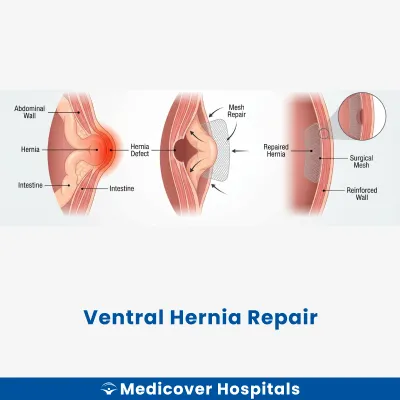
Ventral hernia repair is a surgical procedure to correct a ventral hernia. This occurs when tissue, such as part of the intestine, protrudes through a weak spot in the abdominal wall (belly area). The surgery involves returning the protruding tissue to its proper place and reinforcing the abdominal wall to prevent recurrence.
This surgery is needed to alleviate symptoms like pain and discomfort. Conditions such as obesity, previous surgeries, or heavy lifting can lead to a ventral hernia. If left untreated, it can cause complications like bowel obstruction or strangulation. Modern surgical approaches include open surgery and minimally invasive techniques like laparoscopic repair. These methods help reduce recovery time and minimize scarring.
Ventral Hernia Repair Doctors Near You
Discover skilled gastroenterologists-surgical for ventral hernia repair at Medicover Hospitals across India. Choose your city and book a consultation to address your health needs effectively.
Why Choose Medicover Hospitals for Ventral Hernia Repair?
Get a second opinion from trusted experts and makeconfident, informed decisions.
 Get Second Opinion
Complete Guide To Ventral Hernia Repair
Everything you need to know about the procedure, preparation, and recovery
Ventral Hernia Repair Surgery Indications
Doctors recommend ventral hernia repair surgery when the hernia causes significant symptoms or complications. This procedure is often considered when conservative treatments do not provide relief or when the hernia poses a risk to the patient's health.
Persistent Pain or Discomfort
Patients may experience ongoing pain or discomfort at the hernia site, especially during physical activity. On examination, doctors might find a bulge in the abdominal wall. When pain persists despite medication and lifestyle changes, surgery is advised.
Increasing Hernia Size
Some patients notice their hernia enlarging over time. Imaging tests, like ultrasounds or CT scans, can confirm this growth. If the hernia continues to expand, surgical intervention becomes necessary to prevent further complications.
Intestinal Obstruction
Symptoms like nausea, vomiting, and inability to pass gas or stool may indicate an obstruction. Doctors may detect bowel loops trapped in the hernia through imaging. When obstruction occurs, surgery is often the only solution.
Strangulation Risk
Severe pain, redness, or tenderness at the hernia site can signal strangulation, where blood supply is cut off. Immediate imaging can show compromised blood flow. Surgery is urgent to prevent tissue death.
Failure of Conservative Management
When lifestyle changes and supportive measures like wearing a truss do not alleviate symptoms, doctors may recommend surgery. Persistent or worsening symptoms despite these efforts indicate the need for surgical repair.
How to Prepare for Ventral Hernia Repair?
Proper preparation for ventral hernia repair can help ensure a smooth surgery and recovery. It reduces risks and aids in a quicker return to daily activities.
- Medication Review: Stop NSAIDs, anticoagulants, and herbal supplements as advised by your doctor.
- Fasting Instructions: Do not eat or drink anything for at least 8 hours before the surgery.
- Bowel Preparation: Follow any specific bowel prep instructions given by your healthcare provider.
- Clothing: Wear loose, comfortable clothing on the day of the surgery.
- Transportation: Arrange for someone to drive you home post-surgery.
- Medication List: Bring a list of your current medications, including dosages, to the hospital.
- Smoking and Alcohol: Avoid smoking and alcohol for at least 24 hours before surgery.
- Pre-Surgery Bathing: Bathe with an antiseptic soap as instructed to reduce infection risk.
Ventral Hernia Repair Surgery (Step-by-Step)
Ventral hernia repair is performed by surgical gastroenterologists. The procedure typically lasts 1-2 hours and is done under general anaesthesia.
- Preparation: The patient is positioned on the operating table. Anaesthesia is administered to ensure the patient is asleep and pain-free.
- Incision: A small incision, usually 1-2 cm, is made near the hernia site. This allows access to the hernia.
- Insertion of Instruments: A trocar is inserted through the incision to create space. A laparoscope is used for visual guidance. Additional small incisions may be made for other instruments.
- Hernia Reduction: The herniated tissue is gently pushed back into its proper place. A harmonic scalpel may be used to cut and cauterize tissue with precision.
- Mesh Placement: A mesh is placed over the weakened area to provide support and prevent recurrence. It is secured using sutures or tacks.
- Closure: The incisions are closed with sutures or surgical glue. Dressings are applied to protect the site.
- Recovery: The patient is moved to the recovery room. They are monitored as they wake up from anaesthesia. Pain management is provided as needed.
Who Performs Ventral Hernia Repair Surgery?
Ventral hernia repair is performed by surgical gastroenterologists. These specialists are trained in diagnosing and treating conditions of the gastrointestinal tract, including hernias. They use advanced techniques and instruments to ensure effective repair.
Recovery After Ventral Hernia Repair Surgery
Recovery from ventral hernia repair surgery involves gradual healing and a return to normal activities. Patients can expect some discomfort and restrictions in the initial days. Following the doctor's advice is crucial for a smooth recovery.
Day 1-3:
- Rest is essential. Avoid strenuous activities.
- Stick to a liquid or soft diet. Include curd, dal-rice, and soups.
- Manage pain with prescribed medications.
Day 4-7:
- Begin gentle walking to improve circulation.
- Gradually introduce soft foods like khichdi and moong dal.
- Continue avoiding heavy lifting or bending.
Day 8-14:
- Increase activity levels slowly, but avoid strenuous exercise.
- Return to work or school if approved by your doctor.
- Monitor the surgical site for any unusual changes.
Phase 3 (Week 3-4):
- Resume normal diet, focusing on balanced meals.
- Gradually return to regular activities, avoiding heavy lifting.
- Attend follow-up appointments for progress checks.
When to Seek Urgent Help:
- Severe pain unrelieved by medication.
- Fever or chills indicating possible infection.
- Redness, swelling, or discharge from the incision site.
- Difficulty breathing or chest pain.
Benefits of Ventral Hernia Repair Surgery
Ventral hernia repair surgery offers several advantages for patients experiencing discomfort or complications from a hernia.
- Pain Relief: Alleviates the pain associated with hernias.
- Improved Mobility: Enhances movement and daily activities.
- Reduced Risk of Complications: Decreases the chance of hernia strangulation.
- Enhanced Quality of Life: Improves overall well-being and comfort.
Risks and Complications of Ventral Hernia Repair Surgery
While ventral hernia repair surgery is generally safe, it carries some risks and potential complications.
- Infection at the surgical site.
- Pain or discomfort post-surgery.
- Seroma or fluid accumulation under the skin.
- Recurrence of the hernia.
- Damage to surrounding organs or tissues.
- Adverse reaction to anaesthesia.
- Blood clots or deep vein thrombosis.
Cost of Ventral Hernia Repair Surgery
The cost of Ventral Hernia Repair Surgery ranges from Rs. 27,500 to Rs. 44,000, depending on the surgical approach, hospital stay, room category, diagnostics, and post-operative care.
At Medicover Hospitals, we offer transparent pricing to ensure clarity for our patients. We support insurance and TPA services, including CGHS, ESI, and major TPAs, with cashless facility options available. Please contact the hospital for the latest insurance panel details as these may change periodically.
Frequently Asked Questions
1. How much does Ventral hernia repair surgery cost at Medicover Hospitals?
The cost of Ventral Hernia Repair Surgery ranges from Rs. 27,500 to Rs. 44,
2. For exact pricing, please contact Medicover Hospitals, as costs vary based on patient needs and location. 2. Is Ventral hernia repair surgery covered under health insurance at Medicover?
Ventral hernia repair surgery may be covered by CGHS, ESI, and major TPAs. Please contact the hospital for current panel details.
3. Will my abdominal muscles be weaker after surgery?
Post-surgery, your abdominal muscles may feel weaker temporarily. Regular physiotherapy can help regain strength over time.
4. Can I lift heavy objects after Ventral hernia repair?
Avoid lifting heavy objects for at least 6 weeks post-surgery. Consult your doctor for personalized advice on resuming heavy activities.
5. What dietary changes should I follow post-surgery?
Stick to a light diet including curd, dal-rice, and khichdi for the first week. Gradually reintroduce other foods as advised by your doctor.
6. Is there a risk of hernia recurrence after repair?
There is a small risk of recurrence after Ventral hernia repair. Following post-operative care instructions can help minimize this risk.
7. Will I have a visible scar after Ventral hernia repair?
A small scar may be visible post-surgery. Over time, it usually fades and becomes less noticeable with proper care.


