 Call
Call Patient Reports
Best Hospital for Ventral & Scar Hernia Repair with Mesh Surgery
At Medicover Hospitals, our surgical gastroenterologists, with qualifications like MS, DNB, and MCh, perform ventral and scar hernia repair using advanced laparoscopic techniques. This approach ensures smaller incisions and reduced blood loss, facilitating quicker recovery for patients across India.
Expert Surgeons
Yearly Surgeries
Patient Satisfaction
What is Ventral and Scar Hernia Repair With Mesh?
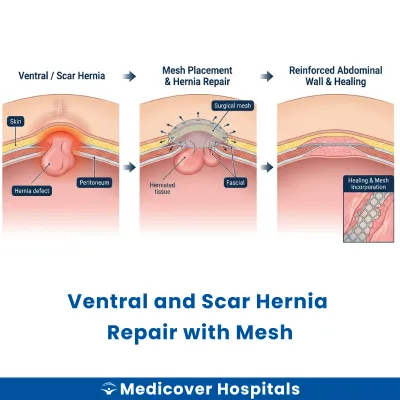
Ventral and Scar Hernia Repair with Mesh is a surgical procedure to fix hernias in the abdominal wall. A hernia occurs when an organ or tissue pushes through a weak spot in the muscle or surrounding tissue. In this procedure, a synthetic mesh is placed over the weak area. This strengthens the abdominal wall and prevents the hernia from recurring.
This surgery is needed when a hernia causes pain or discomfort. Conditions like previous surgeries or injuries can lead to ventral and scar hernias. If untreated, hernias can grow larger and cause complications. Modern surgical approaches include laparoscopic (minimally invasive) and open repair techniques. These methods help in quicker recovery and reduced post-operative pain.
Ventral and Scar Hernia Repair With Mesh Doctors Near You
Find expert gastroenterologists-surgical for ventral and scar hernia repair with mesh at Medicover Hospitals across India. Choose your city and book a consultation today for specialised care.
Why Choose Medicover Hospitals for Ventral and Scar Hernia Repair With Mesh?
Get a second opinion from trusted experts and makeconfident, informed decisions.
 Get Second Opinion
Complete Guide To Ventral And Scar Hernia Repair With Mesh
Everything you need to know about the procedure, preparation, and recovery
Ventral and Scar Hernia Repair with Mesh Surgery Indications
Doctors recommend ventral and scar hernia repair with mesh when non-surgical treatments do not relieve symptoms. This procedure is often suggested to prevent complications and improve quality of life.
Persistent Abdominal Pain
Patients may experience ongoing abdominal pain that worsens with activity. Physical examination often reveals a noticeable bulge. When pain persists despite medication and lifestyle changes, surgery is considered.
Increasing Hernia Size
A growing hernia can be detected through physical examination or imaging. Patients might notice an enlarging lump in the abdomen. Surgery is recommended when the hernia continues to increase in size, risking complications.
Intestinal Obstruction
Symptoms include severe abdominal pain, vomiting, and constipation. Imaging may show trapped intestines within the hernia. If conservative management fails to relieve obstruction, surgical repair becomes necessary.
Recurrent Hernias
Patients with previously repaired hernias may experience recurrence, indicated by similar symptoms. Examination and imaging confirm the recurrence. Surgery is advised when non-surgical methods do not prevent recurrence.
Skin Changes Over Hernia
Discoloration or ulceration of skin over the hernia indicates compromised blood supply. Examination reveals skin changes and imaging may show tissue damage. Surgery is needed when these changes persist, risking tissue death.
How to Prepare for Ventral and Scar Hernia Repair with Mesh?
Proper preparation is crucial for a smooth surgery and recovery. It helps reduce complications and ensures the best possible outcome.
- Medication Review: Stop NSAIDs, anticoagulants, and herbal supplements as advised by your doctor.
- Fasting: Do not eat or drink anything for at least 8 hours before the surgery to prepare for anaesthesia.
- Bowel Preparation: Follow any specific instructions given by your surgeon for bowel prep, if required.
- Clothing: Wear loose, comfortable clothing on the day of the surgery for ease and comfort.
- Transportation: Arrange for someone to drive you home post-surgery as you may feel drowsy.
- Medication List: Bring a list of all medications you take, including dosages, for hospital records.
- Pre-Surgery Hygiene: Take a shower using an antibacterial soap the night before or the morning of the surgery.
- Smoking and Alcohol: Avoid smoking and alcohol for at least 24 hours before the procedure.
Ventral and Scar Hernia Repair with Mesh Surgery (Step-by-Step)
This surgery is performed by Gastrointestinal surgeons. The procedure typically lasts 1 to 3 hours. It is usually done under general anaesthesia.
- Preparation: The patient is positioned comfortably on the operating table. General anaesthesia is administered to ensure the patient is asleep and pain-free.
- Incision: A small incision, usually 1-2 cm, is made near the hernia site. This allows access to the hernia.
- Hernia Exposure: The surgeon uses a laparoscope to view the hernia. The laparoscope is a thin tube with a camera, inserted through the incision.
- Hernia Reduction: The herniated tissue is gently pushed back into place. Instruments like trocars and bipolar cautery may be used for precision.
- Mesh Placement: A mesh is placed over the weakened area. This reinforces the abdominal wall and prevents recurrence.
- Securing the Mesh: The mesh is secured with sutures or surgical staples. This ensures it stays in position.
- Closure: The incision is closed with sutures or surgical glue. A dressing is applied to protect the site.
Who Performs Ventral and Scar Hernia Repair with Mesh Surgery?
This surgery is performed by surgical gastroenterologists. They have expertise in managing hernias and using laparoscopic techniques. These specialists ensure the procedure is done with care and precision.
Recovery After Ventral and Scar Hernia Repair with Mesh Surgery
Recovery from ventral and scar hernia repair with mesh surgery involves gradual healing. Patients can expect some discomfort initially, but this typically improves over time. Following your surgeon's advice and attending follow-up appointments are crucial for a smooth recovery.
Day 1-3:
- Rest is essential. Avoid strenuous activities.
- Stick to a light diet. Opt for easily digestible foods like curd, dal-rice, and soups.
- Pain and swelling are common. Follow prescribed medication schedules.
Day 4-7:
- Gradually increase light activities. Short walks are beneficial.
- Continue with a soft diet. Include khichdi and moong dal for nutrition.
- Monitor the surgical site for any unusual changes.
Day 8-14:
- Most patients can resume work or school, depending on the nature of their activities.
- Introduce more variety in your diet, but avoid heavy or spicy foods.
- Continue avoiding heavy lifting or strenuous exercises.
Phase 3 (Week 3-6):
- Normal activities can be resumed gradually.
- Maintain a balanced diet to support healing.
- Follow up with your doctor to ensure proper recovery.
When to Seek Urgent Help
- Severe pain unrelieved by medication.
- Fever or chills indicating possible infection.
- Redness, swelling, or discharge from the incision site.
- Difficulty breathing or chest pain.
Benefits of Ventral and Scar Hernia Repair with Mesh Surgery
Ventral and scar hernia repair with mesh is a common procedure aimed at providing relief and preventing recurrence.
- Reduced Recurrence Rate: Using mesh can significantly lower the chances of hernia returning.
- Enhanced Strength: Mesh provides additional support to the weakened area, improving abdominal wall strength.
- Quicker Recovery: Patients often experience faster recovery times compared to traditional suture repair.
- Minimally Invasive Options: Laparoscopic techniques can be used, resulting in smaller incisions and less scarring.
Risks and Complications of Ventral and Scar Hernia Repair with Mesh Surgery
While generally safe, ventral and scar hernia repair with mesh carries some risks.
Common Risks:
- Infection at the surgical site can occur, requiring medical attention.
- Pain or discomfort around the mesh area is possible post-surgery.
Rare Complications:
- Mesh migration or shrinkage may happen, potentially leading to complications.
- Bowel obstruction can occur if the mesh adheres to the intestines.
- Allergic reactions to the mesh material, though uncommon, may arise.
Cost of Ventral and Scar Hernia Repair with Mesh Surgery
The cost of ventral and scar hernia repair with mesh surgery typically ranges from Rs. 40,000 to Rs. 1,80,000, depending on the surgical approach, duration of hospital stay, room category, diagnostics, and post-operative care.
At Medicover Hospitals, we offer transparent pricing with support for insurance and TPA, including CGHS, ESI, and major TPAs. A cashless facility is also available. Please contact the hospital for the latest insurance panel details as these may change periodically.
Frequently Asked Questions
1. How much does Ventral and Scar Hernia Repair with Mesh surgery cost at Medicover Hospitals?
The cost typically ranges from Rs. 40,000 to Rs. 1,80,000, depending on individual cases. Please contact Medicover Hospitals for detailed pricing information.
2. Is Ventral and Scar Hernia Repair with Mesh surgery covered under health insurance at Medicover?
Many insurance plans, including CGHS and ESI, may cover this surgery. Please contact the hospital for current panel details.
3. Will I have a bulge after hernia repair?
A bulge may persist initially due to swelling. It typically subsides within a few weeks post-surgery.
4. Can I lift weights after hernia repair?
Avoid lifting heavy weights for at least 6 weeks. Consult your doctor for a personalized timeline based on your recovery.
5. What foods aid recovery after hernia repair?
Soft foods like curd, dal-rice, and khichdi are recommended. They help ease digestion and promote healing.
6. Will mesh cause any allergic reaction?
Allergic reactions to mesh are rare. Inform your doctor about any known allergies before the procedure.
7. Can hernia recur after mesh repair?
Hernia recurrence is possible but reduced with mesh repair. Regular follow-ups and lifestyle changes can help minimize the risk.


