 Call
Call Patient Reports
Vascularized Small Bone Grafting Surgery Hospital by Expert Orthopedics
Vascularized Small Bone Grafting at Medicover Hospitals is performed using open surgical techniques by experienced orthopaedic surgeons with qualifications like MS and DNB. This procedure is effective for treating bone defects, leading to shorter recovery times and improved bone healing outcomes.
Expert Surgeons
Yearly Surgeries
Patient Satisfaction
What is Vascularized Small Bone Grafting?
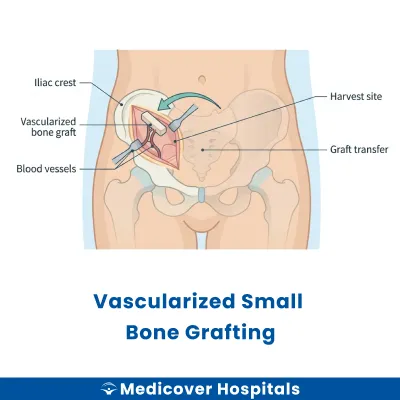
Vascularized Small Bone Grafting is a surgical procedure used to repair or replace small bones, often in the hand or wrist. It involves transferring a piece of bone along with its blood supply from one part of the body to another. This ensures the bone remains healthy and integrates well with the surrounding tissue. The procedure is crucial for healing and restoring function in areas where small bones are damaged or missing.
This surgery is needed when small bones are fractured, infected, or have poor blood supply. Conditions like avascular necrosis (bone tissue death due to lack of blood) often require this grafting. If untreated, these conditions can lead to chronic pain and loss of function. Modern surgical approaches include microsurgical techniques and advanced imaging for precise graft placement. These methods enhance recovery and outcomes.
Vascularized Small Bone Grafting Doctors Near You
Discover skilled orthopedics for vascularized small bone grafting at Medicover Hospitals across India. Choose your city and book a consultation to explore treatment options tailored to your needs.
Why Choose Medicover Hospitals for Vascularized Small Bone Grafting?
Get a second opinion from trusted experts and makeconfident, informed decisions.
 Get Second Opinion
Complete Guide To Vascularized Small Bone Grafting
Everything you need to know about the procedure, preparation, and recovery
Vascularized Small Bone Grafting Surgery Indications
Doctors recommend vascularized small bone grafting when there is a need to restore bone integrity and blood supply in areas where healing is compromised. This procedure is often considered when other treatments have not succeeded in resolving bone defects or fractures.
Non-Union of Fractures
Patients may experience persistent pain and swelling at the fracture site. X-rays or CT scans show a lack of bone healing over several months. Surgery is considered when immobilization and bone stimulation therapies fail.
Avascular Necrosis
Patients often report joint pain and limited movement. MRI scans reveal bone tissue death due to lack of blood supply. When core decompression and medication do not improve symptoms, grafting is advised.
Bone Defects from Tumour Removal
After tumour excision, patients may have structural weakness in the affected bone. Imaging shows significant bone loss. Grafting is needed when reconstruction with other methods is inadequate.
Congenital Bone Defects
Children may show deformities or functional limitations. X-rays highlight missing or malformed bone segments. Surgery is recommended when growth and function are severely impacted.
Severe Osteomyelitis
Patients experience chronic pain and infection signs like fever. Imaging shows bone destruction. When antibiotics and debridement do not resolve the infection, grafting becomes necessary.
How to Prepare for Vascularized Small Bone Grafting?
Proper preparation is crucial for a successful vascularized small bone grafting procedure. It helps in minimizing complications and ensuring a smooth recovery.
- Medication Adjustment: Stop NSAIDs, anticoagulants, and herbal supplements as advised by your doctor.
- Fasting Guidelines: Follow a fasting period of 8-12 hours before the surgery, as general anaesthesia is typically used.
- Medical History: Bring a list of all medications you are taking, including dosages, to the hospital.
- Clothing: Wear loose, comfortable clothing on the day of the surgery for easy movement post-procedure.
- Transportation: Arrange for someone to drive you home after the surgery, as you may feel drowsy from the anaesthesia.
- Pre-Surgery Tests: Complete any required blood tests or imaging studies as instructed by your healthcare provider.
- Smoking Cessation: Avoid smoking for at least two weeks before and after the procedure to promote healing.
- Hydration: Stay well-hydrated in the days leading up to the surgery, unless otherwise directed by your doctor.
Vascularized Small Bone Grafting Surgery (Step-by-Step)
Overview: This procedure is performed by orthopedic surgeons. It typically lasts 3-5 hours. General anaesthesia is used to ensure the patient is asleep and pain-free during the surgery.
- Preparation: The patient is positioned on the operating table. The surgical area is cleaned and sterilized.
- Incision: A small incision, usually 1-2 cm, is made at the donor site. Another incision is made at the recipient site where the graft is needed.
- Harvesting the Bone Graft: Using a curette, the surgeon carefully removes a small piece of bone along with its blood supply from the donor site.
- Preparing the Recipient Site: The recipient site is prepared using a harmonic scalpel to ensure proper fit and integration of the graft.
- Transplantation: The harvested bone is placed at the recipient site. The surgeon ensures the blood vessels are connected to facilitate healing.
- Closure: Incisions are closed with sutures. A sterile dressing is applied to protect the area.
- Recovery: The patient is moved to the recovery room. Monitoring continues as anaesthesia wears off. Pain management and instructions are provided.
Who Performs Vascularized Small Bone Grafting Surgery?
This surgery is performed by orthopedic surgeons. They specialise in bone and joint conditions. They are trained to handle complex procedures like bone grafting, ensuring proper healing and function.
Recovery After Vascularized Small Bone Grafting Surgery
Recovery from vascularized small bone grafting surgery involves careful monitoring and gradual return to daily activities. It's essential to follow your doctor's advice for a smooth recovery process.
Day 1-3:
- Rest is crucial. Keep the affected limb elevated to reduce swelling.
- Pain and swelling are common. Medications will be prescribed to manage these symptoms.
- Begin with a soft diet. Include curd, dal-rice, and soups to ensure adequate nutrition.
Day 4-7:
- Continue with light activities as advised by your doctor. Avoid putting weight on the affected area.
- Maintain a balanced diet. Include moong dal and khichdi for easy digestion and energy.
- Attend follow-up appointments to monitor healing progress.
Week 2-4:
- Gradual increase in mobility. Physical therapy may begin to improve strength and flexibility.
- Continue with a nutritious diet to support bone healing.
- Most patients can resume light work or school activities by the end of this phase, depending on individual recovery.
Month 1-3:
- Full recovery may take several months. Regular physiotherapy sessions are important.
- Continue dietary focus on calcium and protein-rich foods.
- Discuss with your doctor before resuming strenuous activities or sports.
When to Seek Urgent Help
- Increased pain or swelling that doesn't improve with medication.
- Fever or signs of infection at the surgical site.
- Numbness or loss of function in the affected limb.
Benefits of Vascularized Small Bone Grafting Surgery
Vascularized small bone grafting is a surgical procedure that helps in bone healing and reconstruction. It offers several advantages for patients needing bone repair.
- Enhanced Healing: The procedure promotes faster and more effective bone healing by providing a blood supply to the graft.
- Improved Bone Strength: Vascularized grafts integrate well with existing bone, enhancing structural integrity.
- Reduced Risk of Graft Failure: The blood supply helps in reducing the chances of graft rejection or failure.
- Versatility: Suitable for various bone defects, making it a flexible option for different conditions.
Risks and Complications of Vascularized Small Bone Grafting Surgery
While vascularized small bone grafting can be beneficial, it also carries certain risks and potential complications. It is important to be aware of these before undergoing the procedure.
- Common: Infection at the surgical site can occur, requiring medical attention.
- Common: Pain and swelling are typical post-surgery symptoms that usually subside over time.
- Rare: Blood vessel complications can arise, affecting the graft's success.
- Rare: Nerve damage may occur, leading to temporary or permanent sensation changes.
- Rare: Non-union, where the graft does not integrate with the existing bone, may require additional treatment.
Cost of Vascularized Small Bone Grafting Surgery
The cost of Vascularized Small Bone Grafting Surgery at Medicover Hospitals ranges from Rs. 150,000 to Rs. 240,000. The price varies based on the ward category chosen, such as day care, general, private, or deluxe suites.
We offer transparent pricing and support for insurance and TPA, including CGHS, ESI, and major TPAs. A cashless facility is also available for your convenience. Please contact the hospital for the latest insurance panel details as these may change periodically.
Frequently Asked Questions
1. How much does Vascularized Small Bone Grafting surgery cost at Medicover Hospitals?
The cost for Vascularized Small Bone Grafting surgery at Medicover Hospitals ranges from Rs.150000 to Rs.240000, depending on the type of room chosen.
2. Is Vascularized Small Bone Grafting surgery covered under health insurance at Medicover?
Vascularized Small Bone Grafting surgery may be covered under CGHS, ESI, and major TPAs with cashless options. Please contact the hospital for current panel details.
3. Will I experience stiffness after Vascularized Small Bone Grafting?
Stiffness in the affected area is common post-surgery. Physiotherapy can help improve mobility and reduce stiffness over time.
4. Can I lift weights after Vascularized Small Bone Grafting?
Avoid lifting heavy weights for at least 6 weeks post-surgery. Gradual return to activities should be guided by your healthcare provider.
5. What foods aid recovery after Vascularized Small Bone Grafting?
Include calcium-rich foods like curd and green leafy vegetables. Protein sources like dal and paneer can also support bone healing.
6. Will I need a splint after Vascularized Small Bone Grafting?
A splint may be required to immobilize and protect the grafted area. Your doctor will advise on the duration of its use.
7. Can smoking affect my recovery after Vascularized Small Bone Grafting?
Smoking can impair blood flow and delay bone healing. It's advisable to quit smoking to ensure optimal recovery.


