 Call
Call Patient Reports
Best Urethroplasty for Stricture Double Stage Surgery Hospital
At Medicover Hospitals, our skilled urologists, with qualifications like MS, DNB, and MCh, perform open urethroplasty for stricture in a double-stage approach. This method effectively addresses complex urethral strictures. Patients benefit from reduced blood loss and shorter hospital stays.
Expert Surgeons
Yearly Surgeries
Patient Satisfaction
What is Urethroplasty FOR Stricture Double Stage?
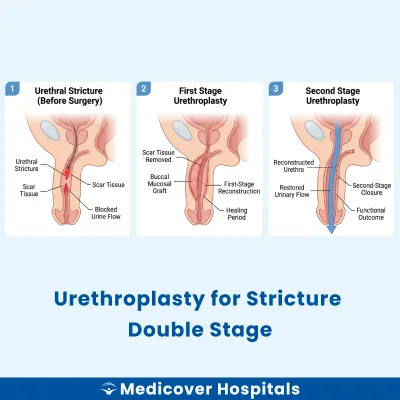
Urethroplasty for stricture double stage is a surgical procedure to repair the urethra (the tube that carries urine from the bladder out of the body). This method involves two separate surgeries. The first stage creates a temporary opening, and the second stage completes the urethral reconstruction. It is often used for complex or long urethral strictures (narrowing of the urethra).
This surgery is needed when the urethra is significantly narrowed, causing difficulty in urination. Conditions like trauma, infections, or previous surgeries can lead to strictures. If untreated, it can cause urinary retention or infections. Modern approaches include buccal mucosa grafting (using tissue from the mouth) and staged repairs. These methods aim to restore normal urine flow and prevent complications.
Urethroplasty For Stricture Double Stage Doctors Near You
Discover experienced urologists for urethroplasty for stricture double stage at Medicover Hospitals across India. Choose your city and book a consultation to discuss your treatment options today.
Why Choose Medicover Hospitals for Urethroplasty For Stricture Double Stage?
Get a second opinion from trusted experts and makeconfident, informed decisions.
 Get Second Opinion
Complete Guide To Urethroplasty For Stricture Double Stage
Everything you need to know about the procedure, preparation, and recovery
Urethroplasty for Stricture Double Stage surgery Indications
Doctors recommend urethroplasty for stricture double stage surgery when a urethral stricture is complex or recurrent. This procedure is often chosen when other treatments have not provided relief.
Severe Urinary Retention
Patients experience difficulty in urinating, leading to a weak stream or inability to urinate. On examination, doctors find significant narrowing of the urethra. When catheterisation and dilation fail, surgery becomes necessary.
Recurrent Urinary Tract Infections (UTIs)
Frequent UTIs cause burning sensation and pain during urination. Lab tests show persistent bacterial infection. If antibiotics and other treatments do not resolve the issue, surgery is considered.
Urethral Pain and Discomfort
Patients report persistent pain in the pelvic region or during urination. Physical examination and imaging reveal a stricture causing the discomfort. When pain management and less invasive procedures are ineffective, surgery is advised.
Complex or Long Strictures
Imaging studies show long or intricate strictures that are not amenable to single-stage repair. Patients may have a history of failed previous surgeries. In such cases, a double stage approach is recommended.
Failed Previous Urethral Surgeries
Patients with a history of unsuccessful urethral surgeries continue to have symptoms like poor urine flow. Examination and imaging confirm persistent stricture. A double stage surgery is considered when other surgical attempts have not succeeded.
How to Prepare for Urethroplasty for Stricture Double Stage?
Proper preparation is crucial for a successful urethroplasty for stricture double stage. It helps minimise complications and ensures a smoother recovery.
- Medication Review: Stop NSAIDs, anticoagulants, and herbal supplements as advised by your doctor to reduce bleeding risks.
- Fasting Guidelines: Fast for at least 8 hours before the procedure if general anaesthesia is used.
- Pre-Surgery Tests: Complete all required blood tests and imaging studies as instructed by your healthcare provider.
- Hygiene: Take a shower on the morning of the surgery using antibacterial soap to reduce infection risk.
- Clothing: Wear loose, comfortable clothing on the day of the surgery for ease and comfort post-procedure.
- Transport Arrangement: Arrange for someone to drive you home after the surgery, as you will not be able to drive yourself.
- Medication List: Bring a list of all medications you are currently taking, including dosages, for hospital records.
- Smoking and Alcohol: Avoid smoking and alcohol for at least 24 hours before the surgery to aid recovery.
Urethroplasty for Stricture Double Stage surgery (Step-by-Step)
Urethroplasty for stricture double stage is performed by urology doctors. The procedure typically takes several hours and is done under general anaesthesia.
- Initial Assessment: The urologist evaluates the stricture using imaging techniques. This helps in planning the surgery.
- First Stage Incision: A small incision, about 1-2 cm, is made to access the urethra. Instruments like a curette or bipolar cautery may be used to remove scar tissue.
- Graft Placement: A graft is taken, often from the inside of the cheek (buccal mucosa). It is then placed at the site of the stricture to widen the urethra.
- Healing Period: The incision is left to heal over several months. During this time, the graft integrates with the surrounding tissue.
- Second Stage Surgery: After healing, a second incision is made. The grafted area is checked and adjusted if necessary to ensure proper urethral function.
- Final Reconstruction: The urethra is reconstructed using the healed graft. This restores normal urine flow.
- Post-Operative Care: A catheter is placed to aid healing. Patients may experience mild discomfort and are monitored for any complications.
Who Performs Urethroplasty for Stricture Double Stage surgery?
This surgery is performed by urologists who specialise in urinary tract and male reproductive system surgeries. They have expertise in managing urethral strictures and performing reconstructive procedures.
Recovery After Urethroplasty for Stricture Double Stage surgery
Recovery from urethroplasty for stricture double stage surgery requires patience and care. It's important to follow medical advice closely to ensure proper healing. Expect some discomfort initially, but it should gradually improve.
Day 1-3:
- Rest is crucial. Stay in bed as much as possible.
- Maintain a liquid diet initially. Include clear soups and fruit juices.
- Keep the surgical area clean and dry.
Day 4-7:
- Slowly introduce soft foods like khichdi, dal-rice, and curd.
- Avoid strenuous activities. Short walks are encouraged to improve circulation.
- Continue to monitor the surgical site for any signs of infection.
Week 2-4:
- Gradually return to normal diet. Include moong dal and soft vegetables.
- Resume light activities but avoid heavy lifting or intense exercise.
- Follow up with your doctor for a check-up.
Phase 2 (Month 1-3):
- Most can return to work or school after 4-6 weeks, depending on recovery.
- Continue to avoid activities that strain the pelvic area.
- Maintain a balanced diet to support healing.
When to Seek Urgent Help:
- Fever or chills indicating possible infection.
- Severe pain or swelling at the surgical site.
- Difficulty urinating or blood in urine.
- Any unusual discharge or foul smell from the wound.
Benefits of Urethroplasty for Stricture Double Stage surgery
Urethroplasty for stricture double stage surgery is a procedure aimed at restoring normal urine flow by reconstructing the urethra.
- Improved Urine Flow: This procedure can significantly enhance urine flow by removing obstructions.
- Reduced Recurrence: It lowers the chances of stricture recurrence compared to other treatments.
- Enhanced Quality of Life: Patients often experience a better quality of life post-surgery.
- Customised Reconstruction: Allows for tailored reconstruction based on the patient's specific condition.
Risks and Complications of Urethroplasty for Stricture Double Stage surgery
While urethroplasty is generally effective, it carries certain risks and potential complications.
- Common: Infection at the surgical site may occur, requiring medical attention.
- Common: Bleeding during or after the procedure is possible.
- Rare: Stricture recurrence may happen, necessitating further treatment.
- Rare: Urinary incontinence could develop post-surgery.
- Rare: Erectile dysfunction might occur, although it is uncommon.
- Rare: Scarring at the surgical site can affect healing.
Cost of Urethroplasty for Stricture Double Stage surgery
The cost of Urethroplasty for Stricture Double Stage surgery at Medicover Hospitals ranges from Rs. 180,000 to Rs. 290,000. The price varies depending on the ward category chosen, such as general, twin sharing, or private rooms.
We offer transparent pricing and support for insurance and TPA, including CGHS, ESI, and major TPAs. Cashless facilities are also available for your convenience. Please contact the hospital for the latest insurance panel details as these may change periodically.
Frequently Asked Questions
1. How much does Urethroplasty for Stricture Double Stage surgery cost at Medicover Hospitals?
The cost for Urethroplasty for Stricture Double Stage surgery ranges from Rs. 180,000 to Rs. 290,000 across Medicover Hospitals.
2. Is Urethroplasty for Stricture Double Stage surgery covered under health insurance at Medicover?
Yes, it is often covered by CGHS, ESI, and major TPAs with cashless options. Please contact the hospital for current panel details.
3. Will I need a catheter after urethroplasty?
Yes, a catheter is typically required for a few weeks after urethroplasty to aid in healing.
4. Can I experience urinary incontinence post-surgery?
Urinary incontinence is uncommon but can occur temporarily after urethroplasty. Consult your doctor if symptoms persist.
5. What foods should I avoid after urethroplasty?
Avoid spicy and acidic foods to prevent irritation. Opt for soft foods like curd and khichdi for easier digestion.
6. Will I have any sexual function changes post-surgery?
Most patients do not experience long-term changes in sexual function. Discuss any concerns with your doctor for reassurance.
7. How soon can I return to work after surgery?
You may return to work in about 4-6 weeks, depending on recovery. Follow your doctor's advice for a safe return.


