 Call
Call Patient Reports
Urethral Dilation Procedure by Expert General Surgeons
Urethral Dilation at Medicover Hospitals is performed using endoscopic techniques by skilled urologist with qualifications like MS and DNB. This minimally invasive approach helps in relieving urethral strictures effectively. Patients often experience shorter hospital stays due to the advanced surgical methods employed.
Expert Surgeons
Yearly Surgeries
Patient Satisfaction
What is Urethral Dilation?
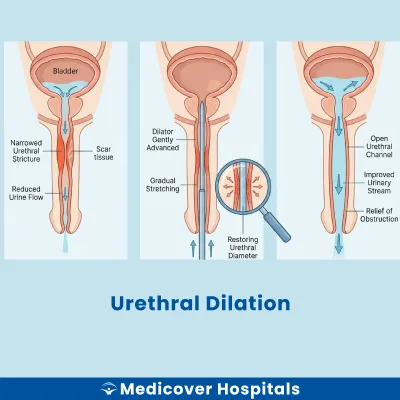
Urethral Dilation is a medical procedure to widen the urethra. The urethra is the tube that carries urine from the bladder out of the body. This procedure involves inserting special instruments to stretch the narrowed section. It helps improve urine flow and relieve symptoms.
This surgery is needed when there is a urethral stricture (narrowing of the urethra). Conditions like infections, injuries, or surgeries can lead to strictures. If untreated, it can cause urinary problems or infections. Modern approaches for Urethral Dilation include endoscopic techniques. These methods are less invasive and offer quicker recovery.
Urethral Dilation Doctors Near You
Find experienced urologists for urethral dilation at Medicover Hospitals across India. Choose your city and book a consultation to discuss your treatment options and start your journey to better health.
Why Choose Medicover Hospitals for Urethral Dilation?
Get a second opinion from trusted experts and makeconfident, informed decisions.
 Get Second Opinion
Complete Guide To Urethral Dilation
Everything you need to know about the procedure, preparation, and recovery
Urethral Dilation procedure Indications
Doctors recommend urethral dilation when there is a narrowing of the urethra that affects urine flow. This procedure helps alleviate symptoms and improve quality of life when conservative treatments are ineffective.
Urethral Stricture
Patients may experience difficulty urinating, weak urine stream, or frequent urinary tract infections. Examination may reveal a narrowed urethra. When medications and lifestyle changes do not relieve symptoms, urethral dilation is considered.
Recurrent Urinary Tract Infections (UTIs)
Frequent UTIs can occur due to a narrowed urethra. Patients often report burning sensation during urination and increased urgency. If antibiotics and other treatments fail, dilation may be needed to prevent further infections.
Incomplete Bladder Emptying
Patients may feel the need to urinate frequently but pass only small amounts of urine. Tests may show residual urine in the bladder. When lifestyle changes and medications do not help, urethral dilation can be an option.
Urinary Retention
Inability to empty the bladder fully can lead to discomfort and bladder damage. Ultrasound or catheterization may confirm retention. If catheterization and medications are ineffective, dilation may be recommended.
Post-Surgical Scar Tissue
Scar tissue from previous surgeries can narrow the urethra, causing pain and difficulty urinating. Imaging may reveal the scarred area. When symptoms persist despite other treatments, dilation may be necessary.
How to Prepare for Urethral Dilation?
Proper preparation for urethral dilation is crucial for a smooth procedure and recovery. It helps minimise risks and ensures the best possible outcome.
- Medication Adjustment: Stop NSAIDs, anticoagulants, and herbal supplements as advised by your doctor.
- Fasting: Fast for at least 6 hours before the procedure if general anaesthesia is used.
- Hydration: Drink plenty of water the day before unless instructed otherwise.
- Clothing: Wear loose, comfortable clothing on the day of the procedure.
- Transport: Arrange for someone to drive you home post-procedure.
- Medication List: Bring a list of all medications you take, including dosages.
- Pre-procedure Check: Follow any specific instructions given by your healthcare provider.
- Restroom Use: Empty your bladder before the procedure begins.
Urethral Dilation procedure (Step-by-Step)
Overview: Urethral dilation is performed by general surgeons. The procedure typically lasts 30 to 60 minutes. It is usually done under local or regional anaesthesia.
- Preparation: The patient is positioned comfortably. Local or regional anaesthesia is administered to numb the area.
- Insertion of Dilators: The surgeon uses a series of dilators, starting with a small size. These are gently inserted into the urethra to gradually widen it.
- Progressive Dilation: Larger dilators are used sequentially. This step continues until the desired dilation is achieved. The patient may feel pressure but not pain.
- Use of Bougies: Bougies, which are smooth, flexible instruments, may be used for further dilation if necessary. This helps ensure the urethra is adequately widened.
- Monitoring: Throughout the procedure, the patient's vital signs are monitored. This ensures their safety and comfort.
- Completion: Once the desired dilation is achieved, the instruments are removed. The patient is observed for a short period before being discharged.
- Post-Procedure Care: The patient is given instructions on care and signs of complications to watch for. Mild discomfort may be experienced, but it usually resolves quickly.
Who Performs Urethral Dilation procedure?
Urethral dilation is performed by urology doctors with expertise in urological procedures. They are skilled in using instruments like dilators and bougies to ensure safe and effective treatment.
Recovery After Urethral Dilation Procedure
After a urethral dilation procedure, you may experience mild discomfort and a burning sensation during urination. It's important to follow your doctor's instructions for a smooth recovery.
Day 1-3:
- Rest is crucial. Avoid strenuous activities.
- Drink plenty of water to help flush the urinary tract.
- Consume soft, easy-to-digest foods like curd, dal-rice, and khichdi.
- You may notice slight blood in urine, which is normal.
Day 4-7:
- Gradually resume light activities as tolerated.
- Continue with a balanced diet including moong dal and soups.
- Avoid spicy and acidic foods to prevent irritation.
- Monitor for any unusual symptoms and maintain hydration.
Day 8-14:
- You may return to work or school if feeling well.
- Avoid heavy lifting and intense physical activities.
- Maintain a healthy diet to support recovery.
- Follow up with your doctor as scheduled.
When to Seek Urgent Help:
- Severe pain or discomfort during urination.
- High fever or chills.
- Heavy bleeding or blood clots in urine.
- Inability to urinate or severe urinary retention.
Benefits of Urethral Dilation procedure
Urethral dilation is a procedure aimed at relieving urethral strictures, improving urine flow and reducing discomfort.
- Improved Urine Flow: Helps restore normal urine flow by widening the narrowed urethra.
- Reduced Discomfort: Alleviates pain and discomfort associated with urethral strictures.
- Non-Surgical Option: Offers a less invasive alternative compared to surgical interventions.
- Quick Recovery: Typically allows for a faster recovery time compared to more invasive procedures.
Risks and Complications of Urethral Dilation procedure
While generally safe, urethral dilation carries some risks and potential complications. It is important to be aware of them.
Common Risks
- Temporary discomfort or pain during and after the procedure.
- Mild bleeding or spotting from the urethra.
Rare Risks
- Infection at the site of dilation.
- Urethral injury or perforation.
- Recurrence of urethral stricture, requiring further treatment.
- Urinary incontinence as a temporary side effect.
Cost of Urethral Dilation procedure
The cost of a Urethral Dilation procedure at Medicover Hospitals ranges from ₹25,000 to ₹55,000. The price varies based on the ward category chosen, such as day care, general, private, or suite options. We offer transparent pricing to ensure clarity for our patients.
Insurance and TPA support, including CGHS, ESI, and major TPAs, are accepted. A cashless facility is also available for added convenience. Please contact the hospital for the latest insurance panel details as these may change periodically.
Frequently Asked Questions
1. How much does Urethral Dilation procedure cost at Medicover Hospitals?
The cost of Urethral Dilation at Medicover Hospitals ranges from ₹25,000 to ₹55,000, depending on the type of care and facility chosen.
2. Is Urethral Dilation procedure covered under health insurance at Medicover?
Urethral Dilation may be covered by CGHS, ESI, and major TPAs, offering cashless options. Please contact the hospital for current panel details.
3. Will I need a catheter after Urethral Dilation?
A catheter may be temporarily required post-procedure to ensure proper urine flow. Your doctor will advise based on your specific condition.
4. Can Urethral Dilation affect my sexual function?
Temporary changes in sexual function may occur after Urethral Dilation. Consult your doctor if you experience any prolonged issues.
5. What foods should I avoid after Urethral Dilation?
Avoid spicy foods and caffeine to prevent irritation. Opt for bland options like curd, dal-rice, and khichdi during recovery.
6. Is there a risk of infection after Urethral Dilation?
There is a small risk of urinary tract infection post-procedure. Follow hygiene instructions and report any symptoms to your doctor promptly.
7. How soon can I return to work after Urethral Dilation?
Most patients can return to work within a week, depending on recovery. Your doctor will provide guidance based on your progress.


