 Call
Call Patient Reports
Best Hospital for Ureteroscopic Lithotripsy with Advanced Urology Care
Ureteroscopic Lithotripsy at Medicover Hospitals uses an endoscopic approach to treat kidney stones. Our team of urologists, with qualifications like MS, DNB, and MCh, ensures precise stone removal. This minimally invasive procedure results in shorter hospital stays and quicker recovery.
Expert Surgeons
Yearly Surgeries
Patient Satisfaction
What is Ureteroscopic Lithotripsy Surgery ?
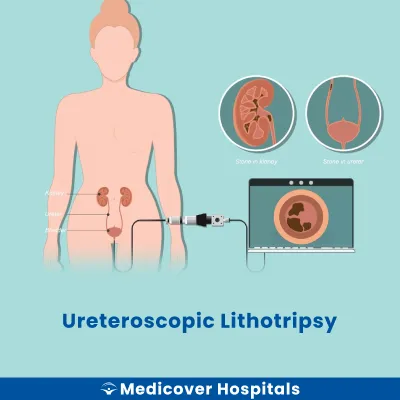
Ureteroscopic Lithotripsy is a medical surgery used to treat stones in the ureter (the tube connecting the kidney to the bladder). During this procedure, a thin tube with a camera, called a ureteroscope, is inserted into the urethra and bladder to reach the ureter. The stones are then broken into smaller pieces using a laser or other energy sources, making them easier to pass naturally.
This surgery is needed when kidney stones become lodged in the ureter, causing pain, infection, or blockage. If left untreated, these stones can lead to severe complications like kidney damage or infections. Modern surgical approaches for Ureteroscopic Lithotripsy include laser lithotripsy and pneumatic lithotripsy. These techniques are minimally invasive and help in effectively managing the condition.
Ureteroscopic Lithotripsy Doctors Near You
Find expert urologists for ureteroscopic lithotripsy at Medicover Hospitals across India. Choose your city and book a consultation to discuss your treatment options today.
Why Choose Medicover Hospitals for Ureteroscopic Lithotripsy?
Get a second opinion from trusted experts and makeconfident, informed decisions.
 Get Second Opinion
Complete Guide To Ureteroscopic Lithotripsy
Everything you need to know about the procedure, preparation, and recovery
Ureteroscopic Lithotripsy procedure Indications
Doctors recommend ureteroscopic lithotripsy when kidney stones cause significant discomfort or complications. This procedure is often chosen when stones are too large to pass naturally or when other treatments have not been successful.
Severe Pain from Kidney Stones
Patients often experience intense pain in the back or side, known as renal colic. Imaging tests like CT scans reveal stones lodged in the ureter. When pain is unmanageable with medication, ureteroscopic lithotripsy may be necessary.
Recurrent Urinary Tract Infections (UTIs)
Some patients suffer frequent UTIs due to obstructing stones. Symptoms include burning sensation during urination and fever. Persistent infections, despite antibiotics, may prompt doctors to remove the stones using this procedure.
Obstruction of Urine Flow
Stones can block the ureter, leading to difficulty urinating and swelling of the kidney (hydronephrosis). Ultrasound or CT scans confirm the blockage. When obstruction causes kidney damage risk, surgical intervention is advised.
Hematuria (Blood in Urine)
Visible blood in urine can be alarming and is often due to stones irritating the urinary tract. Persistent hematuria, confirmed by urinalysis, may require lithotripsy if conservative measures fail.
Failed Extracorporeal Shock Wave Lithotripsy (ESWL)
When ESWL does not successfully break down stones, patients may still experience pain or obstruction. Follow-up imaging shows remaining stone fragments, leading doctors to opt for ureteroscopic lithotripsy.
How to Prepare for Ureteroscopic Lithotripsy?
Proper preparation is crucial for a smooth ureteroscopic lithotripsy procedure. It helps reduce complications and ensures a quicker recovery.
- Medication Review: Stop NSAIDs, anticoagulants, and herbal supplements as advised by your doctor.
- Fasting: Do not eat or drink anything for at least 6-8 hours before the procedure.
- Hydration: Drink plenty of water the day before, unless instructed otherwise.
- Personal Items: Wear loose, comfortable clothing on the day of the procedure.
- Transportation: Arrange for someone to drive you home post-procedure.
- Medication List: Bring a list of current medications with dosages for hospital records.
- Pre-Procedure Tests: Complete any blood tests or imaging as scheduled by your healthcare provider.
- Health Conditions: Inform your doctor of any changes in health, such as fever or infections.
Ureteroscopic Lithotripsy procedure (Step-by-Step)
Ureteroscopic Lithotripsy is performed by urologists. The procedure typically lasts 1-2 hours. It is usually done under general anaesthesia, ensuring the patient is asleep and pain-free.
- Preparation: The patient is positioned on the operating table. Anaesthesia is administered to ensure comfort throughout the procedure.
- Insertion of Ureteroscope: A ureteroscope, a thin tube with a camera, is gently inserted through the urethra into the bladder and then into the ureter. No incisions are made.
- Locating the Stone: The camera on the ureteroscope helps the urologist locate the kidney stone within the ureter.
- Fragmentation: Once the stone is located, a laser fibre is used to break the stone into smaller pieces. This process is known as lithotripsy.
- Removal of Fragments: The smaller stone fragments are either removed using a small basket or left to pass naturally through the urine.
- Stent Placement: In some cases, a temporary stent may be placed in the ureter to ensure proper drainage and healing. This is usually removed after a few days.
- Recovery: The patient is moved to a recovery area. They may experience mild discomfort or a burning sensation during urination, which usually subsides in a few days.
Who Performs Ureteroscopic Lithotripsy procedure?
Ureteroscopic Lithotripsy is performed by urologists. These specialists are trained in diagnosing and treating conditions related to the urinary tract. They use advanced instruments like ureteroscopes and laser fibres to ensure effective treatment of kidney stones.
Recovery After Ureteroscopic Lithotripsy Procedure
After undergoing ureteroscopic lithotripsy, patients can expect a gradual recovery. It's important to follow the doctor's instructions to ensure a smooth healing process. Most individuals can resume normal activities within a few days, but complete recovery may take a little longer.
Day 1-3:
- Rest at home and avoid strenuous activities.
- Stay hydrated by drinking plenty of water to help flush out stone fragments.
- Consume a light diet including curd, dal-rice, and soups to avoid digestive strain.
- You may experience mild discomfort or blood in urine, which should gradually improve.
Day 4-7:
- Gradually increase activity levels as tolerated, but avoid heavy lifting or intense exercise.
- Continue with a balanced diet, incorporating foods like khichdi and moong dal for easy digestion.
- Most patients can return to work or school by the end of this period, depending on their comfort level.
Day 8-14:
- Resume normal activities, but listen to your body and rest if needed.
- Maintain a healthy diet and stay hydrated to support kidney health.
- Follow up with your doctor as advised for any additional tests or evaluations.
When to Seek Urgent Help:
- Severe pain that does not subside with medication.
- High fever or chills, indicating a possible infection.
- Persistent nausea or vomiting.
- Heavy bleeding or large blood clots in urine.
Contact us if you experience any of these symptoms.
Benefits of Ureteroscopic Lithotripsy Procedure
Ureteroscopic Lithotripsy is a minimally invasive procedure to treat kidney stones. It offers several advantages for patients.
- Minimally Invasive: The procedure does not require any incisions, reducing recovery time.
- High Success Rate: Effective in breaking down stones into smaller pieces for easier passage.
- Short Hospital Stay: Most patients can return home the same day or after a brief stay.
- Quick Recovery: Patients often resume normal activities within a few days.
Risks and Complications of Ureteroscopic Lithotripsy procedure
While generally safe, Ureteroscopic Lithotripsy carries some risks, as with any medical procedure.
- Mild discomfort or pain during urination post-procedure.
- Blood in urine for a short period after the procedure.
- Infection requiring antibiotics.
- Injury to the ureter, which may need further treatment.
- Incomplete stone removal, necessitating additional procedures.
- Allergic reaction to anaesthesia or contrast dye used during the procedure.
What is the Cost of Ureteroscopic Lithotripsy Surgery?
The cost of the Ureteroscopic Lithotripsy procedure at Medicover Hospitals ranges from Rs. 48,000 to Rs. 76,800. The price varies based on the ward category chosen, such as outpatient, day care, general, and deluxe options. Medicover Hospitals offers transparent pricing and supports insurance and TPA services, including CGHS, ESI, and major TPAs. A cashless facility is also available for added convenience. Please contact the hospital for the latest insurance panel details as these may change periodically.
Frequently Asked Questions
1. How much does Ureteroscopic Lithotripsy cost?
The cost of Ureteroscopic Lithotripsy at Medicover Hospitals ranges from Rs. 48,000 to Rs. 76,800, depending on the type of room and care.
2. Is Ureteroscopic Lithotripsy covered under insurance?
Ureteroscopic Lithotripsy may be covered by CGHS, ESI, and major TPAs for cashless treatment. Please contact the hospital for current panel details.
3. Can I develop urinary infections post-procedure?
There is a possibility of urinary infections after Ureteroscopic Lithotripsy. It's important to follow your doctor's advice to minimise this risk.
4. Will I need a stent after the procedure?
A stent is often placed temporarily to ensure proper urine flow after Ureteroscopic Lithotripsy. Your doctor will decide based on your condition.
5. Can I eat spicy food after the procedure?
It's advisable to avoid spicy food immediately after Ureteroscopic Lithotripsy. Opt for soft, bland foods like curd and khichdi for a few days.
6. How soon can I resume work post-procedure?
Most patients can return to work within a week after Ureteroscopic Lithotripsy. However, it depends on individual recovery and doctor's advice.
7. Is there a risk of stone recurrence?
There is a chance of stone recurrence after Ureteroscopic Lithotripsy. Regular follow-ups and dietary changes can help manage this risk.


