 Call
Call Patient Reports
Ureterolithotomy Surgery Hospital by Expert Urologists
Ureterolithotomy at Medicover Hospitals is performed using advanced laparoscopic techniques by our skilled urologists with qualifications like MS, DNB, and MCh. This minimally invasive approach ensures smaller incisions and reduced blood loss, leading to a quicker recovery and shorter hospital stay for patients across India.
Expert Surgeons
Yearly Surgeries
Patient Satisfaction
What is Ureterolithotomy?
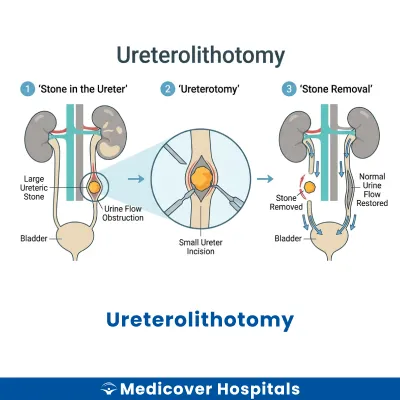
Ureterolithotomy is a surgical procedure to remove stones from the ureter. The ureter is a tube that carries urine from the kidney to the bladder. This surgery involves making an incision to access and extract the stone, which is causing a blockage. The procedure is typically performed when less invasive methods are not suitable.
Ureterolithotomy is needed when stones in the ureter cause severe pain, infection, or obstruction. If left untreated, these stones can lead to kidney damage or infection. Modern surgical approaches include laparoscopic ureterolithotomy and robotic-assisted ureterolithotomy. These techniques offer less pain and quicker recovery. Please consult with a healthcare professional to determine the best approach for your condition.
Ureterolithotomy Doctors Near You
Find skilled urologists for ureterolithotomy at Medicover Hospitals across India. Select your city and book a consultation to discuss your treatment options with our experienced specialists.
Why Choose Medicover Hospitals for Ureterolithotomy?
Get a second opinion from trusted experts and makeconfident, informed decisions.
 Get Second Opinion
Complete Guide To Ureterolithotomy
Everything you need to know about the procedure, preparation, and recovery
Ureterolithotomy Surgery Indications
Ureterolithotomy is recommended when kidney stones obstruct the ureter and cause severe symptoms. This procedure is considered when other treatments fail to relieve discomfort or remove the stones.
Severe Pain and Obstruction
Patients often experience intense flank pain that radiates to the groin. Imaging tests like CT scans reveal large stones blocking the ureter. When pain persists despite medication, surgery may be necessary.
Recurrent Urinary Tract Infections (UTIs)
Frequent UTIs can occur due to stones causing obstruction. Patients may have symptoms like fever, chills, and painful urination. If antibiotics and other treatments do not resolve the infections, surgery might be advised.
Hydronephrosis
Swelling of the kidney due to urine buildup is detected through ultrasound or CT scans. Patients might feel discomfort or have reduced urine output. If hydronephrosis worsens, surgical removal of the stone is considered.
Failed Lithotripsy
When non-invasive procedures like lithotripsy do not successfully break down the stones, patients may still experience pain and obstruction. In such cases, ureterolithotomy is an option.
Large Ureteral Stones
Stones larger than 10 mm often cause significant blockage and pain. Imaging confirms the size and location. If these stones do not pass with medication, surgery is recommended.
Persistent Hematuria
Continuous blood in urine can indicate stone irritation. Patients may notice red or brown urine. If this condition persists and is linked to ureteral stones, surgical intervention may be required.
How to Prepare for Ureterolithotomy?
Proper preparation is crucial for a successful ureterolithotomy. It helps reduce risks and ensures a smoother recovery. Follow these steps to get ready for your surgery.
- Medication Review: Stop NSAIDs, anticoagulants, and herbal supplements at least a week before surgery.
- Fasting Instructions: Do not eat or drink anything for at least 8 hours before the procedure.
- Pre-Surgery Tests: Complete any blood tests or imaging studies as advised by your doctor.
- Personal Items: Wear loose, comfortable clothing on the day of surgery.
- Transportation: Arrange for someone to drive you home after the procedure.
- Medication List: Bring a list of your current medications, including dosages, to the hospital.
- Pre-Op Instructions: Follow any specific instructions given by your healthcare provider.
- Hydration: Stay well-hydrated in the days leading up to the surgery, unless instructed otherwise.
Ureterolithotomy Surgery (Step-by-Step)
Overview: Ureterolithotomy is performed by urinary tract specialists. The surgery typically lasts 1-2 hours. It is done under general anaesthesia to ensure the patient is asleep and pain-free.
- Preparation: The patient is positioned on the operating table. General anaesthesia is administered. Vital signs are monitored throughout the procedure.
- Incision: A small incision, usually 1-2 cm, is made in the patient's side or abdomen. This provides access to the ureter.
- Accessing the Ureter: The surgeon carefully navigates through tissues to reach the ureter. Instruments like a laparoscope and trocar may be used for better visibility and access.
- Stone Removal: The stone is located within the ureter. Tools such as a curette or harmonic scalpel are used to remove the stone. Care is taken to avoid damage to surrounding tissues.
- Closure: After the stone is removed, the ureter is checked for any remaining fragments. The incision is closed with sutures or staples. A drain may be placed to prevent fluid accumulation.
- Recovery: The patient is moved to a recovery area. Vital signs are monitored as they wake from anaesthesia. Pain management is provided as needed.
Who Performs Ureterolithotomy Surgery?
Ureterolithotomy is performed by urologists. These specialists are trained in surgical procedures involving the urinary tract. They have expertise in managing conditions like kidney stones and ensuring safe removal through surgery.
Recovery After Ureterolithotomy Surgery
Recovery from ureterolithotomy surgery involves gradual healing and resuming daily activities. It is important to follow your doctor's advice for a smooth recovery process.
Day 1-3:
- Rest is crucial. Avoid any strenuous activity.
- Start with a liquid diet. Include clear soups and coconut water.
- Manage pain with prescribed medications.
Day 4-7:
- Gradually introduce soft foods like khichdi, dal-rice, and curd.
- Increase fluid intake to help flush out the urinary system.
- Short walks around the house are encouraged to improve circulation.
Day 8-14:
- Continue with a balanced diet. Include moong dal and fresh fruits.
- Avoid lifting heavy objects or engaging in vigorous activities.
- Most patients can resume work or school, depending on comfort and doctor's advice.
Phase 3 (Week 3-4):
- Gradually return to normal activities, but listen to your body.
- Maintain a healthy diet with plenty of fluids.
- Follow up with your doctor for any necessary tests or consultations.
When to Seek Urgent Help:
- Fever above 101°F or chills.
- Severe pain unrelieved by medication.
- Blood in urine or difficulty urinating.
- Signs of infection at the incision site, such as redness or discharge.
Benefits of Ureterolithotomy Surgery
Ureterolithotomy is a surgical procedure to remove stones from the ureter. It offers several benefits for patients with large or obstructive stones.
- Effective Stone Removal: Directly removes large stones that may not pass naturally.
- Immediate Relief: Provides quick relief from pain and discomfort caused by ureteral stones.
- Prevents Complications: Reduces the risk of kidney damage and infection by removing obstructions.
- Improved Kidney Function: Restores normal urine flow, enhancing kidney function.
Risks and Complications of Ureterolithotomy Surgery
While ureterolithotomy is generally safe, like any surgery, it carries certain risks. It's important to be aware of these potential complications.
- Common: Infection at the surgical site.
- Common: Bleeding during or after the procedure.
- Rare: Injury to surrounding organs or tissues.
- Rare: Blood clots forming in the legs or lungs.
- Rare: Scar tissue formation leading to ureteral stricture.
- Rare: Adverse reactions to anaesthesia.
Cost of Ureterolithotomy Surgery
The cost of ureterolithotomy surgery at Medicover Hospitals ranges from Rs. 60,000 to Rs. 162,000. The price varies depending on the ward category chosen, such as day care, general, or suite options. We offer transparent pricing to ensure clarity for our patients.
Insurance and TPA support is available, with acceptance of CGHS, ESI, and major TPAs. A cashless facility is also provided for added convenience. Please contact the hospital for the latest insurance panel details as these may change periodically.
Frequently Asked Questions
1. How much does Ureterolithotomy cost?
Ureterolithotomy surgery at Medicover Hospitals costs between Rs. 60,000 and Rs. 162,000, depending on the type of room and care required.
2. Is Ureterolithotomy covered under insurance?
Ureterolithotomy may be covered by CGHS, ESI, and major TPAs, offering cashless options. Please contact the hospital for current panel details.
3. Will I need a stent after Ureterolithotomy?
A stent may be placed temporarily to ensure urine flow post-surgery. Your doctor will advise when it can be safely removed.
4. Can kidney stones recur after surgery?
Yes, kidney stones can recur even after ureterolithotomy. Regular check-ups and dietary changes can help manage and prevent recurrence.
5. What foods to avoid post-Ureterolithotomy?
Avoid high-oxalate foods like spinach and nuts post-surgery. Opt for curd, dal-rice, and khichdi to aid recovery.
6. Will I experience pain after Ureterolithotomy?
Some discomfort is normal after ureterolithotomy. Pain management will be provided to ensure a comfortable recovery.
7. Is bed rest needed after Ureterolithotomy?
Limited activity is advised for a few days post-surgery. Gradually resume normal activities as per your doctor's guidance.


