 Call
Call Patient Reports
Best Hospital for Ureteroscopy with Laser Lithotripsy and DJ Stent Placement with Expert Care
Unilateral Ureteroscopy with Laser Lithotripsy and DJ Stent Placement at Medicover Hospitals is performed using an endoscopic approach. Our team of urologists, with qualifications like MS, DNB, and MCh, ensures effective treatment. This minimally invasive procedure results in shorter hospital stays and quicker recovery.
Expert Surgeons
Yearly Surgeries
Patient Satisfaction
What is Unilateral Ureteroscopy With Laser Lithotripsy and DJ Stent Placement?
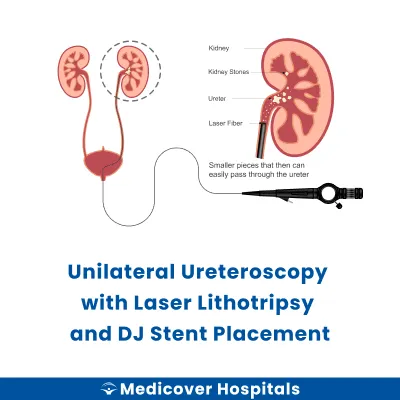
Unilateral Ureteroscopy with Laser Lithotripsy and DJ Stent Placement is a medical procedure involving the ureter, the tube connecting the kidney to the bladder. During this procedure, a ureteroscope (a thin, flexible tube with a camera) is inserted into the ureter. Laser lithotripsy is then used to break down kidney stones. A DJ stent (a small tube) is placed to ensure urine flows smoothly from the kidney to the bladder.
This surgery is needed to treat kidney stones that cause pain, infection, or block urine flow. If untreated, stones can lead to severe pain, infections, or kidney damage. Modern surgical approaches for this procedure include minimally invasive techniques, which offer quicker recovery and less discomfort.
Unilateral Ureteroscopy With Laser Lithotripsy and DJ Stent Placement Doctors Near You
Find experienced urologists for unilateral ureteroscopy with laser lithotripsy and DJ stent placement at Medicover Hospitals across India. Choose your city and book a consultation today.
Why Choose Medicover Hospitals for Unilateral Ureteroscopy With Laser Lithotripsy and DJ Stent Placement?
Get a second opinion from trusted experts and makeconfident, informed decisions.
 Get Second Opinion
Complete Guide To Unilateral Ureteroscopy With Laser Lithotripsy And Dj Stent Placement
Everything you need to know about the procedure, preparation, and recovery
Unilateral Ureteroscopy with Laser Lithotripsy and DJ Stent Placement Surgery Indications
Unilateral ureteroscopy with laser lithotripsy and DJ stent placement is recommended when kidney stones cause significant discomfort or complications. Urologists suggest this procedure when non-invasive treatments fail to relieve symptoms or when stones pose a risk to kidney health.
Recurrent Urinary Tract Infections
Patients often experience frequent and painful urination, fever, and back pain. Imaging may reveal stones obstructing urine flow, leading to infections. When antibiotics and hydration do not prevent recurrence, surgery is considered.
Severe Flank Pain
Intense pain in the back or side, often radiating to the groin, indicates a possible obstruction by stones. CT scans or ultrasounds confirm the presence and size of stones. If pain management and medications do not alleviate symptoms, surgical intervention is needed.
Hematuria
Blood in urine, visible or microscopic, can be alarming. It often accompanies stone movement or irritation. Persistent hematuria, despite conservative measures, may necessitate surgical removal of stones.
Obstructive Uropathy
Difficulty in urination, reduced urine output, or kidney swelling may occur due to blockage. Imaging studies show stones causing obstruction. When drainage and medications fail, surgery becomes essential.
Failed Extracorporeal Shock Wave Lithotripsy (ESWL)
Patients who do not respond to ESWL continue to experience stone-related symptoms. Imaging shows residual or fragmented stones. Surgery is advised when ESWL does not achieve desired results.
How to Prepare for Unilateral Ureteroscopy with Laser Lithotripsy and DJ Stent Placement?
Proper preparation is crucial for a smooth procedure and recovery. It helps reduce risks and ensures the best outcomes.
- Medication Review: Stop NSAIDs, anticoagulants, and herbal supplements a few days before the procedure. Consult your doctor for specific timelines.
- Fasting Guidelines: Do not eat or drink anything for at least 6-8 hours before the procedure to ensure safety during anaesthesia.
- Hydration: Drink plenty of water the day before the procedure unless advised otherwise by your doctor.
- Clothing: Wear loose, comfortable clothing on the day of the procedure for ease and comfort.
- Transportation: Arrange for someone to drive you home after the procedure, as you may feel drowsy from the anaesthesia.
- Medication List: Bring a list of all medications you are currently taking, including dosages, for the medical team.
- Pre-Procedure Tests: Complete any blood tests or imaging studies as instructed by your healthcare provider.
- Personal Items: Leave valuables at home and bring only essentials to the hospital.
Unilateral Ureteroscopy with Laser Lithotripsy and DJ Stent Placement Surgery (Step-by-Step)
This procedure is performed by urologists. It typically lasts 1-2 hours and is done under general anaesthesia.
- Preparation: The patient is positioned on the surgical table. General anaesthesia is administered to ensure comfort and pain-free experience.
- Insertion of Ureteroscope: A ureteroscope, a thin tube with a camera, is gently inserted through the urethra into the bladder and then into the ureter. This allows the surgeon to view the stone.
- Laser Lithotripsy: A laser fibre is passed through the ureteroscope. The laser is used to break the kidney stone into smaller fragments. The patient remains under anaesthesia and does not feel any pain.
- Stone Fragment Removal: Small stone fragments are removed using a basket or left to pass naturally. The ureteroscope helps guide this process.
- DJ Stent Placement: A Double-J (DJ) stent is placed in the ureter to ensure urine flow and prevent blockage. The stent is positioned using the ureteroscope.
- Completion: The ureteroscope is carefully removed. The patient is gradually brought out of anaesthesia and monitored in the recovery room.
- Post-Operative Care: The patient may experience mild discomfort. Instructions on hydration and activity restrictions are provided for recovery.
Who Performs Unilateral Ureteroscopy with Laser Lithotripsy and DJ Stent Placement Surgery?
This surgery is performed by urologists, specialists in urinary tract conditions. They are trained in using instruments like the ureteroscope and laser devices to treat kidney stones effectively.
Recovery After Unilateral Ureteroscopy with Laser Lithotripsy and DJ Stent Placement Surgery
After undergoing unilateral ureteroscopy with laser lithotripsy and DJ stent placement, you may experience mild discomfort and need to follow specific guidelines to ensure a smooth recovery. Here's what to expect:
Day 1-3:
- Rest is crucial. Avoid strenuous activities.
- Drink plenty of fluids to help flush out stone fragments.
- Stick to a light diet. Opt for easily digestible foods like curd, dal-rice, and soups.
- You may experience mild discomfort or blood in urine, which is normal.
Day 4-7:
- Gradually resume light activities. Avoid heavy lifting.
- Continue a balanced diet. Include moong dal and khichdi for easy digestion.
- Monitor urine colour. Slight blood traces may persist.
Day 8-14:
- Most can return to work or school, depending on recovery progress.
- Maintain hydration and a balanced diet.
- Follow up with your doctor for stent removal if advised.
When to Seek Urgent Help:
- Severe pain unrelieved by medication.
- High fever or chills.
- Persistent nausea or vomiting.
- Heavy bleeding or blood clots in urine.
- Difficulty urinating or severe discomfort.
Benefits of Unilateral Ureteroscopy with Laser Lithotripsy and DJ Stent Placement Surgery
This procedure is an effective way to treat kidney stones and ensure smooth urine flow.
- Minimally Invasive: The procedure involves no large incisions, reducing recovery time.
- High Stone Clearance Rate: Laser lithotripsy effectively breaks down stones, facilitating their removal.
- Quick Recovery: Patients often experience faster recovery compared to open surgery.
- Preservation of Kidney Function: The procedure helps maintain kidney health by removing obstructions.
Risks and Complications of Unilateral Ureteroscopy with Laser Lithotripsy and DJ Stent Placement Surgery
While generally safe, this procedure carries some risks and potential complications.
- Temporary hematuria (blood in urine) can occur post-surgery.
- Mild discomfort or pain due to the stent is possible.
- Urinary tract infections may develop after the procedure.
- Injury to the ureter may occur, requiring additional treatment.
- Stent migration or blockage might necessitate further intervention.
- Allergic reactions to anaesthesia or medications can happen.
What is the Cost of Unilateral Ureteroscopy with Laser Lithotripsy and DJ Stent Placement Surgery?
The cost for Unilateral Ureteroscopy with Laser Lithotripsy and DJ Stent Placement Surgery at Medicover Hospitals ranges from Rs. 50,000 to Rs. 120,000. The price varies based on the ward category chosen. We offer transparent pricing and support for insurance and TPA, including CGHS, ESI, and major TPAs. Cashless facilities are available for a hassle-free experience. Please contact the hospital for the latest insurance panel details as these may change periodically.
Frequently Asked Questions
1. How much does Unilateral Ureteroscopy with Laser Lithotripsy and DJ Stent Placement surgery cost at Medicover Hospitals?
The cost ranges from Rs. 50,000 to Rs. 120,000 across Medicover Hospitals. Prices vary based on room type and other factors.
2. Is Unilateral Ureteroscopy with Laser Lithotripsy and DJ Stent Placement surgery covered under health insurance at Medicover?
Yes, it is often covered by CGHS, ESI, and major TPAs. Please contact the hospital for current panel details.
3. Will I have urinary discomfort after the procedure?
Some patients may experience temporary urinary discomfort after the procedure. This usually resolves within a few days.
4. Can I resume normal activities after stent placement?
Most patients can resume light activities within a week. However, avoid heavy lifting until your doctor advises.
5. Will I need to follow a special diet post-surgery?
A light diet including curd, dal-rice, and khichdi is recommended initially. Gradually return to your regular diet as advised by your doctor.
6. Is there a risk of infection after the procedure?
There is a small risk of urinary tract infection post-procedure. Follow your doctor's instructions to minimise this risk.
7. How long will the DJ stent remain in place?
The DJ stent is typically removed within a few weeks. Your doctor will schedule a follow-up appointment for removal.


