 Call
Call Patient Reports
Unilateral Tonsillectomy Surgery Hospital by Expert General Medicine Specialists
Unilateral Tonsillectomy at Medicover Hospitals is performed using the coblation technique. Our team of specialists, including those with DNB and MD qualifications, ensures precise care. This approach results in reduced blood loss, providing a smoother recovery for patients across India.
Expert Surgeons
Yearly Surgeries
Patient Satisfaction
What is Unilateral Tonsillectomy?
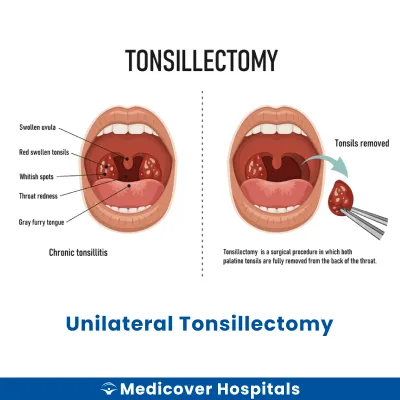
Unilateral Tonsillectomy is a surgical procedure involving the removal of one tonsil. The tonsils are small glands located at the back of the throat. They play a role in the immune system by trapping germs. This procedure is performed when only one tonsil is affected by disease or infection.
This surgery is needed for conditions like chronic tonsillitis (persistent inflammation of the tonsil) or asymmetric tonsil enlargement. If left untreated, these conditions can lead to recurrent infections or breathing difficulties. Modern surgical approaches for Unilateral Tonsillectomy include coblation (using radiofrequency energy) and laser techniques. These methods aim to reduce pain and recovery time.
Unilateral Tonsillectomy Doctors Near You
Discover general-medicine specialists for unilateral tonsillectomy at Medicover Hospitals across India. Choose your city and book a consultation to explore your treatment options today.
Why Choose Medicover Hospitals for Unilateral Tonsillectomy?
Get a second opinion from trusted experts and makeconfident, informed decisions.
 Get Second Opinion
Complete Guide To Unilateral Tonsillectomy
Everything you need to know about the procedure, preparation, and recovery
Unilateral Tonsillectomy Surgery Indications
Doctors may recommend unilateral>tonsillectomy when one tonsil is persistently problematic, while the other remains unaffected. This procedure is often considered when conservative treatments fail to resolve specific issues.
Recurrent Unilateral Tonsillitis
Patients experience frequent sore throats, fever, and swollen lymph nodes on one side. Examination shows one tonsil is consistently inflamed. When antibiotics and other treatments do not prevent recurrence, surgery is considered.
Unilateral Tonsillar Hypertrophy
Patients may have difficulty swallowing or breathing due to one enlarged tonsil. Doctors find a significant size difference between the tonsils during examination. If the enlarged tonsil causes obstruction or discomfort, surgery may be needed.
Suspicion of Malignancy
Patients may notice a persistent sore throat or lump on one side. Imaging or biopsy reveals abnormal growth in one tonsil. If malignancy is suspected or confirmed, removal of the affected tonsil is necessary.
Unilateral Peritonsillar Abscess
Patients suffer from severe throat pain, difficulty opening the mouth, and fever. Examination shows pus collection near one tonsil. When drainage and antibiotics do not resolve the abscess, surgical removal of the tonsil may be required.
Asymmetric Tonsils with Obstructive Symptoms
Patients experience snoring or sleep apnea due to one tonsil being larger. Examination confirms a significant asymmetry causing airway obstruction. If symptoms persist despite medical management, surgery is advised.
How to Prepare for Unilateral Tonsillectomy?
Proper preparation for a unilateral tonsillectomy can help ensure a smoother surgery and recovery. It helps in reducing risks and complications associated with the procedure.
- Medication Review: Stop NSAIDs, anticoagulants, and herbal supplements 1-2 weeks before surgery.
- Fasting Guidelines: Do not eat or drink anything for at least 6 hours before the procedure.
- Health Check: Inform your doctor about any recent illnesses or infections.
- Clothing: Wear loose, comfortable clothing on the day of surgery.
- Transportation: Arrange for someone to drive you home post-surgery.
- Medication List: Bring a list of current medications with dosages to the hospital.
- Pre-Surgery Instructions: Follow any additional instructions provided by your healthcare team.
- Rest and Recovery: Plan for adequate rest post-surgery to aid recovery.
Unilateral Tonsillectomy Surgery (Step-by-Step)
Overview: Unilateral tonsillectomy is performed by an ENT specialist. It typically lasts 30 to 60 minutes. General anaesthesia is used to ensure the patient is asleep and pain-free during the procedure.
- Preparation: The patient is given general anaesthesia. They will be asleep and not feel any pain during the surgery.
- Incision: A small incision, usually 1-2 cm, is made in the mouth to access the tonsil. No external cuts are made.
- Tonsil Removal: The surgeon uses instruments like a curette or harmonic scalpel to carefully remove the affected tonsil. The coblation wand may also be used to minimize bleeding.
- Bleeding Control: Bipolar cautery is applied to control bleeding and ensure the area is clean. This helps in reducing post-operative complications.
- Closure: The surgical area is inspected for any remaining bleeding. No stitches are usually needed as the area heals naturally.
- Recovery: The patient is moved to a recovery area. They are monitored as they wake up from anaesthesia. Some throat discomfort is normal.
Who Performs Unilateral Tonsillectomy Surgery?
An ENT (Ear, Nose, and Throat) specialist performs unilateral tonsillectomy. These specialists are trained to handle conditions related to the ear, nose, and throat, ensuring the procedure is done safely and effectively.
Recovery After Unilateral Tonsillectomy Surgery
Recovery from unilateral tonsillectomy surgery is generally smooth, but it requires careful attention to diet and activity. Expect some discomfort and throat pain, which gradually improves over time.
Day 1-3:
- Expect throat pain and mild swelling. Stay hydrated with plenty of fluids.
- Stick to a soft diet. Include foods like curd, dal-rice, and khichdi.
- Avoid strenuous activities. Rest is crucial during this period.
Day 4-7:
- Pain should start to decrease. Continue with soft foods like moong dal and soups.
- Gradually increase activity but avoid heavy lifting or intense exercise.
- Most people can return to light work or school by the end of this week.
Day 8-14:
- Throat discomfort should significantly reduce. Slowly reintroduce regular foods.
- Resume normal activities but listen to your body. Avoid activities that cause discomfort.
- Full recovery is expected by the end of this phase for most individuals.
When to Seek Urgent Help:
- Severe bleeding from the throat.
- High fever that doesn't respond to medication.
- Difficulty breathing or swallowing.
- Persistent pain that worsens over time.
If you experience any of these symptoms, contact your healthcare provider immediately.
Benefits of Unilateral Tonsillectomy Surgery
Unilateral tonsillectomy involves removing one tonsil, often to address specific medical issues. This procedure offers several benefits.
- Targeted Relief: Focuses on the affected tonsil, reducing discomfort and infection.
- Faster Recovery: Healing may be quicker compared to bilateral removal.
- Reduced Pain: Less tissue removal can mean less postoperative pain.
- Improved Breathing: Can alleviate breathing difficulties caused by an enlarged tonsil.
Risks and Complications of Unilateral Tonsillectomy Surgery
While generally safe, unilateral tonsillectomy carries some risks. It is important to be aware of potential complications.
- Common: Bleeding during or after the procedure.
- Common: Pain in the throat and ear, which may require medication.
- Rare: Infection at the site of surgery.
- Rare: Adverse reaction to anaesthesia.
- Rare: Changes in voice or speech temporarily.
- Rare: Swelling that may affect breathing.
Cost of Unilateral Tonsillectomy Surgery
The cost of unilateral tonsillectomy surgery at Medicover Hospitals ranges from Rs. 400 to Rs. 2900, depending on the ward category chosen. Prices vary based on the type of accommodation and services provided.
We offer transparent pricing and support for insurance and TPA, including CGHS, ESI, and major TPAs. A cashless facility is also available for your convenience. Please contact the hospital for the latest insurance panel details as these may change periodically.
Frequently Asked Questions
1. How much does Unilateral Tonsillectomy cost?
The cost of Unilateral Tonsillectomy surgery at Medicover Hospitals ranges from Rs.400 to Rs.2900, depending on the facility and room type.
2. Is Unilateral Tonsillectomy covered under insurance?
Unilateral Tonsillectomy may be covered under CGHS, ESI, and major TPAs. Please contact the hospital for current panel details.
3. Will my voice change after tonsillectomy?
Temporary voice changes may occur after Unilateral Tonsillectomy. These usually resolve within a few weeks as the throat heals.
4. Can I eat spicy food after tonsillectomy?
Avoid spicy foods like chilli and masala for at least two weeks. Opt for soft foods like curd, dal-rice, and khichdi during recovery.
5. Will I snore less after tonsillectomy?
Tonsillectomy can reduce snoring if enlarged tonsils were the cause. Improvement is often noticed after recovery from surgery.
6. Is there a risk of bleeding after tonsillectomy?
Bleeding is a potential complication after Unilateral Tonsillectomy. It is crucial to follow post-operative care instructions to minimise this risk.
7. Can I return to work soon after tonsillectomy?
Most patients can return to work within 1-2 weeks after Unilateral Tonsillectomy. Recovery time may vary based on individual healing and job demands.


