 Call
Call Patient Reports
Unilateral Endovenous Ablation for Varicose Veins Procedure Hospital by Expert Interventional Radiology
Unilateral Endovenous Ablation for Varicose Veins at Medicover Hospitals is performed using the endoscopic approach. Our interventional radiologists, with qualifications like MD, DNB, and DMRE, ensure precise procedures. This technique often results in smaller incisions and reduced blood loss, enhancing patient recovery.
Expert Specialists
Yearly Procedures
Patient Satisfaction
What is Unilateral Endovenous Ablation for Varicose Veins?
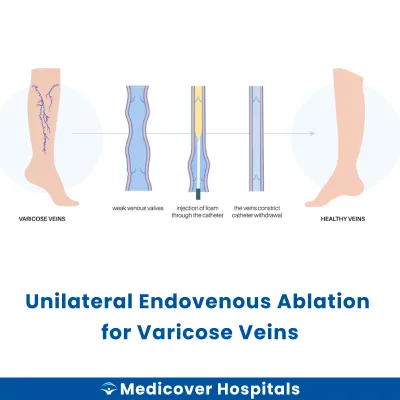
Unilateral Endovenous Ablation for Varicose Veins is a minimally invasive procedure targeting the veins in one leg. It involves using heat energy to close off varicose veins, which are swollen and twisted veins. This procedure is performed on the lower limbs, specifically the legs, to improve blood flow and reduce symptoms.
This surgery is needed when varicose veins cause pain, swelling, or skin changes. If left untreated, they can lead to complications like ulcers or blood clots. Conditions such as chronic venous insufficiency often necessitate this procedure. Modern surgical approaches include radiofrequency ablation and laser ablation, both effective in treating varicose veins.
Unilateral Endovenous Ablation for Varicose Veins Doctors Near You
Discover skilled interventional-radiology specialists for unilateral endovenous ablation of varicose veins at Medicover Hospitals. Choose your city and book a consultation to start your treatment journey today.
Why Choose Medicover Hospitals for Unilateral Endovenous Ablation for Varicose Veins?
Get a second opinion from trusted experts and makeconfident, informed decisions.
 Get Second Opinion
Complete Guide To Unilateral Endovenous Ablation For Varicose Veins
Everything you need to know about the procedure, preparation, and recovery
Unilateral Endovenous Ablation for Varicose Veins procedure Indications
Doctors recommend unilateral endovenous ablation for patients with varicose veins when symptoms become severe or complications arise. This minimally invasive procedure is often considered when conservative treatments like compression stockings and lifestyle changes do not provide relief.
Chronic Leg Pain
Patients often experience persistent aching or throbbing pain in the affected leg. On examination, doctors may find enlarged, twisted veins. When pain interferes with daily activities and conservative measures fail, ablation may be advised.
Swelling and Inflammation
Swelling in the leg, especially around the ankle, is a common symptom. Doctors might observe inflammation and skin changes. If swelling persists despite elevation and compression therapy, ablation can be a solution.
Skin Changes
Patients may notice skin discoloration or thickening around the varicose veins. Doctors identify these changes as signs of venous insufficiency. When topical treatments and lifestyle adjustments are ineffective, ablation is considered.
Venous Ulcers
Open sores or ulcers near the ankle can develop due to prolonged venous pressure. These ulcers are often resistant to healing with standard wound care. Ablation may be recommended to improve circulation and promote healing.
Recurrent Bleeding
Some patients experience bleeding from varicose veins, especially after minor trauma. Doctors may find superficial veins prone to rupture. When bleeding episodes are frequent, ablation offers a preventive approach.
How to Prepare for Unilateral Endovenous Ablation for Varicose Veins?
Proper preparation is crucial for a smooth Unilateral Endovenous Ablation procedure. It helps reduce risks and ensures a quicker recovery.
- Medication Review: Stop NSAIDs, anticoagulants, and herbal supplements as advised by your doctor.
- Fasting Guidelines: Fast for at least 6 hours before the procedure if sedation is used.
- Clothing Choice: Wear loose-fitting clothes to the hospital for comfort post-procedure.
- Transport Arrangement: Arrange for someone to drive you home after the procedure.
- Medication List: Bring a list of your current medications, including dosages, to the hospital.
- Hydration: Drink plenty of water the day before, unless advised otherwise.
- Skin Preparation: Avoid applying lotions or creams on the leg to be treated.
- Follow Instructions: Adhere to any additional instructions provided by your healthcare team.
Unilateral Endovenous Ablation for Varicose Veins procedure (Step-by-Step)
Overview: This procedure is performed by interventional radiology specialists. It typically takes about 45 minutes to an hour. Local anaesthesia is usually administered to numb the area.
- Preparation: The patient lies on the treatment table. The leg is cleaned and sterilised. Local anaesthesia is applied to the treatment area.
- Ultrasound Guidance: An ultrasound device is used to map the vein. This ensures precise targeting during the procedure.
- Catheter Insertion: A small incision (1-2 mm) is made. A catheter is inserted into the vein using a needle. The catheter is guided to the affected vein segment.
- Energy Delivery: Once positioned, the catheter delivers radiofrequency or laser energy. This heats the vein wall, causing it to collapse and seal shut.
- Catheter Removal: The catheter is slowly withdrawn. The vein is checked to ensure closure. Additional energy may be applied if necessary.
- Compression and Dressing: A bandage or compression stocking is applied. This helps reduce swelling and supports healing.
- Post-Procedure Monitoring: The patient is monitored for a short period. They can usually walk immediately after and return home the same day.
Who Performs Unilateral Endovenous Ablation for Varicose Veins procedure?
This procedure is performed by interventional radiologists. They specialise in minimally invasive techniques using imaging guidance. Their expertise ensures precise and effective treatment of varicose veins.
Recovery After Unilateral Endovenous Ablation for Varicose Veins procedure
Recovery from unilateral endovenous ablation for varicose veins is generally smooth. Most patients can resume daily activities quickly. However, following post-procedure guidelines is crucial for optimal healing.
Day 1:
- Rest is recommended. Keep the leg elevated when sitting or lying down.
- Wear compression stockings as advised by your doctor.
- Light walking is encouraged to promote blood flow.
Day 2-3:
- Continue wearing compression stockings during the day.
- Gradually increase walking duration. Avoid strenuous activities.
- Resume normal diet. Include easy-to-digest foods like curd, dal-rice, and khichdi.
Day 4-7:
- Most patients can return to work or school, depending on comfort.
- Continue with light exercises. Avoid heavy lifting or high-impact activities.
- Maintain a balanced diet with moong dal and soups to support recovery.
Week 2 and Beyond:
- Gradually resume all normal activities, including exercise, as tolerated.
- Continue wearing compression stockings if recommended.
- Monitor for any unusual symptoms and maintain a healthy diet.
When to Seek Urgent Help
- Severe pain or swelling in the treated leg.
- Signs of infection such as redness, warmth, or discharge at the treatment site.
- Sudden shortness of breath or chest pain.
If you experience any of these symptoms, contact your healthcare provider immediately.
Benefits of Unilateral Endovenous Ablation for Varicose Veins procedure
This procedure offers several advantages for those dealing with varicose veins.
- Minimally Invasive: Involves a small incision, reducing recovery time.
- Quick Recovery: Most patients resume normal activities within a few days.
- Effective Results: Provides significant relief from symptoms like pain and swelling.
- Local Anaesthesia: Performed under local anaesthesia, minimising discomfort.
- Outpatient Procedure: Typically does not require an overnight hospital stay.
Risks and Complications of Unilateral Endovenous Ablation for Varicose Veins procedure
While generally safe, this procedure carries some risks.
- Common: Bruising or swelling at the treatment site.
- Common: Temporary numbness or tingling in the treated area.
- Rare: Infection at the incision site.
- Rare: Blood clots forming in deep veins.
- Rare: Skin burns from the heat used in the procedure.
- Rare: Changes in skin colour over the treated vein.
Cost of Unilateral Endovenous Ablation for Varicose Veins procedure
The cost of Unilateral Endovenous Ablation for Varicose Veins at Medicover Hospitals varies based on the ward category chosen. Prices ranges from Rs. 10,500 to Rs. 31,000 across different ward types. This ensures that patients can select a suitable option according to their preferences and budget.
We offer transparent pricing and support for insurance and TPA, including CGHS, ESI, and major TPAs. Cashless facilities are available for a hassle-free experience. Please contact the hospital for the latest insurance panel details as these may change periodically.
Frequently Asked Questions
1. How much does Unilateral Endovenous Ablation for Varicose Veins procedure cost at Medicover Hospitals?
The cost for Unilateral Endovenous Ablation for Varicose Veins at Medicover Hospitals ranges from Rs. 10,500 to Rs. 31,000, depending on the facility and services.
2. Is Unilateral Endovenous Ablation for Varicose Veins procedure covered under health insurance at Medicover?
Unilateral Endovenous Ablation for Varicose Veins may be covered by CGHS, ESI, and major TPAs. Please contact the hospital for current panel details.
3. Will my leg feel numb after the procedure?
Some patients experience temporary numbness in the treated leg. This usually resolves within a few weeks after the procedure.
4. Can I walk immediately after the procedure?
Walking is encouraged soon after the procedure to aid recovery. Avoid strenuous activities for a few days as advised by your doctor.
5. Will I need to wear compression stockings?
Yes, wearing compression stockings is recommended to support healing. Your doctor will advise on the duration based on your recovery.
6. Can varicose veins reappear after the procedure?
While the treated vein is closed, new varicose veins can develop. Regular follow-ups can help manage and monitor any new occurrences.
7. What foods should I avoid post-procedure?
Avoid salty and processed foods to reduce swelling. Opt for light meals like curd, dal-rice, or khichdi for better recovery.


