 Call
Call Patient Reports
Unilateral Endoscopic Concha Bullosa Resection Surgery by Expert Ent
Unilateral Endoscopic Concha Bullosa Resection at Medicover Hospitals is performed using advanced endoscopic techniques by skilled ENT specialists with qualifications like MS and DNB. This minimally invasive procedure ensures smaller incisions and a shorter recovery period for patients across India.
Expert Surgeons
Yearly Surgeries
Patient Satisfaction
What is Unilateral Endoscopic Concha Bullosa Resection?
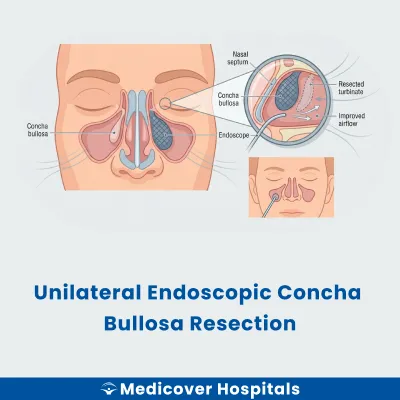
Unilateral Endoscopic Concha Bullosa Resection is a surgical procedure to remove an enlarged nasal turbinate (concha bullosa) on one side of the nose. The nasal turbinates are small structures inside the nose that help filter and humidify the air. When one of these turbinates becomes enlarged, it can block nasal airflow. This surgery uses an endoscope, a thin tube with a camera, to guide the removal process.
This surgery is needed when a concha bullosa causes nasal obstruction, breathing difficulties, or sinus issues. Conditions like chronic sinusitis or nasal congestion may lead to this procedure. If left untreated, it can result in persistent breathing problems and recurrent sinus infections. Modern surgical approaches include endoscopic techniques that allow for precise removal with minimal tissue damage.
Unilateral Endoscopic Concha Bullosa Resection Doctors Near You
Find skilled ENT specialists for unilateral endoscopic concha bullosa resection at Medicover Hospitals across India. Choose your city and book a consultation today for expert care.
Why Choose Medicover Hospitals for Unilateral Endoscopic Concha Bullosa Resection?
Get a second opinion from trusted experts and makeconfident, informed decisions.
 Get Second Opinion
Complete Guide To Unilateral Endoscopic Concha Bullosa Resection
Everything you need to know about the procedure, preparation, and recovery
Unilateral Endoscopic Concha Bullosa Resection Surgery Indications
Doctors recommend unilateral endoscopic concha bullosa resection when a patient experiences persistent nasal obstruction or related issues due to an enlarged middle turbinate. This procedure is considered when conservative treatments do not provide relief.
Chronic Nasal Obstruction
Patients often experience difficulty breathing through one nostril, leading to mouth breathing and disrupted sleep. Examination may reveal a significant enlargement of the middle turbinate. When nasal sprays and decongestants fail to alleviate symptoms, surgery is advised.
Recurrent Sinusitis
Frequent sinus infections may occur, causing facial pain and pressure. Imaging studies often show blockage of sinus drainage pathways due to concha bullosa. If antibiotics and nasal irrigation do not prevent recurrences, surgical intervention becomes necessary.
Headaches
Some patients suffer from persistent headaches, particularly around the forehead and eyes. These headaches are often linked to pressure from an enlarged concha bullosa. When pain relief medications and other treatments do not help, surgery is considered.
Nasal Congestion
Constant nasal congestion can lead to a reduced sense of smell and taste. Examination may reveal a deviated septum with concha bullosa contributing to the blockage. Surgery is recommended when other treatments like nasal steroids are ineffective.
Difficulty Breathing
Patients may report a sensation of blocked airflow, especially during physical activity. This is often due to a large concha bullosa impeding nasal airflow. When breathing exercises and other non-surgical methods fail, surgery is the next step.
How to Prepare for Unilateral Endoscopic Concha Bullosa Resection?
Proper preparation is crucial for a successful Unilateral Endoscopic Concha Bullosa Resection. It helps minimise risks and ensures a smoother recovery process.
- Medication Review: Stop NSAIDs, anticoagulants, and herbal supplements at least 7 days before surgery.
- Fasting Guidelines: Fast for at least 6 hours before the procedure, as general anaesthesia is typically used.
- Nasal Preparation: Use prescribed nasal sprays as directed to reduce inflammation and congestion.
- Health Assessment: Complete any pre-surgery tests or assessments as advised by your healthcare provider.
- Comfortable Clothing: Wear loose, comfortable clothing on the day of the surgery for ease of movement post-procedure.
- Transportation Arrangement: Arrange for someone to drive you home after the surgery, as you may feel drowsy from anaesthesia.
- Medication List: Bring a list of all medications you are currently taking, including dosages, to the hospital.
- Rest and Relaxation: Ensure you get a good night's sleep before the surgery to help your body prepare for recovery.
Unilateral Endoscopic Concha Bullosa Resection Surgery (Step-by-Step)
Overview: This procedure is performed by an ENT specialist. It typically lasts between 30 to 60 minutes. General anaesthesia is usually administered to ensure patient comfort.
- Preparation: The patient is placed under general anaesthesia. The nose is cleaned and prepared for surgery.
- Endoscope Insertion: A small endoscope is gently inserted into the nasal passage. This provides a clear view of the nasal structures on a monitor.
- Identification: The surgeon identifies the concha bullosa, a pneumatized (air-filled) middle turbinate, using the endoscope.
- Incision: A small incision, typically 1-2 cm, is made in the concha bullosa. This allows access to the air-filled cavity.
- Resection: Instruments like a microdebrider or a coblation wand are used to carefully remove the excess tissue. This helps in reducing the size of the concha bullosa.
- Bleeding Control: Bipolar cautery may be used to control any bleeding during the procedure. This ensures a clear surgical field.
- Closure and Recovery: The incision is left to heal naturally. The patient is moved to a recovery area to wake up from anaesthesia.
Who Performs Unilateral Endoscopic Concha Bullosa Resection Surgery?
This surgery is performed by an ENT (Ear, Nose, and Throat) specialist. They have expertise in nasal and sinus surgeries. Their training allows them to handle delicate nasal structures with precision.
Recovery After Unilateral Endoscopic Concha Bullosa Resection Surgery
Recovery from unilateral endoscopic concha bullosa resection surgery is generally smooth, but it requires careful attention to post-operative care. Patients can expect some nasal congestion and mild discomfort, which typically improve over time.
Day 1-3:
- Rest is crucial. Avoid strenuous activities.
- Keep your head elevated to reduce swelling.
- Stick to a soft diet. Include foods like curd, dal-rice, and moong dal.
- Avoid blowing your nose.
Day 4-7:
- Gradually resume light activities.
- Continue with a soft diet. Add khichdi and soups for variety.
- Attend follow-up appointments to monitor healing.
Day 8-14:
- Most patients can return to work or school, depending on comfort.
- Introduce regular foods slowly. Avoid spicy or hot foods.
- Continue avoiding heavy lifting or strenuous exercise.
Phase 3 (Week 3-4):
- Resume normal activities as tolerated.
- Maintain a balanced diet to support recovery.
- Regular follow-ups to ensure complete healing.
When to Seek Urgent Help
- Severe or persistent bleeding from the nose.
- High fever or signs of infection.
- Severe headache or vision changes.
- Difficulty breathing or swallowing.
Benefits of Unilateral Endoscopic Concha Bullosa Resection Surgery
This procedure is designed to alleviate nasal obstruction and improve breathing.
- Improved Breathing: Helps clear nasal passages, enhancing airflow.
- Minimally Invasive: Utilises endoscopic techniques, reducing recovery time.
- Reduced Nasal Congestion: Alleviates symptoms of nasal blockage.
- Enhanced Sense of Smell: May improve olfactory function by clearing obstructions.
Risks and Complications of Unilateral Endoscopic Concha Bullosa Resection Surgery
While generally safe, this surgery carries potential risks and complications.
Common Risks
- Bleeding during or after the procedure.
- Temporary nasal congestion or discomfort post-surgery.
Rare Risks
- Infection at the surgical site.
- Damage to surrounding nasal structures.
- Changes in nasal sensation or smell.
- Need for revision surgery if symptoms persist.
Cost of Unilateral Endoscopic Concha Bullosa Resection Surgery
The cost of Unilateral Endoscopic Concha Bullosa Resection Surgery at Medicover Hospitals ranges from ₹45,000 and ₹90,000. The price varies based on the ward category chosen, such as general, twin sharing, or private rooms.
We offer transparent pricing and support for insurance and TPA, including CGHS, ESI, and major TPAs. A cashless facility is also available for your convenience. Please contact the hospital for the latest insurance panel details as these may change periodically.
Frequently Asked Questions
1. How much does Unilateral Endoscopic Concha Bullosa Resection surgery cost at Medicover Hospitals?
The cost for Unilateral Endoscopic Concha Bullosa Resection surgery at Medicover Hospitals ranges from ₹45,000 and ₹90,
2. Prices vary based on the facility and room type. 2. Is Unilateral Endoscopic Concha Bullosa Resection surgery covered under health insurance at Medicover?
Unilateral Endoscopic Concha Bullosa Resection surgery may be covered by CGHS, ESI, and major TPAs for cashless treatment. Please contact the hospital for current panel details.
3. Will my sense of smell be affected after surgery?
Temporary changes in the sense of smell can occur after surgery. Most patients regain their normal sense of smell within a few weeks.
4. Can I experience nasal bleeding after the surgery?
Mild nasal bleeding is common in the first few days post-surgery. It usually subsides on its own without any intervention.
5. Will I need to avoid any specific activities post-surgery?
Avoid strenuous activities and heavy lifting for at least two weeks after surgery. This helps in preventing complications and aids in recovery.
6. What dietary changes should I follow after the surgery?
Stick to soft foods like dal-rice, khichdi, and curd for the first few days. This helps in reducing discomfort during recovery.
7. Can I have sinus infections after the surgery?
While the surgery reduces sinus blockage, sinus infections can still occur. Regular follow-ups help in monitoring and managing any such issues.


