 Call
Call Patient Reports
Tympanoplasty with Mastoidectomy Surgery Hospital with Advanced Care
At Medicover Hospitals, our experienced ENT surgeons, with qualifications like MS and DNB, perform Tympanoplasty with Mastoidectomy using advanced endoscopic techniques. This approach ensures smaller incisions and reduced blood loss, enhancing recovery and comfort for patients across India.
Expert Surgeons
Yearly Surgeries
Patient Satisfaction
What is Tympanoplasty With Mastoidectomy?
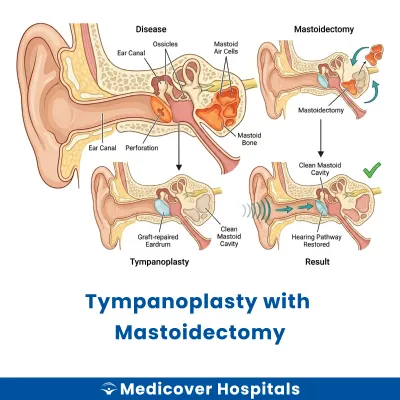
Tympanoplasty with Mastoidectomy is a surgical procedure involving the ear. It repairs the tympanic membrane (eardrum) and removes infected air cells in the mastoid bone. The mastoid bone is located behind the ear. This surgery aims to restore hearing and eliminate infection.
This surgery is needed for chronic ear infections or cholesteatoma. Cholesteatoma is an abnormal skin growth in the middle ear. If untreated, these conditions can lead to hearing loss or spread of infection. Modern surgical approaches include endoscopic and microscopic techniques. These methods help in precise removal and reconstruction. They also aim to reduce recovery time and improve outcomes.
Tympanoplasty With Mastoidectomy Doctors Near You
Discover skilled ENT specialists for tympanoplasty with mastoidectomy at Medicover Hospitals across India. Choose your city and book a consultation to address your ear health needs effectively.
Why Choose Medicover Hospitals for Tympanoplasty With Mastoidectomy?
Get a second opinion from trusted experts and makeconfident, informed decisions.
 Get Second Opinion
Complete Guide To Tympanoplasty With Mastoidectomy
Everything you need to know about the procedure, preparation, and recovery
Tympanoplasty with Mastoidectomy Surgery Indications
Tympanoplasty with Mastoidectomy is recommended when chronic ear conditions do not improve with medication or other treatments. It addresses persistent issues that affect hearing and ear health.
Chronic Otitis Media
Patients experience recurrent ear infections with discharge and hearing loss. Examination reveals a perforated eardrum and fluid in the middle ear. When antibiotics and ear drops fail, surgery is considered.
Cholesteatoma
Symptoms include ear fullness, discharge, and hearing loss. Doctors find a skin growth in the middle ear on examination. Surgery is needed when the growth causes damage or does not respond to other treatments.
Persistent Ear Discharge
Continuous ear discharge despite medication is a common symptom. Examination shows a perforated eardrum with possible infection. Surgery is advised when discharge persists and affects daily life.
Hearing Loss
Patients report reduced hearing ability. Audiometry tests show significant hearing impairment. When hearing aids are ineffective, surgery may restore hearing function.
Ear Drum Perforation
Symptoms include pain and hearing loss. Examination reveals a hole in the eardrum. If the perforation does not heal with time or treatment, surgery is recommended.
Mastoiditis
Patients experience pain and swelling behind the ear. Imaging shows infection in the mastoid bone. When antibiotics do not resolve the infection, surgery is necessary to prevent complications.
How to Prepare for Tympanoplasty with Mastoidectomy?
Proper preparation is crucial for a successful tympanoplasty with mastoidectomy. It helps reduce complications and ensures a smoother recovery.
- Medication Review: Stop NSAIDs, anticoagulants, and herbal supplements 1-2 weeks before surgery.
- Fasting Guidelines: Do not eat or drink anything for at least 8 hours before the surgery.
- Pre-Surgery Tests: Complete any required blood tests or imaging studies as advised by your doctor.
- Hygiene: Bathe and wash your hair the night before or the morning of the surgery.
- Clothing: Wear loose, comfortable clothing on the day of the surgery.
- Transportation: Arrange for someone to drive you home after the procedure.
- Medication List: Bring a list of all medications you are taking, including dosages.
- Smoking and Alcohol: Avoid smoking and alcohol for at least 24 hours before the surgery.
Tympanoplasty with Mastoidectomy Surgery (Step-by-Step)
Tympanoplasty with Mastoidectomy is performed by ENT specialists. The surgery typically lasts 2-4 hours and is done under general anaesthesia.
- Preparation: The patient is given general anaesthesia to ensure they are asleep and pain-free. The surgical area is cleaned and sterilised.
- Incision: A small incision, about 1-2 cm, is made behind the ear to access the mastoid bone and middle ear. This allows the surgeon to reach the affected area.
- Mastoidectomy: The surgeon uses a curette or a drill to remove infected mastoid air cells. This clears the infection and creates space for further procedures.
- Tympanoplasty: The damaged eardrum is repaired using a graft. The surgeon may use instruments like a coblation wand or bipolar cautery to carefully place the graft.
- Reconstruction: The ossicles (tiny ear bones) may be reconstructed if needed. This helps restore hearing function.
- Closure: The incision is closed with sutures. A sterile dressing is applied to protect the area. The patient is then moved to a recovery room.
- Recovery: As the patient wakes up from anaesthesia, they may feel drowsy. Pain management and post-operative care instructions are provided before discharge.
Who Performs Tympanoplasty with Mastoidectomy Surgery?
An ENT (Ear, Nose, and Throat) surgeon performs Tympanoplasty with Mastoidectomy. These specialists are trained in managing ear conditions and performing intricate surgeries to restore hearing and treat infections.
Recovery After Tympanoplasty with Mastoidectomy Surgery
Recovery from tympanoplasty with mastoidectomy surgery involves a gradual return to normal activities. Patients may experience mild discomfort, swelling, and drainage from the ear. Following the doctor's instructions is crucial for a smooth recovery.
Day 1-3:
- Rest is essential. Avoid sudden head movements.
- Keep the head elevated to reduce swelling.
- Stick to a soft diet. Include foods like curd, dal-rice, and soups.
- Avoid blowing your nose to prevent pressure changes.
Day 4-7:
- Continue with light activities. Avoid strenuous tasks.
- Maintain a balanced diet. Include khichdi and moong dal for easy digestion.
- Keep the ear dry. Avoid water exposure during bathing.
Day 8-14:
- Gradually resume normal activities. Avoid heavy lifting.
- Return to work or school if feeling comfortable.
- Follow up with the doctor to check healing progress.
Phase 3 (Week 3-4):
- Most patients can resume regular activities.
- Continue avoiding swimming and activities that risk ear infection.
- Attend all follow-up appointments for ear examination.
When to Seek Urgent Help
- Severe pain or swelling not relieved by medication.
- Persistent fever or chills.
- Excessive or foul-smelling discharge from the ear.
- Sudden hearing loss or dizziness.
Benefits of Tympanoplasty with Mastoidectomy Surgery
This surgery combines tympanoplasty and mastoidectomy to address chronic ear infections and improve hearing.
- Improved Hearing: Helps restore hearing by repairing the eardrum and middle ear structures.
- Infection Control: Removes infected tissue, reducing the risk of recurrent ear infections.
- Prevents Complications: Addresses chronic ear issues, preventing potential complications like cholesteatoma.
- Enhanced Ear Health: Promotes overall ear health by eliminating diseased tissue.
Risks and Complications of Tympanoplasty with Mastoidectomy Surgery
While generally safe, this surgery carries some risks, as with any surgical procedure.
- Common: Temporary dizziness or imbalance may occur post-surgery.
- Common: Some patients experience mild pain or discomfort in the ear.
- Rare: There is a risk of hearing loss, though it is uncommon.
- Rare: Tinnitus, or ringing in the ears, might develop.
- Rare: Facial nerve injury, though rare, can occur, affecting facial movement.
- Rare: Infection at the surgical site, which can be managed with antibiotics.
Cost of Tympanoplasty with Mastoidectomy Surgery
The cost of Tympanoplasty with Mastoidectomy surgery at Medicover Hospitals ranges from Rs. 115,000 to Rs. 184,000. The price varies based on the ward category chosen, such as day care, general, or private rooms. We offer transparent pricing and support for insurance and TPA services, including CGHS, ESI, and major TPAs. A cashless facility is also available for your convenience. Please contact the hospital for the latest insurance panel details as these may change periodically.
Frequently Asked Questions
1. How much does Tympanoplasty with Mastoidectomy surgery cost at Medicover Hospitals?
The cost ranges from Rs. 115,000 to Rs. 184,000 at Medicover Hospitals, depending on the type of room and care level.
2. Is Tympanoplasty with Mastoidectomy surgery covered under health insurance at Medicover?
Yes, it is covered by CGHS, ESI, and major TPAs for cashless treatment. Please contact the hospital for current panel details.
3. Will I lose hearing after Tympanoplasty with Mastoidectomy?
Hearing improvement is often a goal of the surgery. However, some patients may experience temporary hearing loss during recovery.
4. Can I swim after Tympanoplasty with Mastoidectomy?
Avoid swimming for at least 6-8 weeks post-surgery to prevent infections. Consult your doctor before resuming water activities.
5. Will I have ear discharge after Tympanoplasty with Mastoidectomy?
Some patients may experience mild ear discharge initially. If it persists, consult your doctor for further evaluation.
6. Can I fly after Tympanoplasty with Mastoidectomy?
Avoid flying for at least 4-6 weeks post-surgery to prevent pressure changes affecting your ear. Consult your doctor before planning air travel.
7. What foods should I avoid after Tympanoplasty with Mastoidectomy?
Avoid spicy and oily foods to reduce inflammation. Opt for soft foods like curd, dal-rice, and khichdi for easier digestion.
8. What is the recovery time for mastoidectomy with tympanoplasty?
Recovery from Mastoidectomy with Tympanoplasty usually takes about 2–4 weeks for basic healing, but full recovery may take 6–8 weeks. Hearing improvement and complete internal healing can take a few months.
9. Is tympanoplasty and mastoidectomy the same?
No, tympanoplasty repairs the eardrum, while mastoidectomy removes infected or damaged bone behind the ear. They are different procedures but are often performed together when both the eardrum and mastoid bone are affected.


