 Call
Call Patient Reports
Twist Drill Craniostomy Procedure by Expert Neurosurgeons
At Medicover Hospitals, our neurosurgeons, with qualifications like MS, MCh, and DNB, perform Twist Drill Craniostomy using an open surgical approach. This procedure is vital for treating certain brain conditions. It often results in smaller incisions and reduced blood loss, facilitating quicker recovery for patients.
Expert Surgeons
Yearly Surgeries
Patient Satisfaction
What is Twist Drill Craniostomy?
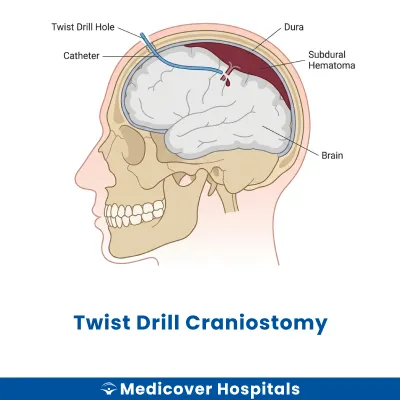
Twist Drill Craniostomy is a minimally invasive surgical procedure involving the skull. It is used to create a small hole in the skull (cranium) using a special drill. This allows doctors to access the brain to relieve pressure or drain fluid. The procedure is often performed under local anaesthesia.
This surgery is needed for conditions like chronic subdural hematoma, where blood collects on the brain's surface. If untreated, it can lead to increased intracranial pressure, causing severe headaches, confusion, or even brain damage. Modern surgical approaches for Twist Drill Craniostomy include image-guided techniques. These help in precise targeting and effective treatment. Early intervention is crucial to prevent complications.
Twist Drill Craniostomy Doctors Near You
Find expert neurosurgeons for twist drill craniostomy at Medicover Hospitals across India. Choose your city and book a consultation to discuss your treatment options with our specialists.
Why Choose Medicover Hospitals for Twist Drill Craniostomy Procedure?
Get a second opinion from trusted experts and makeconfident, informed decisions.
 Get Second Opinion
Complete Guide To Twist Drill Craniostomy
Everything you need to know about the procedure, preparation, and recovery
Twist Drill Craniostomy Procedure Indications
Doctors recommend a Twist Drill Craniostomy when less invasive treatments fail to relieve pressure on the brain. This procedure is often chosen for its minimally invasive nature, especially in emergency situations.
Chronic Subdural Hematoma
Patients may experience headaches, confusion, or weakness. Imaging like CT or MRI shows a collection of blood between the brain and its outer covering. When symptoms persist despite medication, surgery becomes necessary.
Acute Subdural Hematoma
Symptoms include severe headache, nausea, or loss of consciousness. CT scans reveal fresh bleeding in the subdural space. If the patient's condition worsens rapidly, surgical intervention is required.
Subacute Subdural Hematoma
Patients might notice gradual cognitive decline or motor deficits. Imaging shows blood accumulation that is neither fresh nor old. When conservative management fails, a craniostomy is advised.
Increased Intracranial Pressure
Symptoms like persistent headache, vomiting, or altered mental status are common. Doctors find elevated pressure through clinical assessment and imaging. If medication does not alleviate pressure, surgery is considered.
Traumatic Brain Injury
Patients may suffer from confusion, dizziness, or loss of consciousness. Scans show bleeding or swelling in the brain. When non-surgical treatments do not improve the condition, a craniostomy is performed.
How to Prepare for Twist Drill Craniostomy?
Proper preparation is crucial for a successful twist drill craniostomy. It helps minimise risks and ensures a smoother recovery process.
- Medication Review: Stop NSAIDs, anticoagulants, and herbal supplements at least 7 days before the procedure.
- Fasting: Fast for at least 6 hours before the procedure if general anaesthesia is used.
- Medical History: Provide a complete list of medications with dosages to your healthcare team.
- Pre-Surgery Tests: Complete all required blood tests and imaging studies as advised by your doctor.
- Clothing: Wear loose, comfortable clothing on the day of the surgery for ease of movement.
- Transportation: Arrange for someone to drive you home post-procedure, as you may feel drowsy.
- Hygiene: Follow any specific instructions regarding hair washing or scalp cleaning before the surgery.
- Rest and Relaxation: Ensure you get a good night's sleep before the procedure to help your body prepare.
Twist Drill Craniostomy Procedure (Step-by-Step)
Twist Drill Craniostomy is performed by experienced specialists from the Neurosurgery department. The procedure usually takes 30-60 minutes and is commonly carried out under local anaesthesia.
- Preparation: The patient is positioned comfortably, and the scalp is cleaned and sterilised. Local anaesthesia is administered to numb the treatment area.
- Incision: A small incision is made on the scalp at the planned surgical site.
- Drilling: A specialised twist drill is used to create a small opening in the skull to access the affected area safely.
- Membrane Access: The outer protective covering of the brain is carefully accessed to allow drainage of accumulated fluid or blood.
- Drainage: A catheter is inserted to drain excess fluid or blood and relieve pressure within the skull.
- Closure: After adequate drainage, the catheter is removed, and the incision is closed using sutures or staples. A sterile dressing is then applied.
- Recovery: The patient is monitored closely after the procedure, and medications may be provided to manage mild discomfort during recovery.
Who Performs Twist Drill Craniostomy Procedure?
This procedure is performed by skilled neurosurgeons trained in advanced brain and nervous system surgeries, ensuring precise and safe treatment of neurological conditions.
Recovery After Twist Drill Craniostomy Procedure
Recovery from a Twist Drill Craniostomy involves gradual healing and monitoring. Patients can expect to stay in the hospital for a short period for observation. Following discharge, careful attention to dietary habits and activity levels is essential for a smooth recovery.
Day 1-3:
- Rest is crucial. Avoid strenuous activities.
- Follow a soft diet. Include foods like curd, dal-rice, and soups.
- Keep the head elevated while resting to reduce swelling.
Day 4-7:
- Gradually increase light activities as tolerated.
- Continue with a balanced diet. Add moong dal and khichdi for easy digestion.
- Attend follow-up appointments for wound inspection and dressing changes.
Week 2-4:
- Resume light household tasks. Avoid heavy lifting or bending.
- Return to work or school may be possible, depending on individual recovery.
- Maintain a nutritious diet to support healing.
Phase 2 (1-3 Months):
- Gradually return to normal activities, as advised by the doctor.
- Continue to avoid contact sports or activities with a risk of head injury.
- Monitor for any unusual symptoms and maintain regular follow-ups.
When to Seek Urgent Help:
- Severe headache or sudden increase in pain.
- Persistent nausea or vomiting.
- Changes in vision or speech.
- Confusion or difficulty waking up.
- Signs of infection, such as fever or redness at the incision site.
Benefits of Twist Drill Craniostomy Procedure
Twist Drill Craniostomy is a minimally invasive procedure used to treat certain types of brain conditions.
- Minimally Invasive: This procedure involves a small incision, reducing recovery time.
- Quick Relief: Patients often experience rapid symptom improvement.
- Local Anaesthesia: Can be performed under local anaesthesia, minimising risks associated with general anaesthesia.
- Cost-Effective: Generally more affordable compared to more extensive surgical options.
Risks and Complications of Twist Drill Craniostomy Procedure
While Twist Drill Craniostomy is generally safe, it carries certain risks and potential complications.
- Common: Infection at the site of the incision.
- Common: Bleeding, which may require further intervention.
- Rare: Damage to surrounding brain tissue.
- Rare: Seizures following the procedure.
- Rare: Cerebrospinal fluid leakage.
- Rare: Incomplete drainage, necessitating additional procedures.
Cost of Twist Drill Craniostomy Procedure
The cost of a Twist Drill Craniostomy procedure in India typically ranges from INR 50,000 to INR 1,50,000, depending on several factors such as the surgical approach, duration of hospital stay, room category, required diagnostics, and post-operative care.
At Medicover Hospitals, we ensure transparent pricing for all procedures. We offer support for insurance and TPA, including CGHS, ESI, and major TPAs. A cashless facility is also available for added convenience. Please contact the hospital for the latest insurance panel details, as these may change periodically.
Frequently Asked Questions
1. How much does Twist Drill Craniostomy procedure cost at Medicover Hospitals?
The cost of a Twist Drill Craniostomy procedure in India typically ranges from INR 50,000 to INR 1,50,000, depending on the complexity of the condition, hospital stay, diagnostic tests, and post-operative care. Please contact Medicover Hospitals for detailed pricing information.
2. Is Twist Drill Craniostomy procedure covered under health insurance at Medicover?
Twist Drill Craniostomy is often covered by CGHS, ESI, and major TPAs. Please contact the hospital for current panel details.
3. Will I experience headaches after Twist Drill Craniostomy?
Some patients may experience mild headaches post-procedure. These usually subside within a few days with proper care.
4. Can I resume normal activities after Twist Drill Craniostomy?
Most patients can resume light activities within a week. It's important to avoid strenuous activities for at least a month.
5. Will I need follow-up imaging after Twist Drill Craniostomy?
Yes, follow-up imaging is often required to ensure proper healing. Your doctor will advise on the timing based on your recovery.
6. Can I eat regular food immediately after Twist Drill Craniostomy?
Initially, a soft diet like dal-rice or khichdi is recommended. Gradually, you can return to your regular diet as advised by your doctor.
7. Is there a risk of infection after Twist Drill Craniostomy?
There is a small risk of infection at the site. Proper wound care and hygiene can significantly reduce this risk.
8. What is the recovery time after brain drill surgery?
Recovery after a brain drill procedure (such as burr hole or twist drill surgery) typically takes about 2 to 4 weeks, depending on the condition treated and overall health. Patients often recover faster than with major brain surgeries, but follow-up and monitoring are important.
9. What is a twist drill used for?
A twist drill is used to create a small hole in the skull to relieve pressure or drain fluid, such as in cases of subdural hematoma or hydrocephalus. It is a minimally invasive neurosurgical technique.
10. What is a drill used for a craniotomy?
In a craniotomy, a surgical drill is used to make precise openings in the skull (burr holes), which are then connected to remove a bone flap. This allows surgeons to access the brain for treatment.
11. How painful is craniotomy surgery?
Craniotomy itself is not painful during the procedure due to anesthesia. After surgery, patients may experience moderate pain, headache, and discomfort, which are managed with medications during recovery.


