 Call
Call Patient Reports
Turbinate Reduction Surgery Hospital with Advanced ENT Care
At Medicover Hospitals, our ENT specialists, with qualifications like MS and DNB, perform turbinate reduction surgery using advanced endoscopic techniques. This approach helps in reducing nasal obstruction and improving breathing. Patients often experience reduced blood loss and shorter recovery times.
Expert Surgeons
Yearly Surgeries
Patient Satisfaction
What is Turbinate Reduction Surgery?
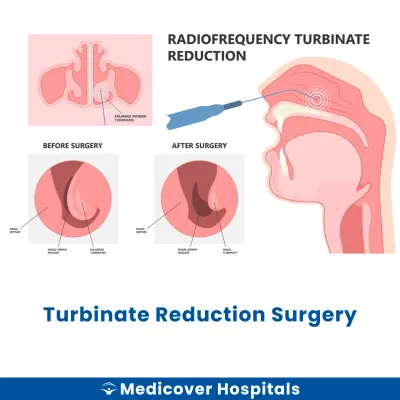
Turbinate Reduction Surgery is a medical procedure aimed at reducing the size of the turbinates. Turbinates are structures inside the nose that help filter and humidify the air we breathe. When these become enlarged, they can obstruct airflow, leading to breathing difficulties. This surgery involves the removal or reduction of excess tissue to improve nasal airflow.
This surgery is often needed for individuals with chronic nasal congestion or obstruction. Conditions like allergic rhinitis or sinusitis can cause turbinate enlargement. If left untreated, it can lead to persistent breathing problems and sleep disturbances. Modern surgical approaches include radiofrequency ablation and laser-assisted reduction. These techniques aim to minimize tissue damage and promote faster recovery.
Turbinate Reduction Surgery Doctors Near You
Find experienced ENT specialists for turbinate reduction surgery at Medicover Hospitals across India. Choose your city and book a consultation to discuss your treatment options with our experts.
Why Choose Medicover Hospitals for Turbinate Reduction Surgery?
Get a second opinion from trusted experts and makeconfident, informed decisions.
 Get Second Opinion
Complete Guide To Turbinate Reduction Surgery
Everything you need to know about the procedure, preparation, and recovery
Turbinate Reduction Surgery Procedure Indications
Turbinate reduction surgery is recommended when enlarged turbinates cause persistent nasal obstruction. It helps patients who do not find relief from medications or other conservative treatments.
Chronic Nasal Congestion
Patients experience constant nasal stuffiness and difficulty breathing through the nose. Examination reveals enlarged turbinates blocking the nasal passage. When decongestants and nasal sprays fail to provide relief, surgery is considered.
Recurrent Sinus Infections
Frequent sinus infections cause facial pain and pressure. Imaging may show swollen turbinates obstructing sinus drainage. If antibiotics and nasal irrigation do not prevent infections, surgery may be needed.
Allergic Rhinitis
Allergy sufferers have persistent sneezing, runny nose, and nasal itching. Examination shows turbinate hypertrophy due to chronic inflammation. When antihistamines and steroids are ineffective, surgery is an option.
Snoring and Sleep Apnea
Patients report loud snoring and disturbed sleep. Sleep studies may indicate nasal obstruction from enlarged turbinates. If CPAP or oral appliances do not improve symptoms, surgery can be beneficial.
Nasal Polyps
Patients with nasal polyps experience blocked nasal passages and reduced sense of smell. Endoscopy may reveal polyps causing turbinate enlargement. When medication fails to shrink polyps, surgery is advised.
Deviated Nasal Septum
Patients have breathing difficulties and nasal blockage. Examination shows a deviated septum with compensatory turbinate hypertrophy. When septoplasty alone is insufficient, turbinate reduction is performed.
How to Prepare for Turbinate Reduction Surgery?
Proper preparation is crucial for a smooth turbinate reduction surgery and recovery. It helps minimise risks and enhances the outcome.
- Medication Review: Stop NSAIDs, anticoagulants, and herbal supplements 7-10 days before surgery.
- Fasting: Do not eat or drink anything for at least 6-8 hours before surgery, as general anaesthesia is used.
- Nasal Preparation: Use prescribed nasal sprays to reduce inflammation before the procedure.
- Clothing: Wear loose, comfortable clothing on the day of surgery for easy changing.
- Transportation: Arrange for someone to drive you home post-surgery, as you may feel groggy.
- Medication List: Bring a list of current medications with dosages for the medical team.
- Smoking and Alcohol: Avoid smoking and alcohol for at least 24 hours before the surgery.
- Health Status: Inform your doctor of any recent illnesses or changes in health.
Turbinate Reduction Surgery Procedure (Step-by-Step)
Overview: Turbinate reduction surgery is performed by an ENT specialist. It typically lasts 30-60 minutes. The procedure is usually done under local anaesthesia, but general anaesthesia may be used in some cases.
- Preparation: The patient is positioned comfortably. Local or general anaesthesia is administered to ensure a pain-free experience.
- Accessing the Turbinates: The surgeon uses a nasal speculum to gently open the nostrils, providing a clear view of the turbinates.
- Reduction: A coblation wand or bipolar cautery is used to reduce the size of the turbinates. This involves shrinking the tissue to improve airflow.
- Tissue Removal: If necessary, a curette may be used to remove excess tissue. This step may involve small incisions, typically 1-2 cm, to access deeper areas.
- Sealing Blood Vessels: The surgeon uses a harmonic scalpel or bipolar cautery to seal any bleeding vessels, ensuring minimal blood loss.
- Final Inspection: The surgeon inspects the nasal cavity to ensure the turbinates are adequately reduced and the airway is clear.
- Recovery: The patient is monitored as the anaesthesia wears off. Mild discomfort or nasal congestion may be experienced post-surgery.
Who Performs Turbinate Reduction Surgery Procedure?
An ENT (Ear, Nose, and Throat) specialist, also known as an otolaryngologist, performs turbinate reduction surgery. These specialists are trained to handle conditions affecting the nasal passages and sinuses.
Recovery After Turbinate Reduction Surgery Procedure
Recovery from turbinate reduction surgery is generally smooth, but it's important to follow your doctor's instructions for the best outcome. Expect some nasal congestion and mild discomfort initially.
Day 1-3:
- Rest is crucial. Avoid strenuous activities.
- Expect some nasal congestion and mild bleeding.
- Stick to soft foods like curd, dal-rice, and soups to avoid irritation.
Day 4-7:
- Swelling and congestion should start to decrease.
- Continue with a light diet, including khichdi and moong dal.
- Begin gentle walks, but avoid bending or lifting heavy objects.
Day 8-14:
- Most patients can resume work or school by the end of this period.
- Normal diet can gradually be resumed, but avoid spicy foods.
- Continue to avoid strenuous activities and contact sports.
Phase 3 (Week 3-4):
- Full recovery is expected, with most symptoms subsiding.
- Resume regular activities, but listen to your body and rest if needed.
When to Seek Urgent Help:
- Severe bleeding or persistent heavy bleeding.
- High fever or signs of infection like pus or foul smell.
- Severe pain not relieved by prescribed medications.
Benefits of Turbinate Reduction Surgery Procedure
Turbinate reduction surgery helps improve nasal airflow and alleviate breathing difficulties.
- Improved Breathing: Reduces nasal obstruction, enhancing airflow.
- Better Sleep Quality: Alleviates snoring and sleep apnea symptoms.
- Reduced Nasal Congestion: Minimises chronic stuffiness and congestion.
- Enhanced Sense of Smell: Improves olfactory function by clearing nasal passages.
Risks and Complications of Turbinate Reduction Surgery Procedure
While generally safe, turbinate reduction surgery carries some risks and potential complications.
- Common: Bleeding during or after the procedure.
- Common: Temporary nasal dryness or crusting.
- Rare: Infection at the surgical site.
- Rare: Changes in nasal sensation or numbness.
- Rare: Persistent nasal obstruction despite surgery.
- Rare: Scarring inside the nose leading to complications.
Cost of Turbinate Reduction Surgery Procedure
The cost of Turbinate Reduction Surgery at Medicover Hospitals ranges from Rs. 90,000 to Rs. 261,000. The price varies based on the ward category chosen, such as day care, general, private, and deluxe options. We ensure transparent pricing and offer support for insurance and TPA, including CGHS, ESI, and major TPAs. A cashless facility is also available for your convenience. Please contact the hospital for the latest insurance panel details as these may change periodically.
Frequently Asked Questions
1. How much does Turbinate Reduction Surgery cost?
The cost of Turbinate Reduction Surgery at Medicover Hospitals ranges from Rs. 90,000 to Rs. 261,000, depending on the type of care.
2. Is Turbinate Reduction Surgery covered under insurance?
Turbinate Reduction Surgery may be covered by CGHS, ESI, and major TPAs. Please contact the hospital for current panel details.
3. Will my sense of smell change after surgery?
Some patients experience temporary changes in smell after turbinate reduction. It usually improves within a few weeks post-surgery.
4. Can I breathe better immediately after surgery?
Breathing may initially be obstructed due to swelling. Improvement is typically noticeable within a week as swelling subsides.
5. What foods should I avoid after turbinate surgery?
Avoid spicy and hot foods like chillies and pepper immediately after surgery. Soft foods like curd and dal-rice are recommended.
6. Will I have nasal congestion after surgery?
Nasal congestion is common in the first few days post-surgery. It usually improves as the healing process progresses.
7. Can I exercise after turbinate reduction surgery?
Avoid strenuous exercise for at least two weeks post-surgery. Light activities can be resumed as advised by your doctor.


