 Call
Call Patient Reports
Best Hospital for Tumor Embolization Procedure with Expert Care
Tumor embolization at Medicover Hospitals is performed using advanced interventional radiology techniques. Our team, with qualifications like MD, DNB, and DMRE, ensures precise procedures. This minimally invasive approach often results in reduced blood loss and shorter hospital stays for patients across India.
Expert Specialists
Yearly Procedures
Patient Satisfaction
What is Tumor Embolization?
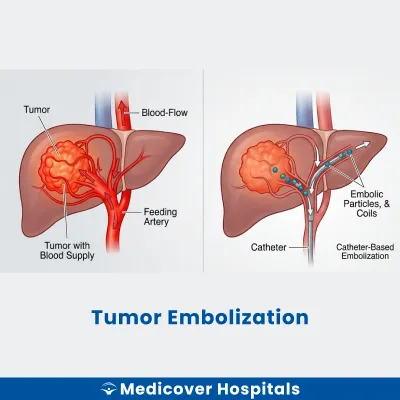
Tumor embolization is a medical procedure that blocks the blood supply to a tumour. This is done by injecting materials into the blood vessels feeding the tumour. It is commonly used for tumours in organs like the liver, kidneys, or uterus. The goal is to shrink the tumour or stop its growth by cutting off its nutrients and oxygen.
This procedure is needed when a tumour is inoperable or to reduce its size before surgery. Conditions like liver cancer, kidney tumours, or uterine fibroids may require embolization. If untreated, these tumours can grow, causing pain or other complications. Modern approaches include transarterial embolization (TAE) and transarterial chemoembolization (TACE), which are minimally invasive techniques.
Tumor Embolization Doctors Near You
Discover expert interventional-radiology specialists at Medicover Hospitals across India. Choose your city and book a consultation to explore tumor embolization options tailored to your needs.
Why Choose Medicover Hospitals for Tumor Embolization?
Get a second opinion from trusted experts and makeconfident, informed decisions.
 Get Second Opinion
Complete Guide To Tumor Embolization
Everything you need to know about the procedure, preparation, and recovery
Tumor Embolization Procedure Indications
Tumor embolization is often recommended when a tumour needs to be shrunk or its blood supply reduced. This procedure is typically considered when other treatments are not effective or feasible.
Uncontrolled Bleeding
Patients may experience significant bleeding due to a tumour. Doctors may find active bleeding on imaging studies. When bleeding persists despite medication, embolization is considered.
Pain Management
Severe pain from a tumour pressing on nerves or organs can be debilitating. Imaging may show a tumour causing pressure. If pain relief is not achieved with medication, embolization may be suggested.
Pre-surgical Tumour Reduction
Some patients need tumour size reduction before surgery. Scans may reveal a large tumour complicating surgical removal. When size reduction is necessary, embolization can be an option.
Non-resectable Tumours
In cases where surgery is not possible, patients may have symptoms like pain or organ dysfunction. Imaging shows tumours in challenging locations. Embolization helps manage symptoms.
Vascular Tumours
Patients with highly vascular tumours may experience symptoms like swelling or discomfort. Imaging shows excessive blood supply to the tumour. When other treatments fail, embolization is used to cut off blood flow.
Metastatic Disease
For patients with metastatic tumours causing symptoms, imaging may show spread to multiple sites. When systemic therapy is insufficient, embolization can target specific tumour sites.
How to Prepare for Tumor Embolization?
Proper preparation for tumor embolization is crucial to ensure a smooth procedure and recovery. It helps minimize risks and enhances the effectiveness of the treatment.
- Medication Review: Stop NSAIDs, anticoagulants, and herbal supplements as advised by your doctor.
- Fasting: Do not eat or drink anything for at least 6-8 hours before the procedure.
- Medical History: Bring a list of all medications you are taking, including dosages, to the hospital.
- Clothing: Wear loose, comfortable clothing on the day of the procedure.
- Transportation: Arrange for someone to drive you home after the procedure, as you may feel drowsy.
- Pre-Procedure Tests: Complete any blood tests or imaging studies as instructed by your healthcare provider.
- Allergy Information: Inform your doctor about any allergies, especially to contrast dye or medications.
- Consent Forms: Ensure all necessary consent forms are signed and understood before the procedure.
Tumor Embolization Procedure (Step-by-Step)
Tumor embolization is performed by interventional radiologists. The procedure typically lasts 1-3 hours and is usually done under local anaesthesia with sedation.
- Preparation: The patient lies on an X-ray table. A local anaesthetic is applied to numb the area where the catheter will be inserted.
- Catheter Insertion: A small incision, about 1-2 mm, is made in the groin or wrist. A catheter is inserted through this incision and guided to the blood vessels supplying the tumor.
- Angiography: A contrast dye is injected through the catheter. This helps the radiologist visualize the blood vessels on an X-ray monitor.
- Embolic Agent Delivery: Tiny particles or coils are delivered through the catheter to block the blood supply to the tumor. This causes the tumor to shrink over time.
- Catheter Removal: Once the embolization is complete, the catheter is carefully removed. Pressure is applied to the incision site to stop any bleeding.
- Recovery Monitoring: The patient is monitored for a few hours in a recovery area. Vital signs are checked regularly to ensure stability.
- Post-Procedure Care: The patient may experience mild discomfort at the incision site. Instructions are given for home care and follow-up appointments.
Who Performs Tumor Embolization Procedure?
The procedure is performed by interventional radiologists. These specialists are trained in using imaging techniques to guide minimally invasive procedures. They have expertise in catheter-based treatments and managing vascular conditions.
Recovery After Tumor Embolization Procedure
Recovery from a tumor embolization procedure varies for each individual. Most patients experience mild discomfort and fatigue initially. It's important to follow your doctor's advice for a smooth recovery.
Day 1-3:
- Rest is crucial. Avoid strenuous activities.
- Expect mild pain or discomfort. Pain relief medication may be prescribed.
- Stick to a light diet. Opt for easily digestible foods like curd, dal-rice, and soups.
Day 4-7:
- Gradually increase light activities as tolerated.
- Continue with a balanced diet. Include soft foods like khichdi and moong dal.
- Monitor the puncture site for any signs of infection.
Week 2:
- Most patients can resume work or school, depending on their comfort level.
- Engage in light exercises like walking but avoid heavy lifting.
- Maintain hydration and a nutritious diet to support healing.
Phase 3 (Week 3-4):
- Gradual return to normal activities. Listen to your body and rest as needed.
- Continue to eat a balanced diet with plenty of fruits and vegetables.
- Regular follow-up appointments to monitor recovery progress.
When to Seek Urgent Help
- Severe pain not relieved by medication.
- Fever or chills indicating possible infection.
- Excessive bleeding or swelling at the puncture site.
- Sudden shortness of breath or chest pain.
Benefits of Tumor Embolization Procedure
Tumor embolization is a minimally invasive procedure used to block blood flow to a tumor, aiding in its treatment.
- Minimally Invasive: This procedure requires only a small incision, reducing recovery time.
- Targeted Treatment: It delivers treatment directly to the tumor, sparing surrounding healthy tissue.
- Reduced Blood Loss: By blocking blood flow, it can decrease bleeding during surgery.
- Pain Relief: It may alleviate pain by reducing the size of the tumor.
- Pre-Surgical Preparation: Helps shrink tumors before surgical removal.
Risks and Complications of Tumor Embolization Procedure
While generally safe, tumor embolization carries some risks and potential complications.
- Pain or discomfort at the site of the procedure.
- Nausea or vomiting post-procedure.
- Infection at the catheter insertion site.
- Allergic reaction to the contrast dye used.
- Non-target embolization affecting healthy tissue.
- Blood clots forming in the treated area.
- Damage to blood vessels during the procedure.
Cost of Tumor Embolization Procedure
The cost of the Tumor embolization procedure at Medicover Hospitals ranges from Rs. 91,000 to Rs. 1,45,600. The price varies based on the ward category chosen, such as general, twin sharing, private, and deluxe options.
We offer transparent pricing and support for insurance and TPA, including CGHS, ESI, and major TPAs. A cashless facility is also available for your convenience. Please contact the hospital for the latest insurance panel details as these may change periodically.
Frequently Asked Questions
1. How much does Tumor embolization cost?
The cost ranges from Rs. 91,000 to Rs. 1,45,600 at Medicover Hospitals, depending on the type of room and care required.
2. Is Tumor embolization covered under insurance?
Tumor embolization may be covered by CGHS, ESI, and major TPAs. Please contact the hospital for current panel details.
3. Can tumor embolization affect liver function?
There is a possibility of temporary liver function changes post-procedure. Regular monitoring and follow-ups are essential to manage any complications.
4. Will I need a special diet after embolization?
A light diet with foods like curd, dal-rice, and khichdi is recommended initially. Gradually reintroduce regular foods as advised by your doctor.
5. How soon can I return to work after embolization?
Most patients can resume work within a week, depending on their recovery. Consult your doctor for personalized advice based on your condition.
6. Can tumor embolization cause fatigue?
Fatigue is a common side effect after tumor embolization. Rest and hydration can help manage this, but consult your doctor if it persists.
7. Is there a risk of infection after embolization?
Infection risk is low but possible after tumor embolization. Follow proper wound care instructions and report any signs of infection to your doctor promptly.


