 Call
Call Patient Reports
Best Hospital for Tubal Cannulation with Expert IVF and Fertility Support
At Medicover Hospitals, our gynecologists, with qualifications like MS, DNB, and FMAS, perform tubal cannulation using the endoscopic approach. This minimally invasive technique helps in treating blocked fallopian tubes. Patients experience shorter hospital stays and smaller incisions, enhancing recovery.
Expert Procedures
Yearly Procedures
Patient Satisfaction
What is Tubal Cannulation?
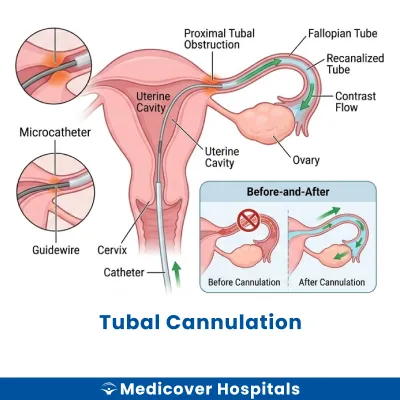
Tubal cannulation is a medical procedure used to open blocked fallopian tubes. The fallopian tubes are part of the female reproductive system. They connect the ovaries to the uterus. During the procedure, a thin tube (catheter) is inserted to clear the blockage and restore normal function.
This surgery is needed when blockages in the fallopian tubes cause infertility. Conditions like pelvic inflammatory disease or previous surgeries can lead to such blockages. If left untreated, these blockages can prevent pregnancy. Modern approaches for tubal cannulation include hysteroscopic and laparoscopic techniques. These methods are minimally invasive, reducing recovery time and improving outcomes.
Tubal Cannulation Doctors Near You
Discover skilled gynecologists for tubal cannulation at Medicover Hospitals across India. Choose your city and book a consultation to explore treatment options tailored to your needs.
Why Choose Medicover Hospitals for Tubal Cannulation?
Get a second opinion from trusted experts and makeconfident, informed decisions.
 Get Second Opinion
Complete Guide To Tubal Cannulation
Everything you need to know about the procedure, preparation, and recovery
Tubal Cannulation Procedure Indications
Tubal cannulation is recommended by gynecologists when there is a blockage in the fallopian tubes, affecting fertility. This procedure helps restore patency to the tubes, improving the chances of conception.
Proximal Tubal Blockage
Women may experience infertility despite regular menstrual cycles. Hysterosalpingography (HSG) shows blockage near the uterus. When medication and other non-invasive treatments fail, tubal cannulation is considered.
Hydrosalpinx
Patients often report pelvic pain and recurrent infections. Ultrasound or HSG reveals fluid-filled fallopian tubes. If antibiotics and other treatments do not resolve the issue, this procedure may be advised.
Unexplained Infertility
Couples face difficulty conceiving with no clear cause. Diagnostic tests may show subtle tubal obstructions. When lifestyle changes and fertility drugs do not work, tubal cannulation can be an option.
Post-Surgical Adhesions
Women with a history of pelvic surgery may experience infertility. Imaging tests reveal adhesions causing tubal blockage. When physical therapy and medication are ineffective, this procedure is considered.
Endometriosis-Related Blockage
Patients suffer from painful periods and infertility. Laparoscopy or imaging shows endometrial tissue causing tubal obstruction. If hormonal treatments fail, tubal cannulation may be recommended.
How to Prepare for Tubal Cannulation?
Proper preparation for tubal cannulation is crucial to ensure a smooth procedure and recovery. It helps in minimizing risks and enhancing the effectiveness of the surgery.
- Medication Review: Stop NSAIDs, anticoagulants, and herbal supplements 7 days prior. Consult your doctor for guidance.
- Fasting: Fast for at least 8 hours before the procedure if general anaesthesia is used. Follow specific instructions from your healthcare provider.
- Pre-Procedure Tests: Complete any required blood tests or imaging studies as advised by your doctor.
- Clothing: Wear loose, comfortable clothing on the day of the procedure to ease movement post-surgery.
- Transportation: Arrange for someone to drive you home after the procedure, as you may feel drowsy from the anaesthesia.
- Medication List: Bring a list of your current medications, including dosages, to the hospital.
- Hydration: Stay well-hydrated in the days leading up to the procedure, unless instructed otherwise.
- Relaxation: Practice relaxation techniques to ease anxiety before the procedure.
Tubal Cannulation Procedure (Step-by-Step)
At Medicover Hospitals Gynecology Department, advanced gynecological procedures are performed with modern technology and patient-focused care. The procedure generally takes around 30-60 minutes.
- Preparation: The patient is placed under general anaesthesia. This ensures comfort and prevents pain during the procedure.
- Insertion of Speculum: A speculum is gently inserted into the vagina. This allows the gynaecologist to access the cervix.
- Cervical Access: A small catheter is passed through the cervix. This helps in accessing the uterine cavity.
- Guide Wire Insertion: A guide wire is carefully inserted through the catheter. This wire reaches the blocked fallopian tube.
- Catheter Advancement: A flexible catheter is advanced over the guide wire. It helps in opening the blocked segment of the tube.
- Contrast Dye Injection: A contrast dye is injected to confirm the patency of the tube. This is monitored using X-ray or ultrasound.
- Completion: The instruments are removed. The patient is moved to the recovery area for observation.
Who Performs Tubal Cannulation Procedure?
Tubal cannulation is performed by gynecology doctors who specialise in reproductive health. They are trained to handle delicate procedures involving the female reproductive system. Their expertise ensures that the procedure is conducted safely and effectively.
Recovery After Tubal Cannulation Procedure
Recovery from a tubal cannulation procedure is generally smooth, with most patients resuming normal activities within a few days. It's important to follow your doctor's advice for a speedy recovery.
Day 1-3:
- Rest is crucial. Avoid strenuous activities.
- Stick to a light diet. Opt for easily digestible foods like curd, dal-rice, and soups.
- You may experience mild discomfort or cramping. Over-the-counter pain relief can help.
Day 4-7:
- Gradually resume light activities. Avoid heavy lifting.
- Continue with a balanced diet. Include foods like khichdi and moong dal for easy digestion.
- Monitor for any unusual symptoms like excessive pain or bleeding.
Day 8-14:
- Most can return to work or school, depending on personal comfort and doctor's advice.
- Maintain a nutritious diet to support healing. Hydrate well.
- Engage in gentle exercises like walking, but avoid vigorous activities.
Phase 3 (Week 3 and Beyond):
- Resume normal activities as tolerated.
- Continue to eat a healthy diet to maintain overall well-being.
- Follow up with your doctor as scheduled to ensure proper recovery.
When to Seek Urgent Help
- Severe abdominal pain or cramping.
- Heavy vaginal bleeding or unusual discharge.
- Fever or signs of infection.
- Persistent nausea or vomiting.
If you experience any of these symptoms, contact your healthcare provider immediately.
Benefits of Tubal Cannulation Procedure
Tubal cannulation is a procedure aimed at treating blockages in the fallopian tubes, potentially improving fertility.
- Non-invasive: It is a minimally invasive procedure compared to surgical alternatives.
- Improved fertility: It can enhance the chances of natural conception by clearing blockages.
- Quick recovery: Patients often experience a faster recovery time.
- Outpatient procedure: Usually performed on an outpatient basis, reducing hospital stay.
Risks and Complications of Tubal Cannulation Procedure
While tubal cannulation is generally safe, it carries some risks and potential complications.
- Mild discomfort or cramping during or after the procedure.
- Spotting or light bleeding post-procedure.
- Infection at the site of cannulation.
- Allergic reaction to the contrast dye used.
- Perforation of the fallopian tube.
- Risk of ectopic pregnancy if the procedure is successful.
Common Side Effects:
Rare Complications:
Cost of Tubal Cannulation Procedure
The cost of the Tubal cannulation procedure at Medicover Hospitals ranges from Rs. 20,000 to Rs. 50,000. The price varies based on the ward category chosen, such as outpatient, day care, general, and private wards. We offer transparent pricing to ensure clarity for our patients.
Insurance and TPA support is available, with acceptance of CGHS, ESI, and major TPAs. A cashless facility is also provided for your convenience. Please contact the hospital for the latest insurance panel details as these may change periodically.
Frequently Asked Questions
1. How much does Tubal cannulation procedure cost at Medicover Hospitals?
The cost of a Tubal cannulation procedure at Medicover Hospitals ranges from Rs. 20,000 to Rs. 50,000, depending on the facility and room type.
2. Is Tubal cannulation procedure covered under health insurance at Medicover?
Tubal cannulation may be covered by CGHS, ESI, and major TPAs. Please contact the hospital for current panel details.
3. Can Tubal cannulation affect my menstrual cycle?
Tubal cannulation typically does not affect the menstrual cycle. Any changes should be discussed with your healthcare provider.
4. Will I experience pain after Tubal cannulation?
Mild discomfort or cramping is common after Tubal cannulation. Pain relief medication can help manage these symptoms effectively.
5. What foods should I avoid after Tubal cannulation?
Avoid spicy and oily foods post-procedure. Opt for light meals like curd rice or khichdi for a few days to aid recovery.
6. How soon can I conceive after Tubal cannulation?
Conception is possible a few weeks post-procedure, but it's best to consult your doctor for personalized advice.
7. Can Tubal cannulation lead to ectopic pregnancy?
There is a small risk of ectopic pregnancy after Tubal cannulation. Regular follow-ups with your doctor can help monitor and manage this risk.


