 Call
Call Patient Reports
Best Hospital for Transverse Myelotomy for Spinal Cord Tumor Excision Surgery
Transverse myelotomy for spinal cord tumor excision at Medicover Hospitals is performed using an open surgical approach by skilled neurosurgeons with qualifications such as MS and MCh. This procedure often results in reduced blood loss, contributing to a smoother recovery process.
Expert Surgeons
Yearly Surgeries
Patient Satisfaction
What is Transverse Myelotomy for Spinal Cord Tumor Excision?
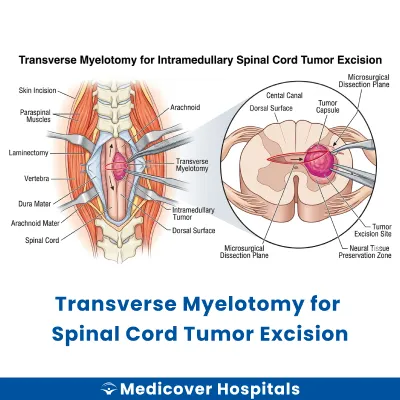
Transverse Myelotomy for Spinal Cord Tumor Excision is a surgical procedure involving the spinal cord. It involves making a precise incision across the spinal cord (transverse myelotomy) to access and remove a tumor. This procedure is crucial for treating tumors located within the spinal cord, which can affect nerve function and overall mobility.
This surgery is necessary when a spinal cord tumor causes severe symptoms like pain, weakness, or loss of sensation. If left untreated, these tumors can lead to permanent nerve damage or paralysis. Modern surgical approaches, such as microsurgery and minimally invasive techniques, are used to perform Transverse Myelotomy for Spinal Cord Tumor Excision, aiming to reduce complications and improve recovery.
Transverse Myelotomy for Spinal Cord Tumor Excision Doctors Near You
Discover skilled neurosurgeons for transverse myelotomy at Medicover Hospitals across India. Choose your city and book a consultation to discuss spinal cord tumour excision options.
Why Choose Medicover Hospitals for Transverse Myelotomy for Spinal Cord Tumor Excision?
Get a second opinion from trusted experts and makeconfident, informed decisions.
 Get Second Opinion
Complete Guide To Transverse Myelotomy For Spinal Cord Tumor Excision
Everything you need to know about the procedure, preparation, and recovery
Transverse Myelotomy for Spinal Cord Tumor Excision Surgery Indications
Doctors may recommend transverse myelotomy for spinal cord tumor excision when a tumour within the spinal cord causes significant symptoms. This procedure is considered when conservative treatments fail to alleviate symptoms or when the tumour poses a risk to neurological function.
Severe Neurological Deficits
Patients may experience weakness, numbness, or paralysis in the limbs. Neurological exams reveal significant deficits. When these symptoms worsen despite medication or therapy, surgery becomes necessary.
Intractable Pain
Persistent and severe back or neck pain that does not respond to pain management strategies is a common symptom. Imaging studies often show a tumour pressing on the spinal cord. Surgery is considered when pain disrupts daily activities.
Progressive Tumour Growth
Imaging tests like MRI or CT scans show the tumour increasing in size. Patients may notice worsening symptoms over time. When growth threatens spinal stability or function, surgical intervention is required.
Spinal Cord Compression
Symptoms such as difficulty walking or loss of bladder control may occur. Imaging reveals compression of the spinal cord by the tumour. Surgery is recommended when compression leads to significant functional impairment.
Failure of Non-Surgical Treatments
Initial treatments like radiation or chemotherapy may not shrink the tumour effectively. Persistent symptoms and tumour presence on scans indicate the need for surgical removal.
How to Prepare for Transverse Myelotomy for Spinal Cord Tumor Excision?
Proper preparation is crucial for a successful transverse myelotomy. It helps minimise risks and ensures a smooth recovery. Follow these steps to get ready for your surgery.
- Medication Review: Stop NSAIDs, anticoagulants, and herbal supplements at least 7 days before surgery.
- Fasting Guidelines: Do not eat or drink anything for at least 8 hours before the procedure to ensure safe anaesthesia.
- Medical Tests: Complete any required blood tests, MRI, or CT scans as advised by your doctor.
- Personal Items: Bring a list of current medications with dosages to the hospital.
- Clothing: Wear loose, comfortable clothing on the day of surgery for ease of movement post-procedure.
- Transportation: Arrange for someone to drive you home after discharge, as you may feel drowsy.
- Pre-Surgery Consultation: Discuss any allergies or previous reactions to anaesthesia with your healthcare provider.
- Hospital Stay: Pack essentials like toiletries and a change of clothes for your hospital stay.
Transverse Myelotomy for Spinal Cord Tumor Excision Surgery (Step-by-Step)
This procedure is performed by Spine and brain surgery specialists. It typically lasts between 3 to 6 hours and is done under general anaesthesia.
- Preparation: The patient is positioned face down on the operating table. The surgical area is sterilised.
- Incision: A midline incision, about 1-2 cm, is made over the affected spinal segment. The skin and underlying tissues are carefully separated.
- Exposure: Using retractors, the surgeon exposes the spinal cord. Special care is taken to avoid damage to surrounding tissues.
- Myelotomy: A precise incision is made in the spinal cord using a scalpel. Instruments like a bipolar cautery may be used to control bleeding.
- Tumor Excision: The tumor is carefully excised using tools such as a curette or harmonic scalpel. The surgeon ensures complete removal while preserving healthy tissue.
- Closure: The incision in the spinal cord is closed. The surrounding tissues and skin are sutured back in layers.
- Recovery: The patient is moved to the recovery room. Vital signs are monitored as they wake from anaesthesia.
Who Performs Transverse Myelotomy for Spinal Cord Tumor Excision Surgery?
This surgery is performed by neurosurgeons. They are specialists trained in complex spinal procedures. Their expertise ensures precision in handling delicate spinal structures.
Recovery After Transverse Myelotomy for Spinal Cord Tumor Excision Surgery
Recovery from transverse myelotomy for spinal cord tumor excision can be a gradual process. Patients may experience varying levels of discomfort and mobility challenges. Adhering to medical advice is crucial for a smooth recovery.
Day 1-3:
- Hospital stay is common. Pain management and monitoring are priorities.
- Start with a liquid diet, gradually moving to soft foods like soups and moong dal.
- Minimal movement. Assistance needed for basic activities.
Day 4-7:
- Transition to semi-solid foods such as khichdi and dal-rice.
- Begin gentle physiotherapy as advised by the doctor.
- Continue to avoid strenuous activities.
Week 2-4:
- Introduce more variety in diet, including curd and soft vegetables.
- Gradual increase in physical activity under supervision.
- Possible return to light work or school activities, depending on recovery.
Phase 2 (1-3 months):
- Focus on strengthening exercises and mobility improvement.
- Regular follow-ups to monitor progress.
- Resume normal activities as advised, avoiding heavy lifting and high-impact sports.
When to Seek Urgent Help
- Sudden increase in pain or swelling at the surgical site.
- Fever or signs of infection.
- Loss of sensation or movement in limbs.
- Difficulty in breathing or severe headache.
Benefits of Transverse Myelotomy for Spinal Cord Tumor Excision Surgery
Transverse myelotomy is a surgical technique used to remove spinal cord tumors. It offers several benefits for patients undergoing this procedure.
- Direct Access: Provides direct access to the tumor, facilitating precise excision.
- Reduced Tumor Size: Helps in effectively reducing the size of the tumor, alleviating symptoms.
- Symptom Relief: Aims to relieve symptoms like pain and neurological deficits caused by the tumor.
- Improved Functionality: May improve motor and sensory functions by removing the tumor.
Risks and Complications of Transverse Myelotomy for Spinal Cord Tumor Excision Surgery
While transverse myelotomy can be beneficial, it also carries certain risks and complications. Patients should be aware of these before undergoing the procedure.
- Infection at the surgical site.
- Bleeding during or after the surgery.
- Neurological deficits post-surgery.
- Cerebrospinal fluid leakage.
- Spinal instability or deformity.
- Adverse reaction to anaesthesia.
Common Risks:
Rare Complications:
Cost of Transverse Myelotomy for Spinal Cord Tumor Excision Surgery
The cost of Transverse Myelotomy for Spinal Cord Tumor Excision Surgery typically ranges from Rs. 3,27,000 to Rs. 5,23,000, depending on factors such as the surgical approach, duration of hospital stay, room category, diagnostic tests, and post-operative care.
Medicover Hospitals offers transparent pricing and supports insurance and TPA services, including CGHS, ESI, and major TPAs. Cashless facility is available for a hassle-free experience. Please contact the hospital for the latest insurance panel details as these may change periodically.
Frequently Asked Questions
1. How much does Transverse Myelotomy for Spinal Cord Tumor Excision surgery cost at Medicover Hospitals?
The cost typically ranges from Rs. 3,27,000 to Rs. 5,23,000, depending on individual cases and requirements. Please contact Medicover Hospitals for detailed pricing information.
2. Is Transverse Myelotomy for Spinal Cord Tumor Excision surgery covered under health insurance at Medicover?
Many insurance providers, including CGHS, ESI, and major TPAs, may cover this surgery. Please contact the hospital for current panel details.
3. Will I experience numbness after Transverse Myelotomy?
Temporary numbness or tingling sensations may occur post-surgery. These typically improve over time with rehabilitation and physiotherapy.
4. Can I walk immediately after Transverse Myelotomy?
Walking may be restricted initially to ensure proper healing. Your doctor will guide you on when to start mobility exercises.
5. Will I need physiotherapy after Transverse Myelotomy?
Yes, physiotherapy is often recommended to regain strength and mobility. It helps in recovering motor functions and improving overall quality of life.
6. What foods should I avoid after Transverse Myelotomy?
Avoid heavy, spicy foods; opt for light meals like dal-rice and khichdi. Curd can be included to aid digestion and improve gut health.
7. Can spinal fluid leak occur after Transverse Myelotomy?
Spinal fluid leakage is a potential complication but is rare. If you experience headaches or fluid drainage, contact your doctor immediately.


