 Call
Call Patient Reports
Best Hospital for Transvaginal Tape (TVT) Procedure with Advanced Urogynecology Care
At Medicover Hospitals, our gynecologists, with qualifications like MS, DNB, and FMAS, perform the Transvaginal Tape procedure using a minimally invasive laparoscopic approach. This technique helps in treating urinary incontinence effectively, leading to smaller incisions and reduced recovery time.
Expert Surgeons
Yearly Surgeries
Patient Satisfaction
What is Transvaginal Tape Procedure?
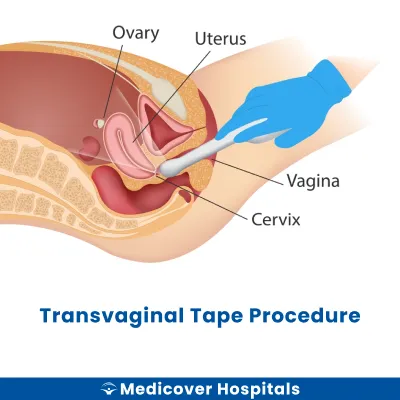
The Transvaginal tape (TVT) procedure is a surgical technique used to treat stress urinary incontinence. This condition affects the bladder and urethra. During the procedure, a mesh-like tape is placed under the mid-urethra (the tube that carries urine out of the body). This provides support and helps prevent involuntary leakage of urine during activities like coughing or sneezing.
This surgery is often needed when stress urinary incontinence affects daily life. Conditions like childbirth, obesity, or aging can weaken pelvic muscles, leading to incontinence. If untreated, it can cause social embarrassment and affect quality of life. Modern surgical approaches for TVT include minimally invasive techniques, which often result in quicker recovery and less discomfort. Always consult a healthcare professional for the best treatment option.
Transvaginal Tape Procedure Doctors Near You
Find experienced gynecologists for transvaginal tape procedures at Medicover Hospitals across India. Choose your city and book a consultation to discuss your treatment options today.
Why Choose Medicover Hospitals for Transvaginal Tape Procedure?
Get a second opinion from trusted experts and makeconfident, informed decisions.
 Get Second Opinion
Complete Guide To Transvaginal Tape Procedure
Everything you need to know about the procedure, preparation, and recovery
Transvaginal Tape Procedure Indications
Doctors recommend the transvaginal tape (TVT) procedure primarily for women experiencing stress urinary incontinence. This surgery is considered when non-surgical treatments do not provide adequate relief.
Stress Urinary Incontinence
Patients often report involuntary leakage of urine during activities like coughing, sneezing, or exercising. Doctors may find weakened pelvic floor muscles during examination. When lifestyle changes and pelvic floor exercises fail, TVT surgery may be advised.
Failed Conservative Management
Some patients do not respond to non-surgical treatments like pelvic floor physiotherapy or medications. Persistent symptoms despite these efforts can lead doctors to suggest the TVT procedure as a next step.
Significant Impact on Quality of Life
Women experiencing frequent urinary leakage that affects daily activities and emotional well-being may be candidates for TVT surgery. Doctors assess the severity and impact on life through patient history and quality of life questionnaires.
Positive Urodynamic Studies
Urodynamic tests may show abnormal bladder function consistent with stress incontinence. When these findings correlate with symptoms and conservative treatments are ineffective, surgery may be recommended.
Postpartum Incontinence
Some women develop stress urinary incontinence following childbirth. If symptoms persist despite exercises and other treatments, doctors might consider the TVT procedure to provide relief.
How to Prepare for Transvaginal Tape Procedure?
Preparation is crucial for a successful transvaginal tape procedure. It helps minimise risks and ensures a smooth recovery. Follow these steps for optimal results.
- Medication Review: Stop NSAIDs, anticoagulants, and herbal supplements as advised by your doctor.
- Fasting: Fast for at least 6 hours before the procedure if general anaesthesia is used.
- Bowel Preparation: Follow any bowel prep instructions given by your healthcare provider.
- Pelvic Floor Exercises: Practice pelvic floor exercises as recommended to strengthen muscles.
- Comfortable Clothing: Wear loose, comfortable clothing on the day of the procedure.
- Transportation: Arrange for someone to drive you home post-procedure.
- Medication List: Bring a list of your current medications with dosages for reference.
- Pre-Procedure Instructions: Follow any additional instructions provided by your healthcare team.
Transvaginal tape procedure (Step-by-Step)
The transvaginal tape (TVT) procedure is performed by experienced specialists from the Gynecology department. The surgery usually takes 30-60 minutes and may be carried out under local, regional, or general anaesthesia depending on the patient's condition and surgical requirements.
- Preparation: The patient is positioned comfortably. Anaesthesia is administered. The surgical area is cleaned and sterilized.
- Incision: A small incision, about 1-2 cm, is made in the vaginal wall. Another tiny incision is made in the lower abdomen.
- Placement of Tape: A trocar is used to guide the mesh tape through the incisions. The tape is positioned under the mid-urethra to provide support.
- Adjustment: The tape is adjusted to ensure it is neither too tight nor too loose. This helps in restoring normal urinary function.
- Closure: The incisions are closed with sutures. The area is cleaned again to prevent infection.
- Recovery: The patient is moved to a recovery room. Vital signs are monitored. Pain relief is provided if necessary.
- Post-Procedure Care: The patient is advised on care instructions. Follow-up appointments are scheduled to monitor healing and effectiveness.
Who performs the transvaginal tape procedure?
The transvaginal tape procedure is performed by a Women's Health Specialist who specialize in female pelvic medicine and reconstructive surgery. These specialists are trained in managing urinary incontinence and related conditions. They ensure the procedure is done safely and effectively.
Recovery After a Transvaginal Tape Procedure
Recovery after a transvaginal tape procedure is generally smooth, but it's important to follow your doctor's advice to ensure proper healing. Expect some discomfort and a gradual return to normal activities.
Day 1-3:
- Rest is crucial. Avoid strenuous activities.
- Expect mild pain and swelling. Pain relief medications may be prescribed.
- Stick to a light diet. Include easily digestible foods like curd, dal-rice, and soups.
Day 4-7:
- Gradually increase light activities. Short walks are beneficial.
- Continue with a balanced diet. Add moong dal and khichdi for nutrition.
- Avoid lifting heavy objects and bending.
Week 2-4:
- Most patients can return to work or school, depending on the nature of their activities.
- Continue to avoid heavy lifting and high-impact exercises.
- Maintain a balanced diet to support healing.
Phase: 1 Month and Beyond:
- Resume normal activities gradually. Consult your doctor before starting any exercise routine.
- Regular follow-up appointments are essential to monitor recovery.
When to Seek Urgent Help:
- Severe pain or swelling that doesn't improve.
- Fever or chills, indicating a possible infection.
- Heavy bleeding or unusual discharge.
- Difficulty urinating or severe discomfort.
Benefits of the Transvaginal Tape Procedure
The Transvaginal tape (TVT) procedure is a surgical option for women experiencing stress urinary incontinence. It offers several benefits.
- Improved Bladder Control: Helps reduce or eliminate urine leakage during activities like coughing or exercising.
- Minimally Invasive: The procedure involves small incisions, leading to quicker recovery.
- Short Hospital Stay: Many patients can return home the same day or the next.
- High Success Rate: Many women experience significant improvement in symptoms.
Risks and Complications of the Transvaginal Tape Procedure
While the TVT procedure is generally safe, like any surgery, it carries potential risks and complications.
- Common: Temporary difficulty urinating post-surgery.
- Common: Pain or discomfort in the pelvic area.
- Rare: Mesh erosion, which may require additional treatment.
- Rare: Infection at the surgical site.
- Rare: Injury to surrounding organs such as the bladder or urethra.
- Rare: Long-term urinary problems.
Cost of Transvaginal tape procedure
The cost of the Transvaginal tape procedure at Medicover Hospitals ranges from Rs. 77,000 to Rs. 185,000. The price varies depending on the ward category chosen, such as day care, general, twin sharing, private, and deluxe options. We offer transparent pricing and support for insurance and TPA, including CGHS, ESI, and major TPAs. Cashless facilities are available for your convenience. Please contact the hospital for the latest insurance panel details as these may change periodically.
Frequently Asked Questions
1. How much does Transvaginal tape procedure surgery cost at Medicover Hospitals?
The cost for Transvaginal tape procedure surgery at Medicover Hospitals ranges from Rs. 77,000 to Rs. 185,000, depending on the type of room chosen.
2. Is Transvaginal tape procedure surgery covered under health insurance at Medicover?
Yes, this procedure may be covered by CGHS, ESI, and major TPAs. Please contact the hospital for current panel details.
3. Will I need a catheter after Transvaginal tape surgery?
A catheter may be temporarily required after the procedure. It helps in managing urine flow during the initial recovery phase.
4. Can I resume exercise after Transvaginal tape surgery?
Light activities can be resumed after 2 weeks. Avoid strenuous exercise for at least 6 weeks to ensure proper healing.
5. Is urinary incontinence completely cured post-surgery?
The surgery significantly reduces symptoms of urinary incontinence. However, some patients may experience mild symptoms that can be managed with lifestyle changes.
6. What foods should I avoid after Transvaginal tape surgery?
Avoid spicy and acidic foods to prevent irritation. Opt for soft, bland foods like curd, dal-rice, and khichdi during recovery.
7. Can Transvaginal tape surgery cause pelvic pain?
Some patients may experience temporary pelvic pain post-surgery. This usually subsides as the body heals over a few weeks.
8. How painful is TVT surgery?
TVT surgery is usually not very painful, as it is performed under local, spinal, or general anesthesia. After the procedure, patients may experience mild to moderate discomfort, which is manageable with medications.
9. How long does a TVT procedure last?
The TVT procedure typically takes about 20 to 40 minutes, making it a relatively quick surgery.
10. What is the success rate of TVT surgery?
TVT surgery has a high success rate, around 80% to 90%, especially for treating stress urinary incontinence.


