 Call
Call Patient Reports
Transurethral Resection of Bladder Tumor Surgery by Expert Urologists
At Medicover Hospitals, our urologists, with qualifications like MS, DNB, and MCh, perform Transurethral Resection of Bladder Tumor using an endoscopic approach. This procedure helps in the effective removal of bladder tumors, resulting in shorter hospital stays and reduced recovery time for patients.
Expert Surgeons
Yearly Surgeries
Patient Satisfaction
What is Transurethral Resection of Bladder Tumor?
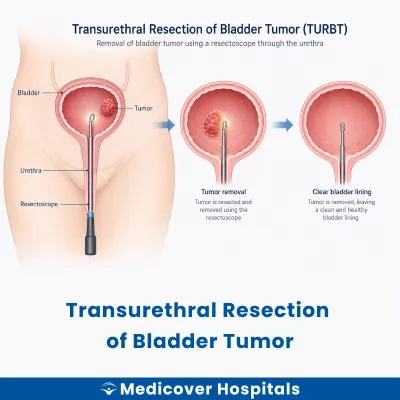
Transurethral Resection of Bladder Tumor (TURBT) is a surgical procedure used to remove tumors from the bladder. The bladder is a hollow organ in the lower abdomen that stores urine. During TURBT, a resectoscope (a thin tube with a camera and cutting tool) is inserted through the urethra to access and remove the tumor without making any external incisions.
TURBT is necessary for diagnosing and treating bladder cancer. It helps in removing cancerous tissues and preventing the spread of cancer. If left untreated, bladder tumors can grow and invade deeper layers of the bladder wall, leading to more severe health issues. Modern surgical techniques, including laser and electrocautery, are available for performing TURBT effectively.
Transurethral Resection of Bladder Tumor Doctors Near You
Find experienced urologists for Transurethral Resection of Bladder Tumor at Medicover Hospitals across India. Choose your city and book a consultation to discuss your treatment options today.
Why Choose Medicover Hospitals for Transurethral Resection of Bladder Tumor?
Get a second opinion from trusted experts and makeconfident, informed decisions.
 Get Second Opinion
Complete Guide To Transurethral Resection Of Bladder Tumor
Everything you need to know about the procedure, preparation, and recovery
Transurethral Resection of Bladder Tumor Surgery Indications
Doctors recommend Transurethral Resection of Bladder Tumor (TURBT) when there are signs of bladder tumors. This procedure is often advised when symptoms persist or worsen despite conservative treatments.
Visible Blood in Urine (Hematuria)
Patients may notice blood in their urine, which can appear pink, red, or brown. On examination, doctors may find blood clots or microscopic blood in urine samples. When bleeding persists or is recurrent, TURBT may be necessary.
Frequent Urinary Tract Infections
Recurrent urinary tract infections (UTIs) can be a sign of bladder tumors. Patients often experience pain during urination and frequent urges to urinate. If UTIs are resistant to antibiotics, further investigation may lead to TURBT.
Unexplained Pelvic Pain
Persistent pelvic pain without an obvious cause can indicate a bladder tumor. Imaging tests like ultrasounds or CT scans may reveal abnormal growths. TURBT is considered when pain does not subside with medication.
Bladder Tumor Detected on Imaging
During routine scans, a mass in the bladder may be found. This is often asymptomatic initially. If the tumor appears suspicious or grows, TURBT is recommended to remove and examine the tissue.
Urinary Obstruction
Patients may experience difficulty urinating or a weak urine stream. Examination might show a blockage caused by a tumor. When medication fails to relieve obstruction, TURBT becomes necessary.
Positive Cytology Results
Abnormal cells found in urine cytology tests can suggest a tumor. Even if no symptoms are present, TURBT is advised to investigate and treat potential malignancies.
How to Prepare for Transurethral Resection of Bladder Tumor?
Proper preparation is crucial for a successful Transurethral Resection of Bladder Tumor (TURBT). It helps reduce complications and ensures a smoother recovery.
- Medication Review: Stop NSAIDs, anticoagulants, and herbal supplements as advised by your doctor.
- Fasting: Fast for at least 6-8 hours before the procedure due to general anaesthesia.
- Bowel Preparation: Follow any specific instructions given by your doctor regarding bowel prep.
- Clothing: Wear loose, comfortable clothing on the day of the surgery.
- Transportation: Arrange for someone to drive you home post-surgery.
- Medication List: Bring a list of current medications with dosages for hospital records.
- Hydration: Stay well-hydrated the day before the procedure unless instructed otherwise.
- Smoking and Alcohol: Avoid smoking and alcohol for a few days before the surgery.
Transurethral Resection of Bladder Tumor Surgery (Step-by-Step)
Overview: This procedure is performed by urologists. It typically lasts 60 to 90 minutes. It is usually done under general or regional anaesthesia.
- Preparation: The patient is positioned on the surgical table. Anaesthesia is administered to ensure comfort and pain-free experience.
- Insertion of Resectoscope: A resectoscope, a thin tube with a light and camera, is gently inserted through the urethra into the bladder. No external incisions are made.
- Tumor Resection: The surgeon uses a loop at the end of the resectoscope to carefully cut away the bladder tumor. Bipolar cautery may be used to control bleeding and remove tissue.
- Tissue Collection: Removed tissue is collected for further pathological examination to determine the nature of the tumor.
- Bladder Inspection: The surgeon inspects the bladder to ensure all tumor tissue is removed. Any bleeding areas are cauterized for hemostasis.
- Catheter Insertion: A catheter is placed in the bladder to drain urine and allow healing. It may remain for a few days post-surgery.
- Recovery: The patient is moved to the recovery area. Monitoring continues until the effects of anaesthesia wear off.
Who Performs Transurethral Resection of Bladder Tumor Surgery?
This surgery is performed by urology doctors. They are specialists trained in diagnosing and treating urinary tract conditions. Their expertise ensures precise removal of bladder tumors.
Recovery After Transurethral Resection of Bladder Tumor Surgery
Recovery from Transurethral Resection of Bladder Tumor (TURBT) surgery involves gradual healing and monitoring. Patients can expect some discomfort and changes in urinary habits as the body heals.
Day 1-3:
- Rest is crucial. Avoid strenuous activities.
- Expect some blood in urine. This is normal initially.
- Stay hydrated. Drink plenty of water to help flush the bladder.
- Diet: Start with light meals like curd, dal-rice, or soups.
Day 4-7:
- Gradually increase activity but avoid heavy lifting.
- Continue to monitor urine. Blood should decrease.
- Diet: Incorporate soft foods like khichdi and moong dal.
- Most patients can resume desk work or school by the end of this period.
Week 2-4:
- Resume normal activities gradually. Avoid high-impact exercises.
- Urinary symptoms should improve. Continue to drink fluids regularly.
- Maintain a balanced diet to support healing.
- Follow up with your doctor as advised for further evaluation.
When to Seek Urgent Help
- Severe or increasing pain.
- Heavy bleeding or blood clots in urine.
- Fever or chills indicating possible infection.
- Inability to urinate or severe urinary discomfort.
If any of these symptoms occur, contact your healthcare provider immediately.
Benefits of Transurethral Resection of Bladder Tumor Surgery
Transurethral Resection of Bladder Tumor (TURBT) is a common procedure for diagnosing and treating bladder tumors. It offers several benefits:
- Minimally Invasive: TURBT is performed through the urethra, avoiding large incisions.
- Quick Recovery: Patients often experience shorter hospital stays and faster recovery times.
- Effective Diagnosis: Provides tissue samples for accurate diagnosis and staging of the tumor.
- Immediate Treatment: Allows for the removal of visible tumors during the same procedure.
- Low Risk of Infection: The minimally invasive nature reduces the risk of post-operative infections.
Risks and Complications of Transurethral Resection of Bladder Tumor Surgery
While TURBT is generally safe, it does carry some risks and potential complications:
Common Risks
- Bleeding during or after the procedure.
- Urinary tract infections may occur post-surgery.
- Temporary difficulty in urination.
Rare Risks
- Perforation of the bladder wall.
- Narrowing of the urethra due to scar tissue.
- Recurrence of bladder tumors.
- Blood clots in the urine.
Cost of Transurethral Resection of Bladder Tumor Surgery
The cost for Transurethral Resection of Bladder Tumor (TURBT) surgery at Medicover Hospitals ranges from ₹40,000 to ₹3,40,000. The price varies based on the ward category chosen, such as day care, general, private, or suite options. We offer transparent pricing, and our facilities support insurance and TPA services, including CGHS, ESI, and major TPAs. Cashless facility is also available for your convenience. Please contact the hospital for the latest insurance panel details as these may change periodically.
Frequently Asked Questions
1. How much does Transurethral Resection of Bladder Tumor surgery cost at Medicover Hospitals?
The cost ranges from ₹40,000 to ₹3,40,000 across Medicover Hospitals, depending on the type of room and care required.
2. Is Transurethral Resection of Bladder Tumor surgery covered under health insurance at Medicover?
Yes, it is covered under CGHS, ESI, and major TPAs with cashless options. Please contact the hospital for current panel details.
3. Will I need a catheter after Transurethral Resection of Bladder Tumor?
A catheter may be required temporarily to help drain urine. Your doctor will advise when it can be safely removed.
4. Can I experience urinary incontinence after Transurethral Resection of Bladder Tumor?
Some patients may experience temporary urinary incontinence post-surgery. This usually improves with time and specific exercises.
5. What foods should I avoid after Transurethral Resection of Bladder Tumor?
Avoid spicy foods, caffeine, and alcohol to prevent bladder irritation. Opt for bland foods like curd, dal-rice, and khichdi.
6. How soon can I return to work after Transurethral Resection of Bladder Tumor?
Most patients can return to work within 2-4 weeks. Your recovery speed will depend on your overall health and job demands.
7. Can bladder tumors recur after Transurethral Resection of Bladder Tumor?
There is a possibility of recurrence, so regular follow-ups are crucial. Your doctor will schedule periodic check-ups to monitor your condition.


