 Call
Call Patient Reports
Best Transcatheter Renal Artery Embolization Procedure Hospital with Expert Care
Transcatheter Renal Artery Embolization at Medicover Hospitals is performed using advanced endoscopic techniques. Our team of specialists, including those with MS and FMAS qualifications, ensures precise care. This approach typically results in reduced blood loss and shorter hospital stays for patients.
Expert Specialists
Yearly Procedures
Patient Satisfaction
What is Transcatheter Renal Artery Embolization?
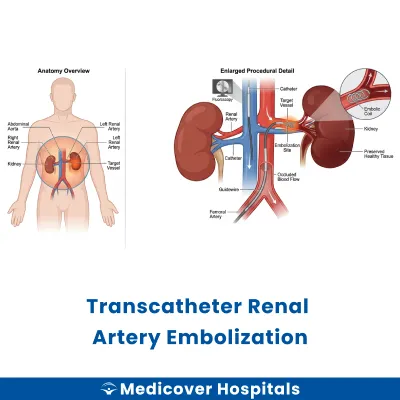
Transcatheter Renal Artery Embolization is a minimally invasive procedure. It involves the renal arteries, which supply blood to the kidneys. During this procedure, a catheter (a thin tube) is inserted through the blood vessels to reach the renal artery. Tiny particles or coils are then used to block the blood flow to a specific area of the kidney.
This procedure is often needed for conditions like renal artery aneurysms, arteriovenous malformations, or tumours. If left untreated, these conditions can lead to severe complications, including kidney damage or uncontrolled bleeding. Modern approaches for this procedure include image-guided techniques, such as fluoroscopy and CT angiography, to ensure precision. These methods help in effectively targeting the affected area.
Transcatheter Renal Artery Embolization Doctors Near You
Discover experienced interventional radiologists for transcatheter renal artery embolization at Medicover Hospitals across India. Choose your city and book a consultation to address your health needs effectively.
Why Choose Medicover Hospitals for Transcatheter Renal Artery Embolization?
Get a second opinion from trusted experts and makeconfident, informed decisions.
 Get Second Opinion
Complete Guide To Transcatheter Renal Artery Embolization
Everything you need to know about the procedure, preparation, and recovery
Transcatheter Renal Artery Embolization procedure Indications
Doctors recommend Transcatheter Renal Artery Embolization when blood flow to the kidneys needs to be controlled. This procedure is often considered when other treatments have not been effective.
Renal Artery Aneurysm
Patients may experience abdominal or flank pain. Imaging tests reveal an abnormal bulge in the renal artery. When the risk of rupture is high, and conservative management is insufficient, embolization is advised.
Renal Artery Stenosis
Patients often have high blood pressure that is difficult to control with medication. Diagnostic imaging shows narrowing of the renal artery. When medication fails to manage hypertension, embolization may be considered.
Renal Tumours
Symptoms include blood in the urine or persistent pain. Imaging or biopsy confirms the presence of a tumour. When surgery is not an option, embolization can help reduce tumour size or bleeding.
Uncontrolled Renal Bleeding
Patients may present with blood in the urine or a drop in blood pressure. Imaging shows active bleeding in the kidney. If bleeding does not stop with conservative measures, embolization is performed.
Renal Trauma
Following an injury, patients may experience severe pain and blood in the urine. Imaging reveals damage to the renal vessels. When bleeding is severe and persistent, embolization is used to control it.
How to Prepare for Transcatheter Renal Artery Embolization?
Proper preparation is crucial for a successful Transcatheter Renal Artery Embolization. It helps reduce risks and ensures a smooth procedure.
- Medication Review: Stop NSAIDs, anticoagulants, and herbal supplements as advised by your doctor.
- Fasting: Do not eat or drink anything for at least 6-8 hours before the procedure due to anaesthesia requirements.
- Hydration: Stay well-hydrated the day before the procedure unless instructed otherwise.
- Clothing: Wear loose, comfortable clothing on the day of the procedure for ease and comfort.
- Transportation: Arrange for someone to drive you home post-procedure as you may feel drowsy.
- Medication List: Bring a list of all medications you are currently taking, including dosages.
- Pre-procedure Tests: Complete any blood tests or imaging studies as ordered by your healthcare provider.
- Consent Form: Ensure you understand the procedure and sign the consent form after discussing any concerns with your doctor.
Transcatheter Renal Artery Embolization procedure (Step-by-Step)
This procedure is typically performed by interventional radiologists. It usually lasts between 1 to 3 hours and is done under local anaesthesia with sedation.
- Preparation: The patient is positioned comfortably on the procedure table. Vital signs are monitored. A local anaesthetic is applied to numb the area where the catheter will be inserted.
- Accessing the Artery: A small incision, about 1-2 cm, is made in the groin area. A catheter is inserted through this incision into the femoral artery using a guidewire.
- Catheter Navigation: The catheter is carefully guided through the blood vessels to reach the renal artery. The patient might feel slight pressure but should not experience pain.
- Embolization: Once the catheter is in place, embolic agents are injected through it to block the blood flow to the targeted area of the kidney. This may cause a warm sensation.
- Monitoring: The position of the embolic agents is confirmed using imaging techniques like fluoroscopy. Adjustments are made if necessary.
- Catheter Removal: The catheter is slowly withdrawn. Pressure is applied to the incision site to prevent bleeding. A bandage is placed over the area.
- Recovery: The patient is monitored for a few hours in the recovery area. Instructions on post-procedure care are provided before discharge.
Who Performs Transcatheter Renal Artery Embolization procedure?
Interventional radiologists, who are trained in minimally invasive procedures using imaging guidance, perform this procedure. They use specialized instruments like catheters and guidewires to navigate the vascular system.
Recovery After Transcatheter Renal Artery Embolization procedure
After undergoing a Transcatheter Renal Artery Embolization procedure, patients can expect a gradual recovery process. It's important to follow the doctor's advice for a smooth recovery and to avoid complications.
Day 1-2:
- Rest is crucial. Avoid any strenuous activities.
- Stay hydrated and consume light meals. Opt for easily digestible foods like moong dal, khichdi, and soups.
- Monitor the puncture site for any signs of bleeding or swelling.
Day 3-5:
- Gradually increase light activities as tolerated.
- Continue with a balanced diet. Include curd and dal-rice for better digestion and nutrition.
- Avoid lifting heavy objects or engaging in vigorous exercise.
Day 6-7:
- You may begin to resume normal activities, but listen to your body and rest as needed.
- Return to work or school if you feel comfortable, but avoid overexertion.
- Maintain a healthy diet to support recovery.
Phase 2 (Week 2-4):
- Most patients can resume regular activities, including exercise, with caution.
- Continue following a nutritious diet. Incorporate a variety of Indian foods for balanced nutrition.
- Attend follow-up appointments to monitor recovery progress.
When to Seek Urgent Help:
- Severe pain or swelling at the puncture site.
- Fever or signs of infection.
- Sudden changes in urine output or blood in urine.
- Any unusual symptoms or concerns should be reported to your healthcare provider immediately.
Benefits of Transcatheter Renal Artery Embolization procedure
Transcatheter Renal Artery Embolization is a minimally invasive procedure used to treat various kidney-related conditions.
- Minimally Invasive: This procedure requires only a small incision, reducing recovery time.
- Targeted Treatment: It allows precise targeting of the affected renal artery, minimizing damage to surrounding tissues.
- Reduced Blood Loss: By blocking blood flow to specific areas, it helps in controlling bleeding effectively.
- Shorter Hospital Stay: Patients often experience a quicker discharge compared to traditional surgery.
Risks and Complications of Transcatheter Renal Artery Embolization procedure
While generally safe, Transcatheter Renal Artery Embolization carries some risks and potential complications.
- Common: Pain at the catheter insertion site may occur.
- Common: There is a risk of infection at the puncture site.
- Rare: Allergic reactions to the contrast dye used during the procedure.
- Rare: Non-target embolization, affecting nearby organs or tissues.
- Rare: Kidney function impairment due to reduced blood flow.
- Rare: Blood clots may form, potentially leading to further complications.
Cost of Transcatheter Renal Artery Embolization procedure
The cost of the Transcatheter Renal Artery Embolization procedure at Medicover Hospitals ranges from Rs. 75,000 to Rs. 202,000. The price varies depending on the ward category chosen, such as outpatient, day care, general, and suite options. We offer transparent pricing and support for insurance and TPA, including CGHS, ESI, and major TPAs. Cashless facilities are also available to ease the financial process. Please contact the hospital for the latest insurance panel details as these may change periodically.
Frequently Asked Questions
1. How much does Transcatheter Renal Artery Embolization procedure cost at Medicover Hospitals?
The cost ranges from Rs. 75,000 to Rs. 202,000 across Medicover Hospitals, depending on the type of room and care required.
2. Is Transcatheter Renal Artery Embolization procedure covered under health insurance at Medicover?
Yes, it is often covered under CGHS, ESI, and major TPAs with cashless options. Please contact the hospital for current panel details.
3. Will I experience changes in blood pressure after the procedure?
Some patients may notice changes in blood pressure post-procedure. Regular monitoring and follow-ups are essential to manage any fluctuations.
4. Can I resume normal activities immediately after the procedure?
Patients are usually advised to rest for a few days post-procedure. Gradual return to normal activities is recommended based on doctor's advice.
5. Are there dietary restrictions after the procedure?
A balanced diet including curd, dal-rice, and khichdi is recommended. Avoid high-sodium foods to help manage blood pressure.
6. What are the risks of kidney function impairment after the procedure?
There is a minimal risk of kidney function impairment. Regular check-ups and tests are crucial to ensure kidney health post-procedure.
7. Will I need medication to manage renal artery conditions post-procedure?
Medications may be prescribed to manage blood pressure and kidney health. Follow your doctor's instructions for any prescribed treatments.


